Dragonfly’s Titan Landing Region Has a Name—and the Spacecraft Is Taking Shape
CosmicGravity · News & analysis · September 5, 2026
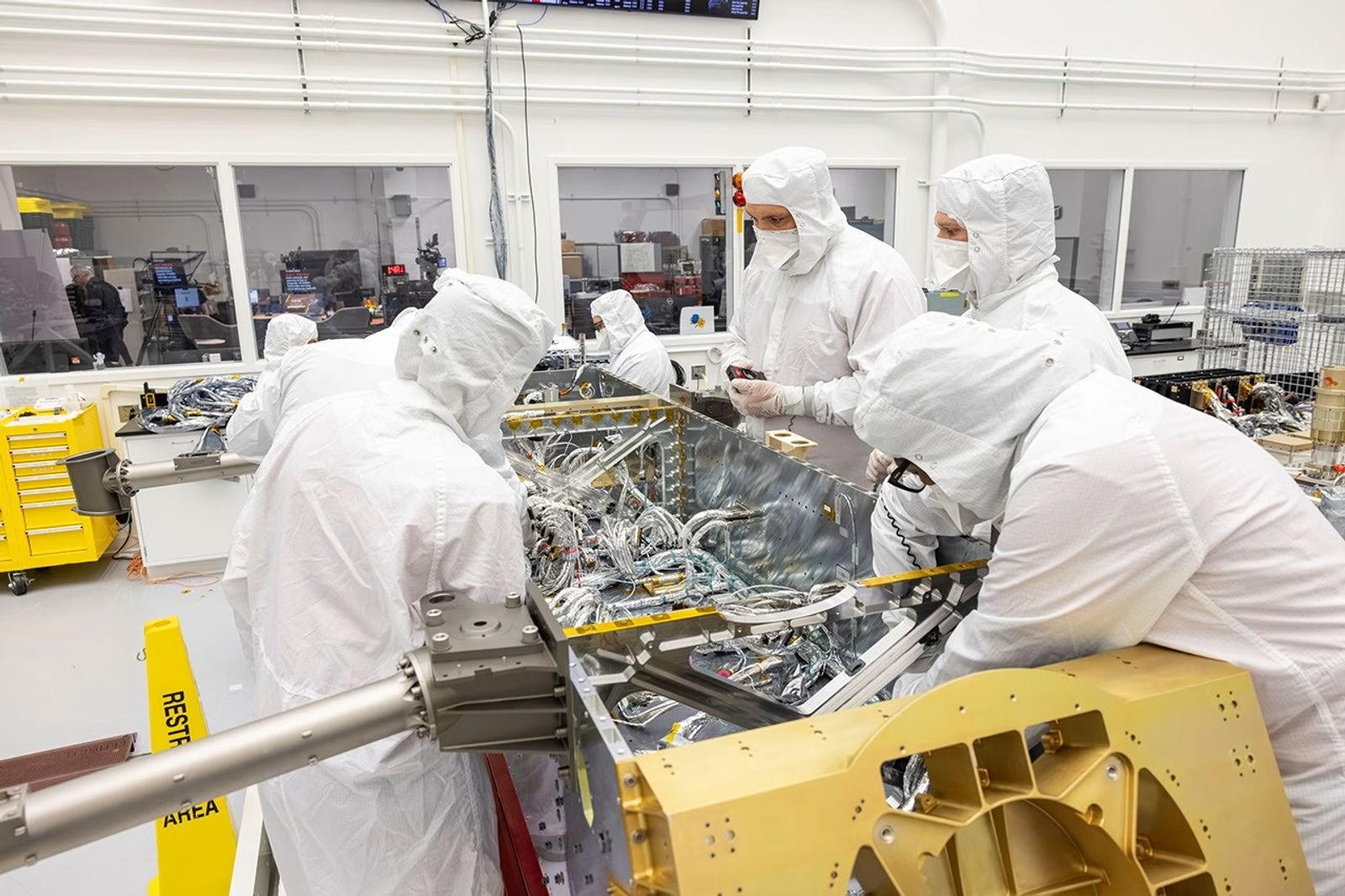
In a clean room in Maryland, technicians are connecting the wiring that will carry power and data through a spacecraft destined for Saturn’s largest moon. Far away on Titan, the landscape it is being built to explore now has an official name.
The Dragonfly Titan landing region is Ahmakiq Undae, a dune field south of Selk Crater. NASA’s September 2 update pairs that naming announcement with progress on the rotorcraft’s electrical harness. The project is currently targeting launch in summer 2028 and arrival in late 2034. NASA’s assembly update provides the latest details.
A name for the place where the journey on Titan begins
The International Astronomical Union approved Ahmakiq Undae for the broad region of dunes and intervening ground near Selk. The name follows the convention of associating Titan’s dune fields with wind deities. It identifies a landscape, not a precise touchdown coordinate.
That matters because Dragonfly is designed to move. Its mission is not simply to land, photograph a horizon and remain in one place.
Why fly rather than drive?
NASA plans a roughly 3.3-year primary surface mission in which the rotorcraft travels between different geological settings. At its stops, it will collect surface material for analysis. The mission overview describes a route from organic-rich dunes toward scientifically interesting deposits associated with Selk Crater.
Comparing places is central to the science. A single sample tells you about a single location. Samples from contrasting environments can help researchers investigate how local conditions shaped the chemistry.
The careful distinction between chemistry and life
Dragonfly will investigate habitability and prebiotic chemistry: the processes that can produce compounds relevant to the emergence of biology. NASA explicitly cautions against treating the mission as a simple life-detection expedition.
Organic molecules are not organisms. Finding a complex carbon-containing compound does not settle how it formed. The exciting question is how far chemistry can progress in an environment very different from Earth, and what traces survive for an instrument to examine.
Why the wiring update deserves attention
A spacecraft announcement about cables may sound less compelling than a new destination name. But the connection between them is the whole mission. Every measurement from that distant landscape will depend on hardware surviving launch, cruise, arrival and the conditions on Titan.
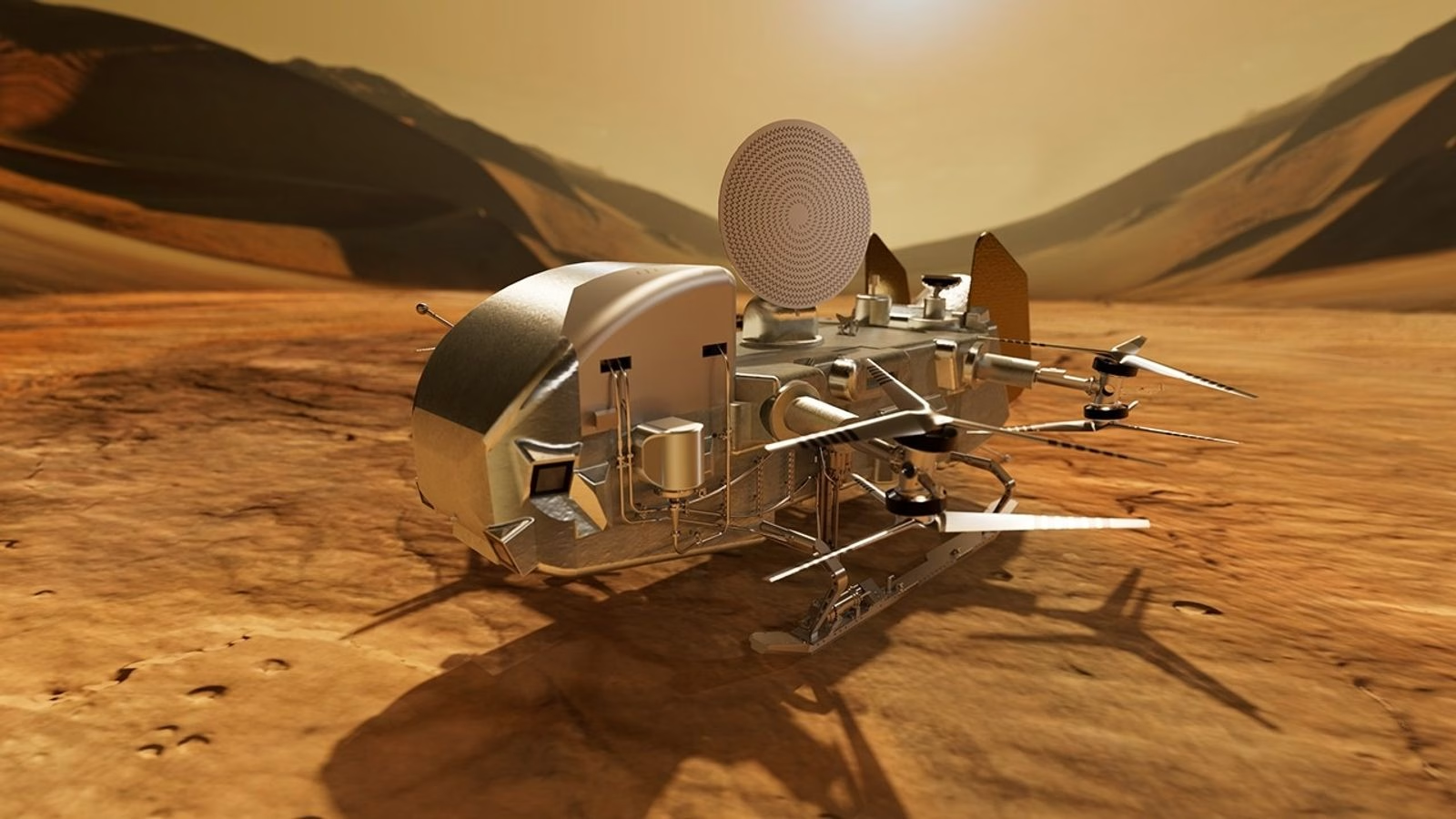
The next meaningful milestones are therefore integration and testing, not a fictional first flight over the dunes. For now, the images of Dragonfly on Titan remain artists’ concepts. The clean-room photographs show the machine that could eventually make those scenes real.
Compare this approach with the search for habitable conditions in Europa’s ocean and the clues carried by Enceladus’s plumes.
COSMICGRAVITY · EXPLORE THE EVIDENCE
From organic chemistry to a biological claim
Tap a heading to open the explanation.
Organic material
Carbon-containing compounds can form without life. Their presence alone does not establish biology.
Habitability
Ask whether an environment provides conditions that could support life or relevant chemistry. This is different from finding an organism.
Mission evidence
Dragonfly will compare measurements from different sites. Interpretations must follow the data; landing and discovery dates remain future plans.
Lead image: Artist’s concept of Dragonfly on Titan. NASA/Johns Hopkins APL. The mission has not landed; this is an illustration, not a photograph from Titan. Image source and usage information.
Editorial note: Reporting checked September 5, 2026. Linked sources distinguish the underlying observations from interpretation. Future plans and preliminary results may change.



latest video


news via inbox
Subscribe to our Cosmic newsletter to get notified when we have new articles.