Isturitz ancient DNA links people across Ice Age Europe
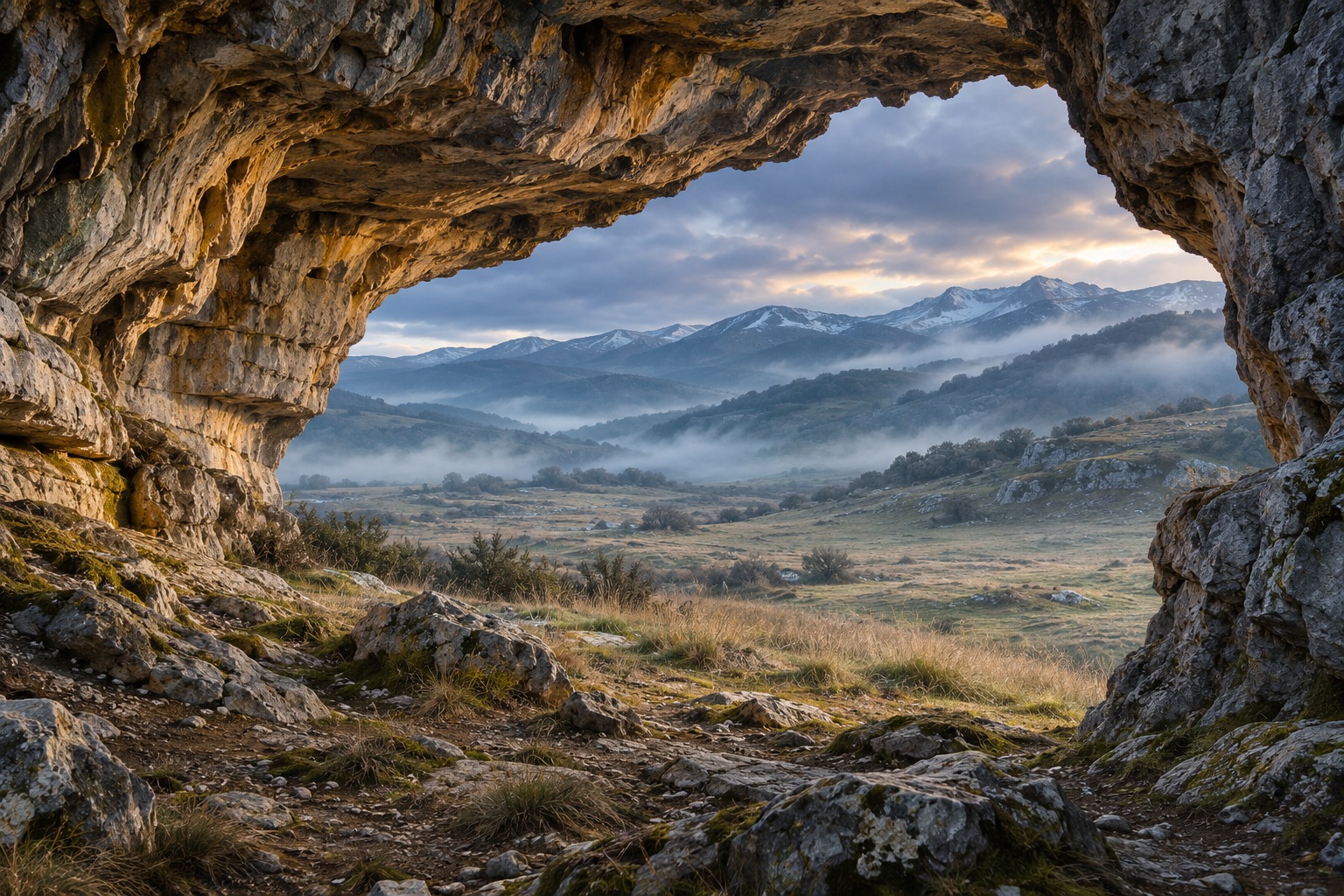
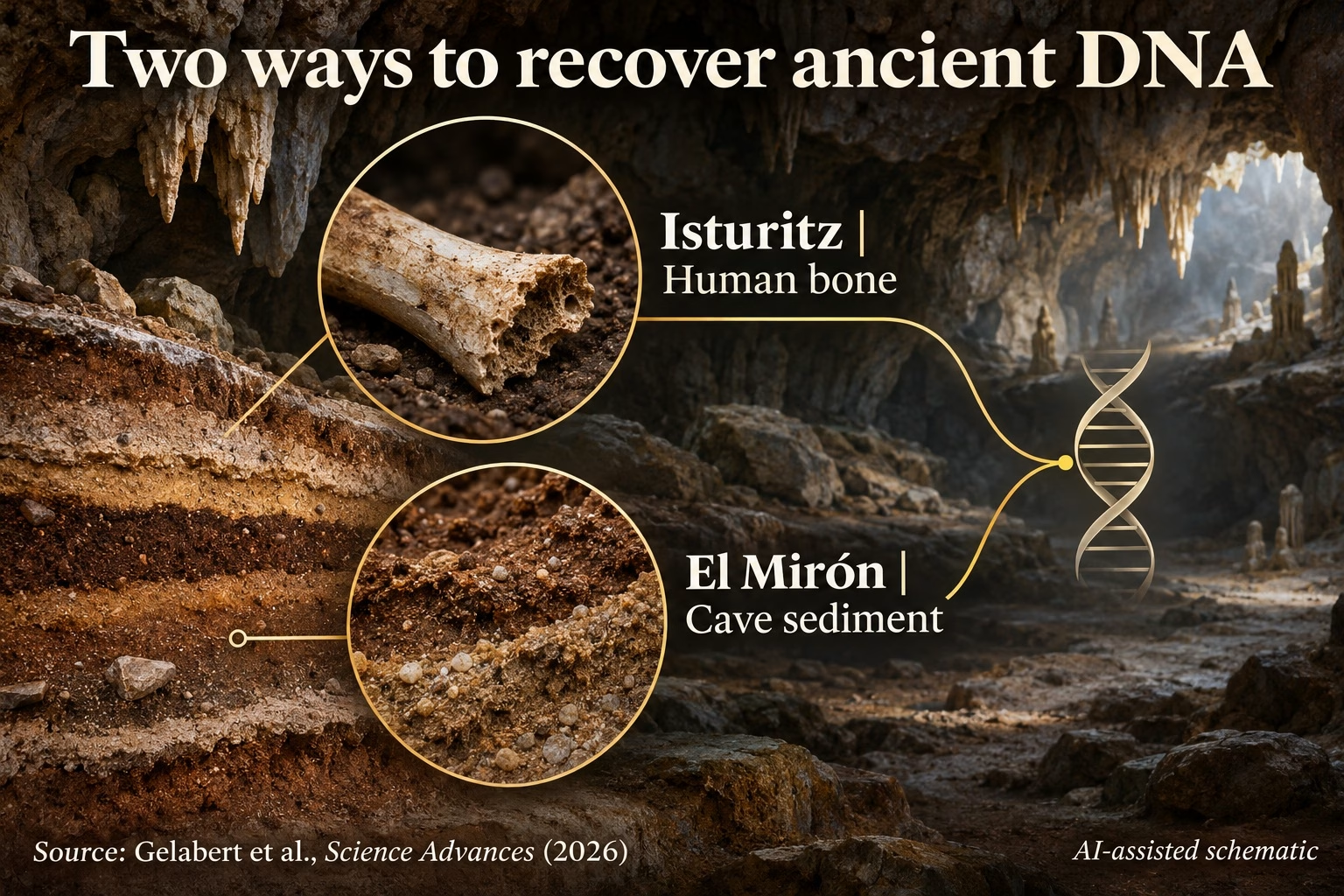
Isturitz ancient DNA adds a connection to the human map of Ice Age Europe. A woman who lived around 30,000 years ago in what is now southwestern France carried ancestry most closely related to western European groups, together with a detectable connection to groups farther east. Her genome comes from a small sample of human bone. In the same study, researchers recovered human genetic information from cave sediment in northern Spain, reaching a period where skeletal remains are scarce. The October 2026 study in Science Advances.
These are different sources of evidence from different places and times. The bone from Isturitz lets researchers investigate one person’s ancestry. Sediment at El Mirón supplies a broader trace of human presence. Together with other ancient genomes, they help test how populations were connected before and during the coldest part of the last Ice Age.
What the Isturitz ancient DNA reveals
Archaeologists group many of the artefacts made across Europe between roughly 34,000 and 25,000 years ago under the name Gravettian. That shared label covers people with varied genetic histories. Previous studies identified broad ancestry patterns associated with western Europe and with central and eastern Europe. The new work gives researchers a closer view of how those patterns overlapped.
The team compared the Isturitz woman’s genome with previously published ancient genomes. Most of her ancestry falls close to the western group often called Fournol-related. But several analyses also found a connection to the Věstonice-related ancestry represented farther east. Genetic mixing had occurred somewhere in her family’s past. Her bone cannot tell us which relative travelled, or whether that movement happened in one journey or through contacts among neighboring groups. The University of Vienna’s account of the ancestry findings.
The researchers estimated when the mixture could have happened. Under a model that treats the contact as a single pulse, they placed it roughly 32,500–31,500 years ago. That estimate describes an event earlier than the woman’s lifetime. It also depends on the model. More samples could help test whether a single pulse adequately captures a more complicated history.
How cave sediment fills a gap in the record
At El Mirón in Cantabria, the team sampled a sediment layer dating to around 22,000 years ago. They recovered thousands of variable positions in human DNA, enough to compare the ancestry signal with other ancient datasets. The result supports the persistence of western ancestry in the region through a time of severe climatic stress. Sediment sampling, laboratory methods and comparisons.
Sediment can preserve DNA when a recognizable human bone has not been found in the sampled layer. It also creates challenges. A sample may contain genetic material from more than one person, and handling or laboratory work can introduce modern DNA. Researchers use clean facilities, controls and patterns of molecular damage to help assess what they have recovered. The amount of usable material determines how fine-grained a question the sample can answer.
What a few genomes can tell us about a continent
The study reports new genetic data from human remains at Isturitz, Chufín in Spain and Ostuni in Italy. The samples yielded different amounts of information. The degraded Chufín tooth supported fewer comparisons than the better-preserved Isturitz material. At Ostuni, the team could compare the new data with those already recovered from a woman in the same burial. The close relationship supported the interpretation of the remains as mother and child. Sapienza’s explanation of the three individuals and the Ostuni relationship.
The Isturitz ancient DNA result makes a formerly simple division between regional groups harder to sustain. Yet the available genomes still represent very few people spread across thousands of years. Another person from a nearby site could reveal a different family history. The new evidence gives researchers a reason to look more closely at connections among places, while leaving plenty of the map open.
Tools, camps and the surrounding landscape supply another view of movement. Our report on the Ice Age camp in Alaska follows how archaeologists use a living surface and stone sources to investigate those questions. At Isturitz, a small piece of bone adds a kind of connection that artefacts alone could not establish.


latest video



news via inbox
Subscribe to our Cosmic newsletter to get notified when we have new articles.