Swift’s Mission Has Ended. Its Last Obstacle Was Earth’s Atmosphere.
The Swift mission ends with a frustrating twist: Earth’s thin upper atmosphere has become too much for the observatory to work against. NASA says its final observation took place on 20 October 2026. The spacecraft is expected to re-enter in the coming weeks; that is a forecast, not a confirmed date.
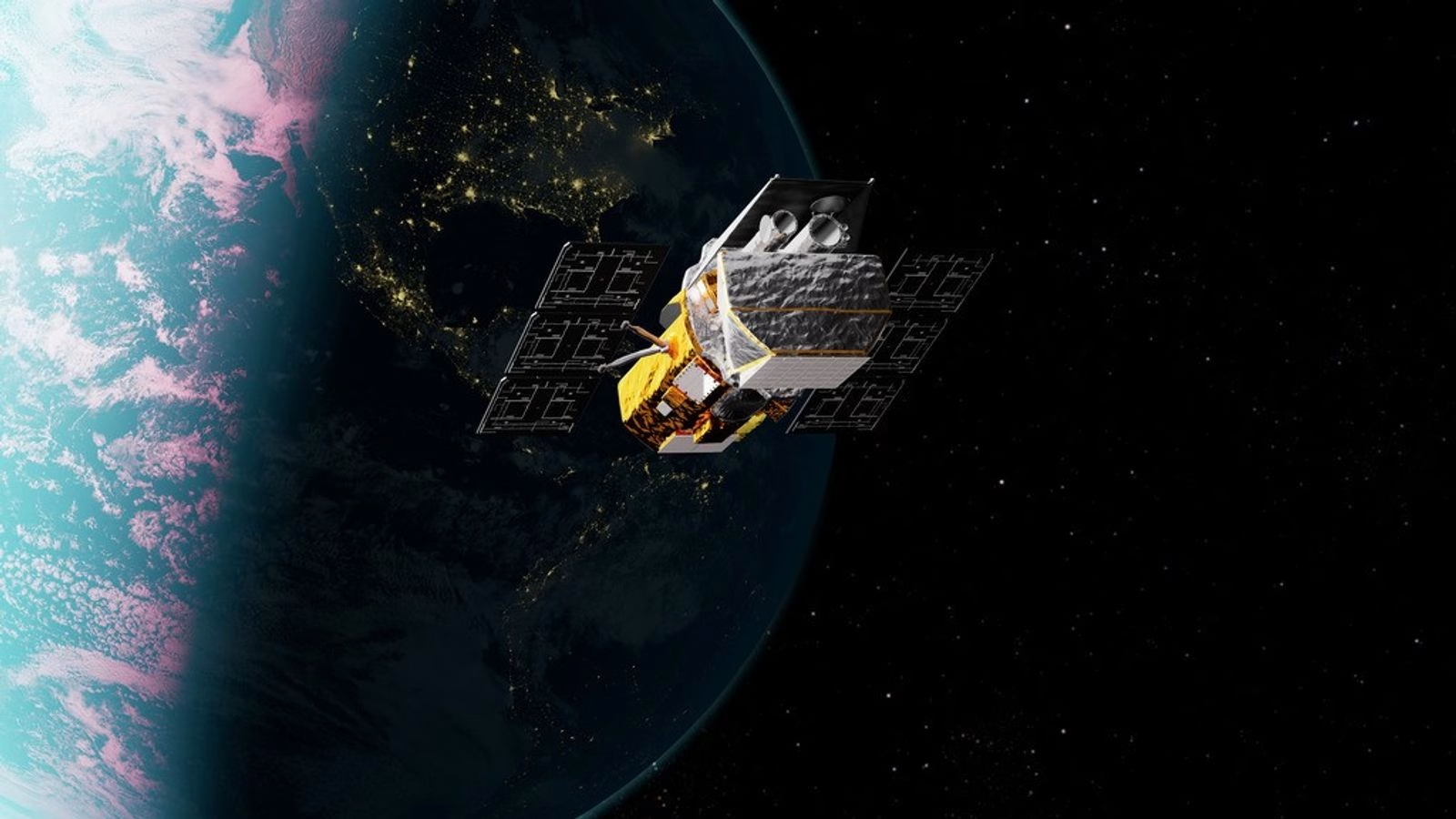
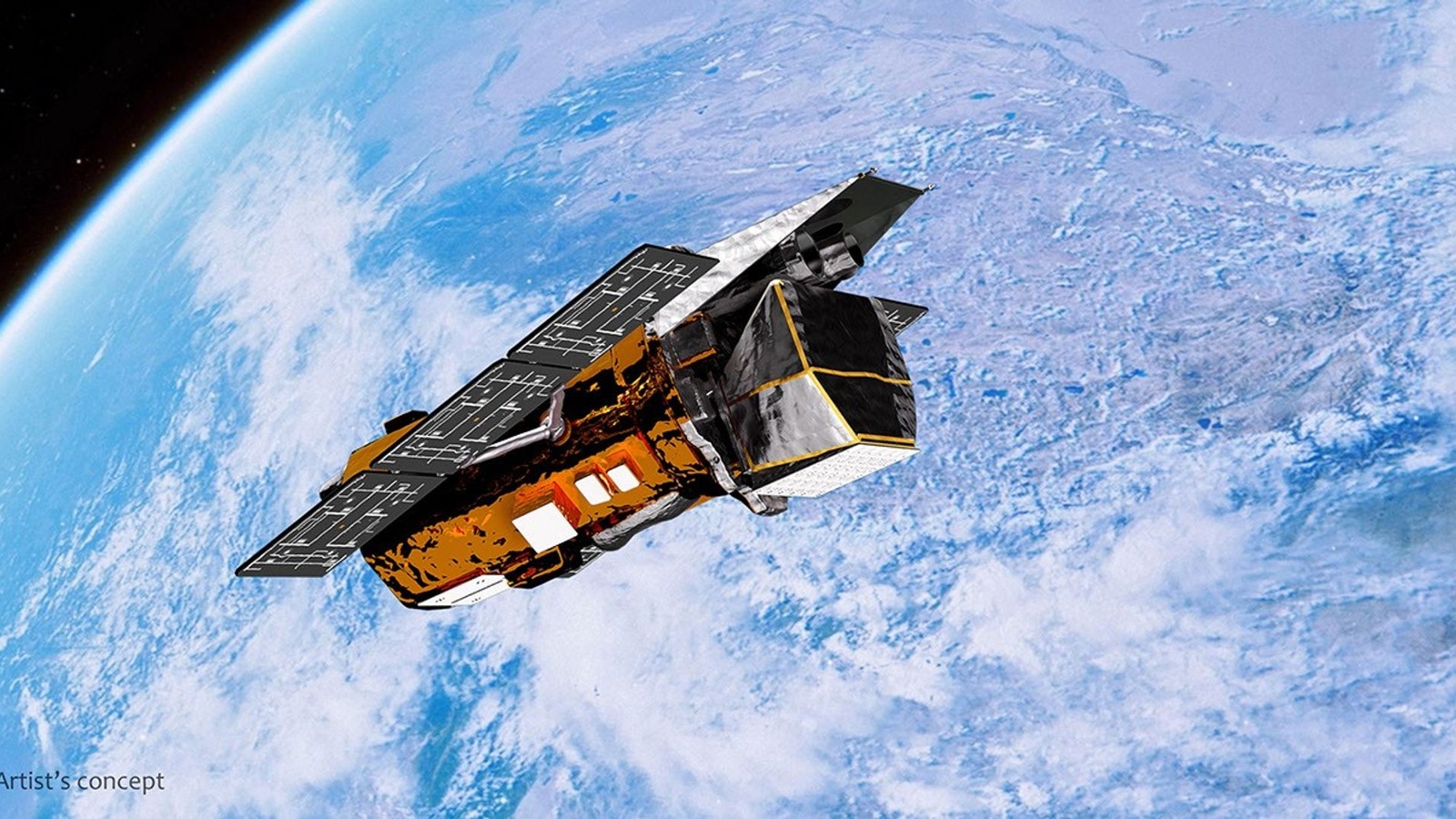
Artist’s concept of Swift above Earth, not a photograph of its final orbit. Credit: NASA’s Goddard Space Flight Center Conceptual Image Lab.
The news closes a chapter that briefly looked more hopeful. In September, we reported Swift’s return to science after its proposed rescue was scaled back. The latest announcement describes what happened next.
Why the Swift mission ends now
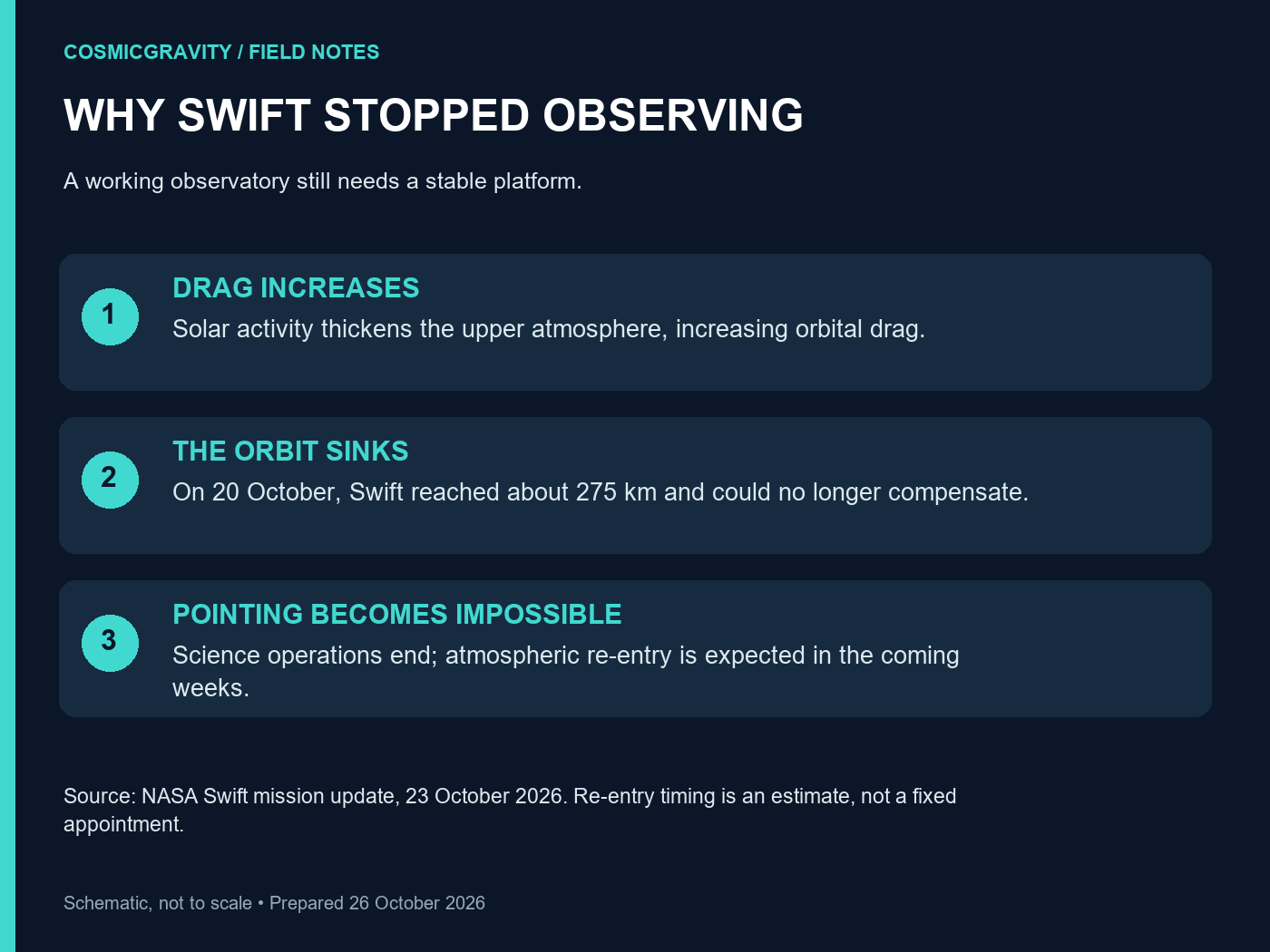
According to NASA’s operational update, increased solar activity helped raise atmospheric drag. The rapid servicing effort ended in August without an attempt to boost the orbit. Swift subsequently resumed observing hundreds of targets.
That return could not reverse the orbital decline. By 20 October, the observatory had reached roughly 275 kilometres above Earth and could no longer compensate for the drag. It entered safe mode, and operators at Penn State sent the commands ending operations.
Altitude alone does not tell the whole story. For an observatory, staying in orbit and holding a useful view are different requirements. A telescope can still be circling Earth while losing the ability to keep its instruments steady on a distant target.
Swift’s special skill was arriving quickly
Swift was built to catch gamma-ray bursts before their fading afterglows disappeared. NASA’s mission overview explains why these events matter: they reveal extreme explosions associated with collapsing massive stars and merging neutron stars.
The essential trick was coordination. Detect a burst, locate it, alert other observatories and turn the onboard telescopes toward it. Fast follow-up lets astronomers compare different kinds of light while an event is still changing.
That makes the loss more specific than simply having one fewer telescope. A spectacular image taken late cannot always recover information from an afterglow that has already faded.
The archive outlives the spacecraft
NASA’s account of the mission’s legacy describes nearly 22 years of observations, including more than 1.5 million ultraviolet and optical images. Swift observed over 2,000 gamma-ray bursts, and its data contributed to about 7,000 scientific papers.
Those records remain valuable because a new discovery can change the question asked of an old observation. Researchers can return to earlier measurements to look for changes or compare a newly recognised event with previous examples.
NASA says it is exploring ways to preserve rapid responses using existing observatories and future options. Those plans should not be mistaken for a ready replacement. Swift has stopped collecting new observations; its scientific record remains available for new work.



latest video



news via inbox
Subscribe to our Cosmic newsletter to get notified when we have new articles.