Northern Lights in September: Read the Forecast Before You Go
CosmicGravity · News & analysis · September 5, 2026
An aurora forecast can look wonderfully decisive: coloured maps, a rising number and a headline promising lights across half a continent. Then you drive into the countryside and find cloud.
A useful northern lights September forecast has to answer two questions. Is auroral activity likely near you? And will your local sky let you see it? This guide was checked on September 5, 2026. It is not a claim that a geomagnetic storm is currently in progress.
Start with the short-term map
NOAA’s aurora forecast uses the OVATION model to estimate where the aurora is likely to be and how intense it may become. Its usual lead time is approximately 30–90 minutes, depending on the solar wind’s journey from the upstream measurement point to Earth.
That makes it useful close to an outing. It is not a precise, week-ahead booking tool. Read the map’s timestamp and legend, and check that fresh data are available. A screenshot shared yesterday does not describe tonight.
Kp is a clue, not a promise for your town
Kp summarizes geomagnetic activity on a scale from 0 to 9. Larger values generally accompany auroral activity extending farther from the magnetic poles. NOAA stresses that the relationship is approximate and depends on geomagnetic latitude, which is not the same as the latitude printed on a road map. Its viewing guide explains those limitations.
Do not reduce the decision to a single number. A lower Kp can still bring a beautiful display under the auroral oval. A high Kp cannot remove thick cloud or switch off a brightly lit city.
Why September is worth watching
NOAA notes that activity tends to be favourable around the equinoxes, while autumn also brings longer nights in northern locations. Neither factor guarantees a display on a chosen date. Treat the season as a reason to pay attention, not as a reservation.
For northern observers, an unobstructed northern horizon and a dark location can help when the display is distant. Avoid unsafe roadside stops, private land and unfamiliar terrain after dark. An outing should be easy to abandon if the conditions deteriorate.
A sensible plan for the evening
Check the official space-weather outlook first. Then inspect the short-term aurora map, your local cloud forecast and the time of darkness. Recheck before leaving. If those pieces do not line up, there is no shame in trying another night.
The most useful forecast is the one that lets you make a proportionate decision. For a nearby dark-sky spot, uncertainty may be acceptable. For a costly overnight journey, the same information may be too weak.
Our Solar Cycle 25 explainer covers the broader activity behind the lights. For another exercise in reading skywatching claims carefully, see our planetary-alignment guide.
COSMICGRAVITY · EXPLORE THE EVIDENCE
Before-you-go checks
Tap a heading to open the explanation.
Space weather
Open the current NOAA map and read its timestamp. This page contains guidance, not a live forecast feed.
Local sky
Check cloud, darkness, light pollution and your view of the horizon. Global activity does not guarantee local visibility.
Practical decision
Choose a safe, legal viewing location. Match the distance and cost of your trip to the uncertainty in the forecast.
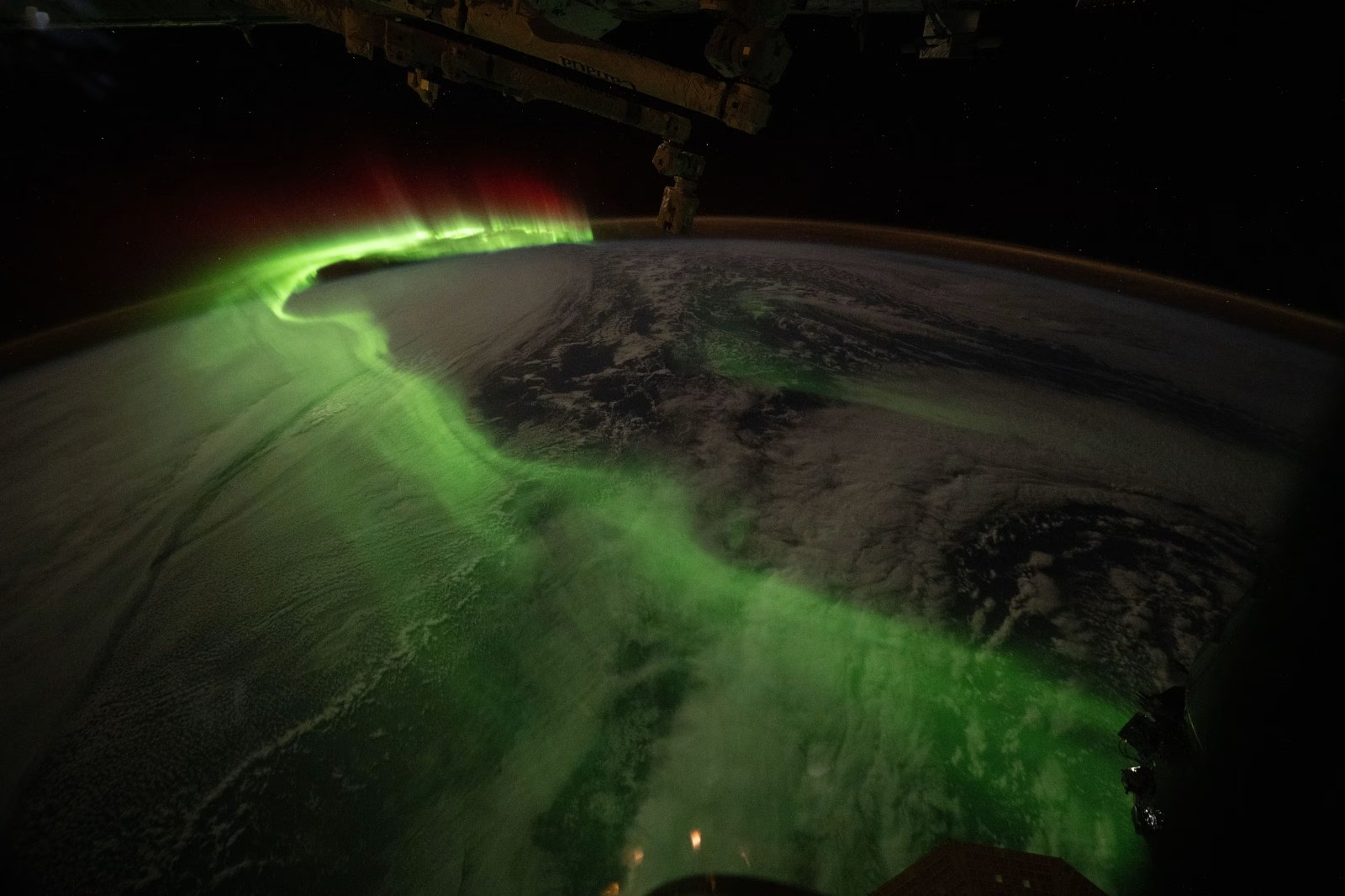
Lead image: Aurora australis photographed from the ISS on June 5, 2026. NASA/Jessica Meir. This southern-hemisphere example is a context image, not a northern-lights forecast for tonight. Image source and usage information.
Editorial note: Reporting checked September 5, 2026. Linked sources distinguish the underlying observations from interpretation. Future plans and preliminary results may change.

latest video

news via inbox
Subscribe to our Cosmic newsletter to get notified when we have new articles.