Two 6,000-Year-Old Tombs Found in Galway Rewrite Ireland’s Neolithic Story
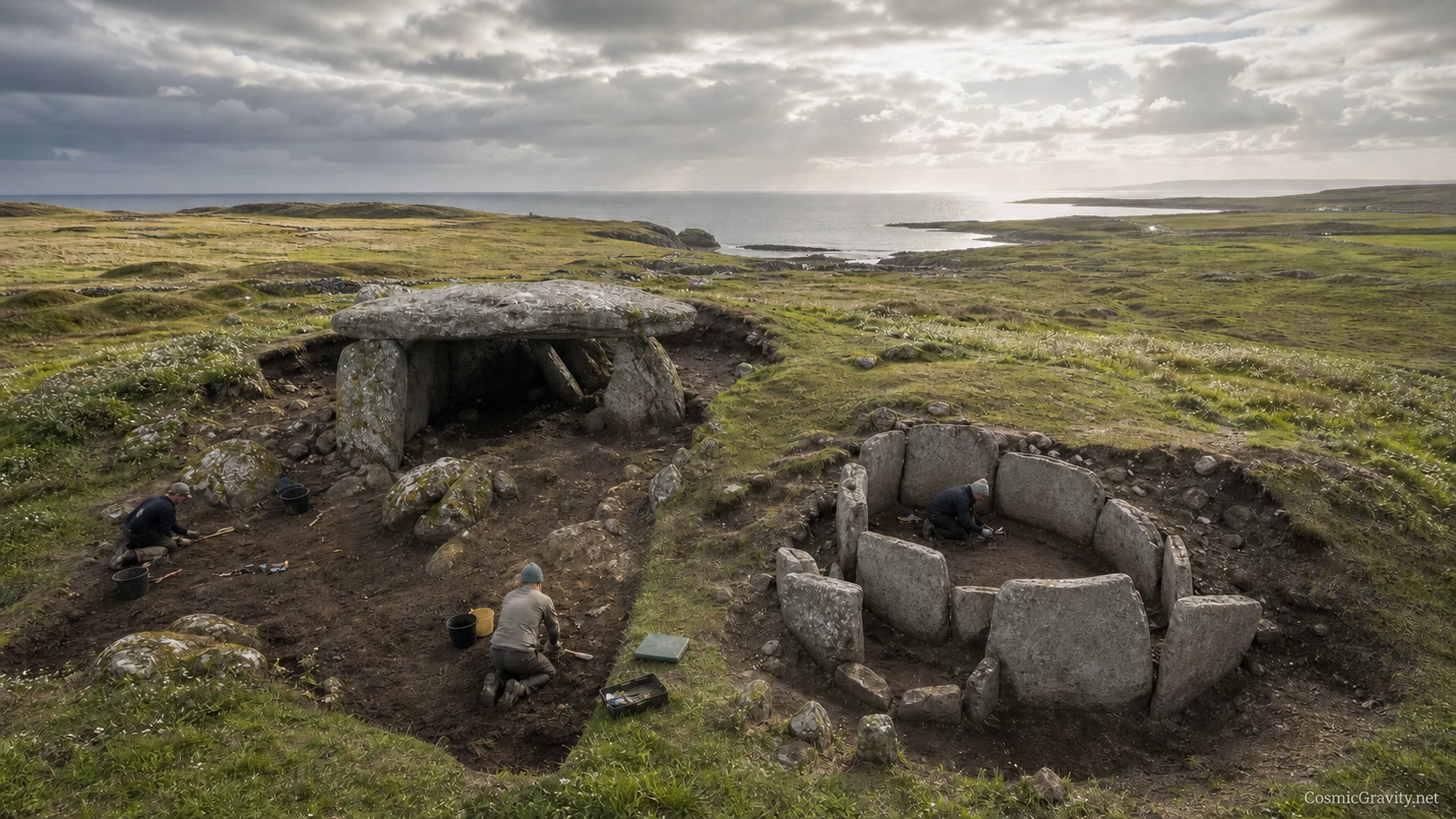
On a windswept corner of County Galway, archaeologists have uncovered two different kinds of Neolithic monument at the same prehistoric site: a portal tomb and a court tomb. Both are close to 6,000 years old. Finding either would matter. Finding the pair together gives researchers a rare chance to examine how Ireland’s earliest farming communities built memory into the landscape.
The Maree Project, led by archaeologists from the University of Galway, rediscovered a “lost” monument and identified a second tomb that had not previously been recognised. Artefacts and architecture place the site in the early Neolithic, when farming, new settlement patterns and large communal monuments were transforming Atlantic Europe.
Why two tomb types at one site matter
Archaeological typologies can make the past look tidier than it was. Portal tombs and court tombs are usually discussed as separate traditions, perhaps associated with different communities or ritual choices. Their close relationship at Maree may show that the people who built them were sharing a place across generations.
The monuments were not simply graves. Large stones, repeated visits and visible placement created landmarks that could anchor identity. The dead were part of that social work, but so were the living people who gathered there.
Walk through 6,000 years
c. 4000 BC: farming communities spread through Ireland and begin building substantial monuments.
Early Neolithic: the Maree portal and court tomb traditions take shape.
Later centuries: stones shift, monuments collapse and local memory changes.
Modern era: one tomb is effectively lost from view; excavation in 2026 relocates it and identifies the second monument.
What the artefacts can reveal
Stone tools, pottery, cremated bone and small deposits may look less spectacular than a capstone, yet they can establish sequence and use. A fragment sealed beneath a structural stone may date construction; material from an entrance can point to later ceremonies.
Researchers will also study whether the monuments were built together or separated by decades. Radiocarbon dating, microscopic soil analysis and careful reconstruction of deposits can turn “6,000 years old” into a much more detailed biography.
The Atlantic was not an edge
Western Ireland is sometimes imagined as remote from the main currents of Neolithic Europe. Megalithic architecture argues otherwise. Ideas, people and seafaring knowledge moved along the Atlantic façade. Monument forms were adapted locally rather than copied like plans from a catalogue.
That broader network connects well with recent evidence that early island communities were more capable at sea than older textbooks assumed. See also our article on Malta’s first settlers crossing open water.
What remains unknown
We do not yet know exactly who was buried at Maree, how many generations used the place or what relationships linked the builders. Ancient DNA may eventually help if suitable human material survives, but it will not explain ritual meaning on its own.
The strongest interpretation will combine architecture, artefacts, landscape and biological evidence. That patience is what keeps an extraordinary discovery from turning into a simplistic headline.
Sources and further reading


latest video


news via inbox
Subscribe to our Cosmic newsletter to get notified when we have new articles.