Swift’s Rescue Has Been Scaled Back—but the Telescope Is Working Again
CosmicGravity · News & analysis · September 5, 2026
A rescue mission can fall short without the telescope it was meant to save falling silent immediately. That is the situation now facing NASA’s Neil Gehrels Swift Observatory.
The Swift telescope rescue plan has been scaled back, but Swift has resumed observations with two instruments. NASA’s September 4 update says the commercial LINK spacecraft is continuing a technology demonstration rather than attempting to capture and raise the observatory. No closer approach to Swift is currently planned. NASA’s latest servicing update describes the revised mission.
What went wrong with the boost?
Katalyst Space developed LINK to approach Swift, attach to it and lift it into a higher orbit. Following launch, LINK encountered problems controlling its orientation. NASA and the company subsequently abandoned the capture-and-boost portion of the plan.
LINK has demonstrated some manoeuvring and hardware operations, but those tests should not be mistaken for a successful rescue. NASA’s September 4 report places it roughly 12–15 kilometres from Swift and anticipates LINK’s own re-entry within a few weeks. That timetable refers to the servicing spacecraft, not to a confirmed end date for Swift.
Swift has already returned useful data
The observatory’s Ultraviolet/Optical Telescope and X-ray Telescope were turned back on August 26. They had been switched off to help reduce drag while the rescue effort was prepared. NASA reported that work was continuing toward restarting the Burst Alert Telescope, its third instrument. The science-restart announcement includes a new X-ray view of Tycho’s supernova remnant.

Why an orbit can run out
Even at a satellite’s altitude, Earth’s atmosphere is not entirely absent. Drag gradually removes orbital energy. NASA says increased solar activity accelerated Swift’s descent, and Swift has no propulsion system to compensate for it.
The team faces an uncomfortable trade-off: operating in a way that prolongs the orbit versus using the remaining time to collect science. Restarting instruments is therefore a practical choice about what to do with a limited opportunity, not evidence that the underlying orbital problem has gone away.
The part of the story worth remembering
Space servicing is often presented as if it were already a routine roadside repair. It is not. Approaching an object, controlling relative motion and making safe physical contact are distinct engineering challenges.
Swift’s next observations matter on their own terms. A limited observing window can still capture something valuable. Until NASA publishes a confirmed end-of-mission update, “the rescue failed to deliver its planned boost” and “the telescope has stopped doing science” should remain separate statements.
Read more about the effects of solar activity and the different end-of-life challenges facing Voyager.
COSMICGRAVITY · EXPLORE THE EVIDENCE
Two spacecraft, two different situations
Tap a heading to open the explanation.
Swift observatory
Two science instruments have restarted. Orbital decay remains a problem; this article does not assign an exact re-entry date.
LINK servicing craft
Its planned capture and orbital boost have been dropped. Remaining activities are a technology demonstration.
Watch the wording
A successful hardware test is not a successful boost. A short remaining mission is not the same as a telescope already being silent.
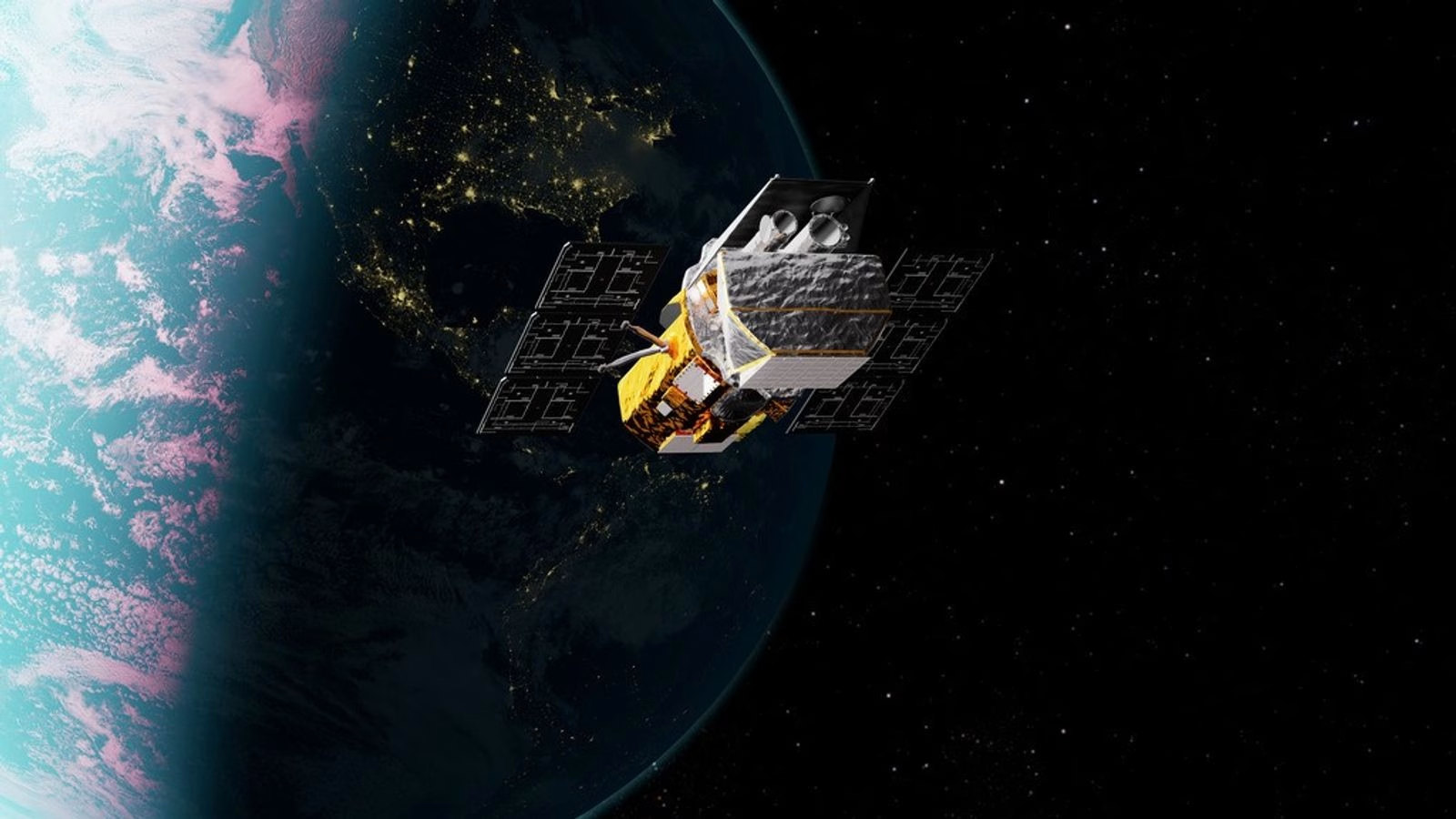
Lead image: NASA visualization of the Swift observatory above Earth. Artist’s impression, not a photograph of the servicing attempt. NASA’s Goddard Space Flight Center. Image source and usage information.
Editorial note: Reporting checked September 5, 2026. Linked sources distinguish the underlying observations from interpretation. Future plans and preliminary results may change.


latest video


news via inbox
Subscribe to our Cosmic newsletter to get notified when we have new articles.