
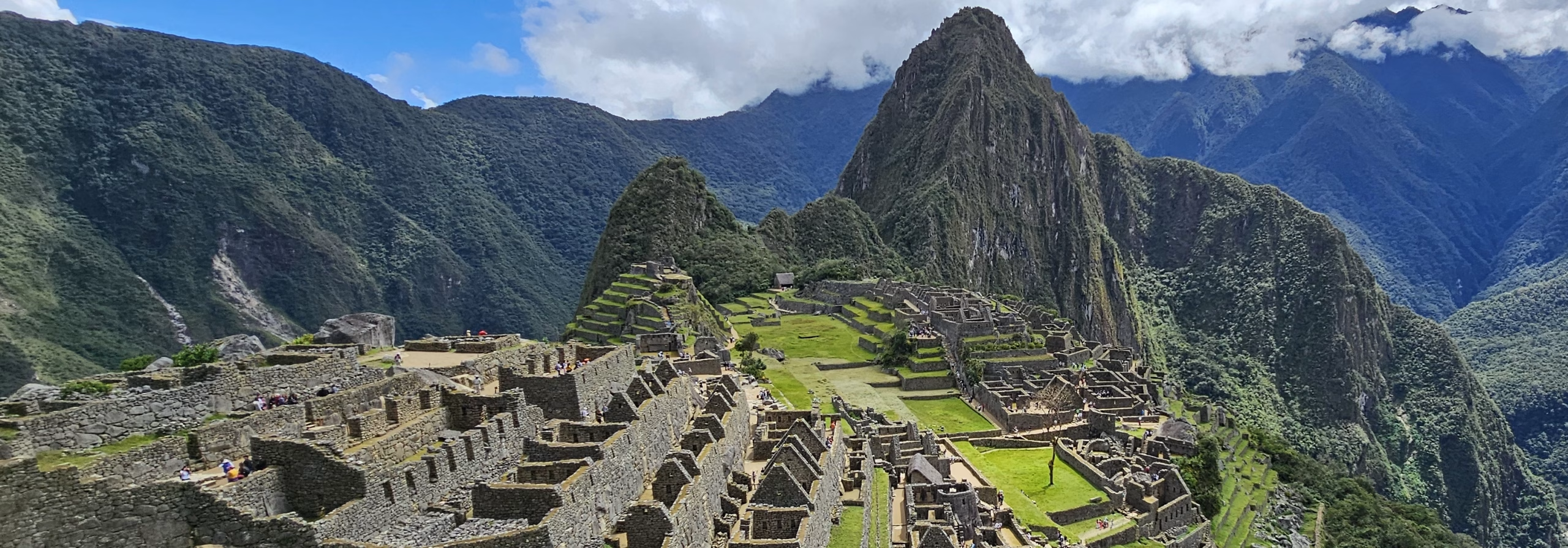
LiDAR Reveals Hidden Inca Roads Near Machu Picchu
CosmicGravity · News & analysis · September 5, 2026
The familiar photograph of Machu Picchu can make the citadel look like an isolated stone island. New survey work adds another reminder that people reached it, supplied it and moved through a much wider inhabited landscape.
A team described by the University of Warsaw has identified approximately 2.5 kilometres of previously undocumented Inca roads during fieldwork in late July and early August 2026. The Machu Picchu hidden roads were detected with LiDAR in dense vegetation, on the opposite bank of the river from the citadel, near the Mandor Wall. The university’s announcement also describes terraces and platforms in the investigated area.
How a laser finds a road beneath trees
LiDAR measures distance using pulses of light. In a forest survey, some pulses reach gaps in the canopy and return from lower vegetation or the ground. Processing the resulting measurements helps researchers model the terrain beneath the leaves.
That is different from seeing through stone or soil. A feature in the terrain model still needs interpretation and, where appropriate, inspection on the ground. A promising line on a survey is not automatically a dated road, and an apparent platform is not an excavation report.
A larger landscape comes into focus
The announcement places the discoveries within a park already known to contain more than 60 associated sites. The new work helps extend the picture of routes and activity beyond the best-known monumental centre. Follow-up field investigations are planned; precise locations have not all been made public because of concerns about damage and looting.
UNESCO’s description of the Historic Sanctuary of Machu Picchu treats its cultural landscape and natural setting together. Terraces, paths and water-management features are part of that story, not incidental scenery around the famous buildings.
What the discovery does—and does not—change
Roads are evidence of relationships. A new route can prompt better questions about movement, maintenance and the connections between places. It can shift the focus from a monument viewed alone to the landscape that allowed it to function.
But this survey does not establish a hidden underground city or prove that a different, much older civilization built Machu Picchu. Those are separate claims requiring their own dating and archaeological evidence.
The next stage is the interesting one: working out how these features connect, when they were used and how much survives. The discovery is already compelling without asking a laser scan to answer questions it cannot yet resolve.
For a practical comparison of methods, read muons, radar and the new archaeology. Our megalithic-sites map explores other landscapes where context matters as much as the monument.
COSMICGRAVITY · EXPLORE THE EVIDENCE
What can LiDAR really reveal?
Tap a heading to open the explanation.
Canopy gaps → terrain
Some laser returns come from the ground through gaps in foliage. The survey can help map features that are difficult to see from above.
Terrain → interpretation
Shapes can suggest roads, terraces or platforms. Archaeologists must test that interpretation against the site.
Interpretation → chronology
A shape alone does not provide an exact age. Dating and field investigation are separate parts of the research.
Lead image: Machu Picchu panorama, photographed April 21, 2025. Jorge Castro Ruso, via Wikimedia Commons, CC BY-SA 2.0. Cropped version supplied by Commons; no further artistic changes. Context photograph; the newly reported roads are not identified in this view. Image source and usage information.
Editorial note: Reporting checked September 5, 2026. Linked sources distinguish the underlying observations from interpretation. Future plans and preliminary results may change.



latest video



news via inbox
Subscribe to our Cosmic newsletter to get notified when we have new articles.


.jpg)