The U.S. National Archives Is Building a Permanent UAP Record
Disclosure is often imagined as a single dramatic announcement: a government official steps to a microphone, opens a classified folder and ends decades of uncertainty. The real process is quieter. It happens through transfer schedules, catalog numbers, digitisation projects and records that become searchable one series at a time.
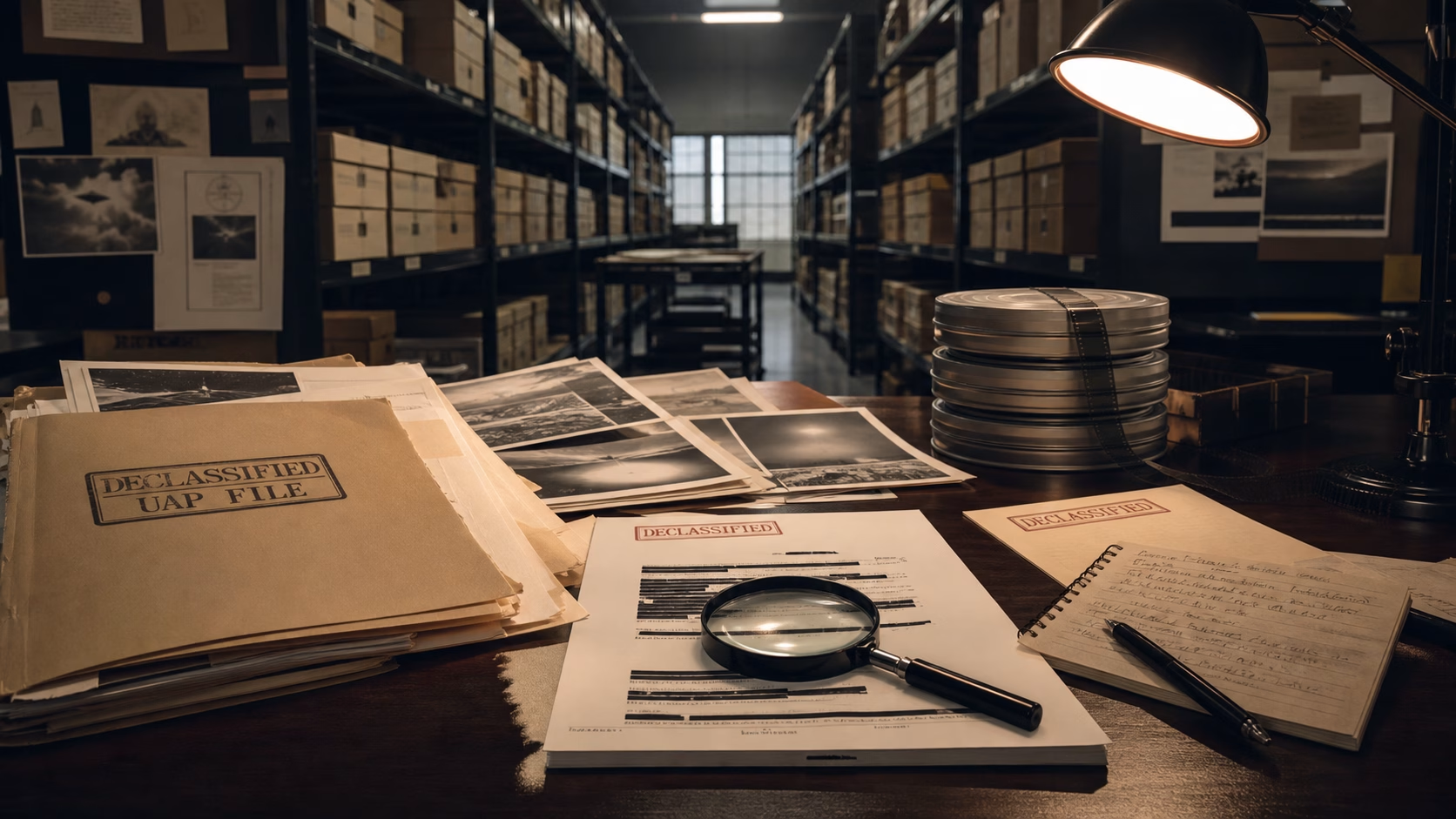
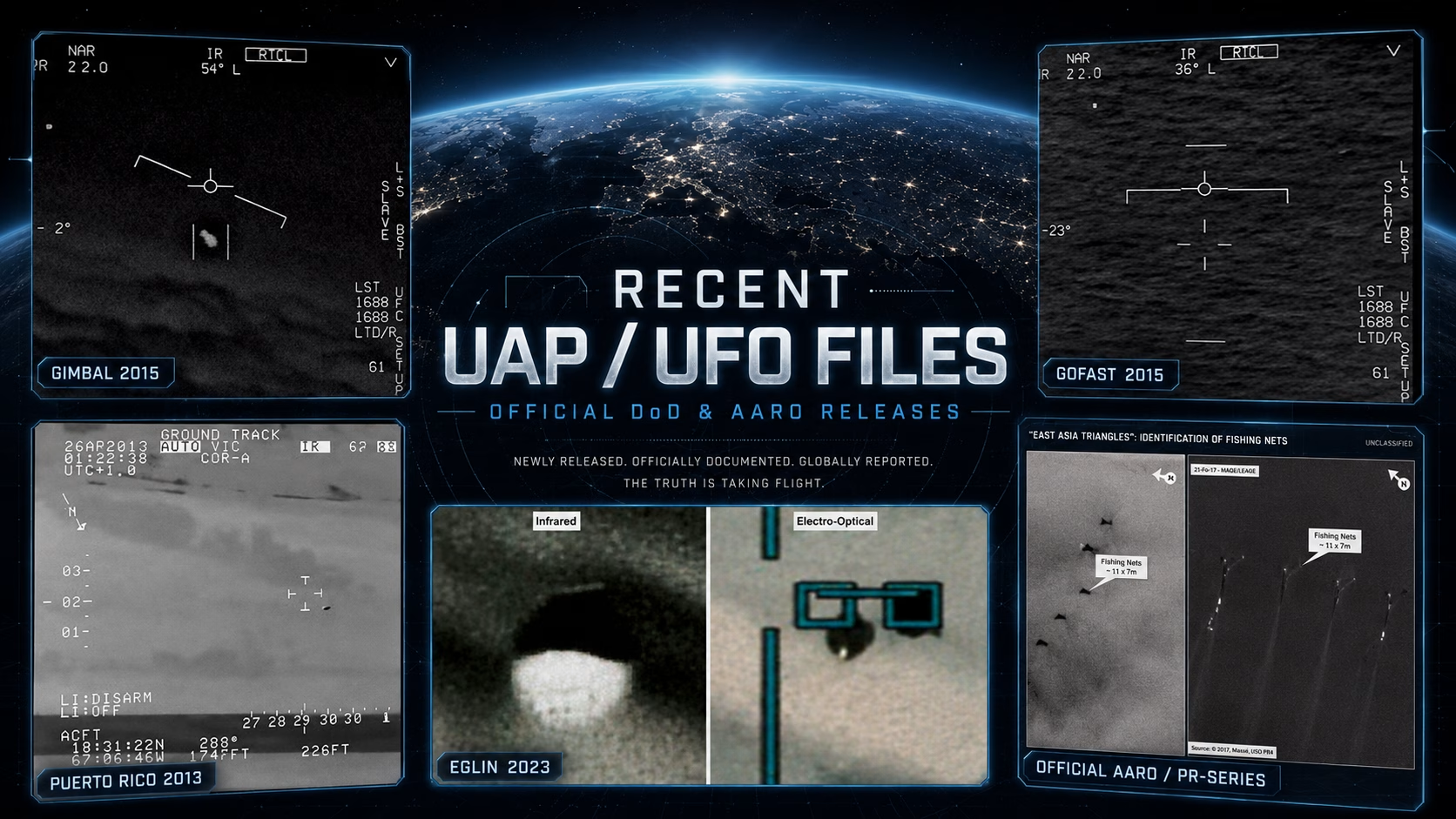
That process now has a permanent home. The U.S. National Archives and Records Administration is building Record Group 615, the Unidentified Anomalous Phenomena Records Collection. As of May 2026, the collection includes material transferred by the Federal Aviation Administration, Nuclear Regulatory Commission, Office of the Director of National Intelligence, Office of the Secretary of Defense, National Security Agency, Department of State and Federal Bureau of Investigation.
No single file in the collection proves an extraterrestrial origin for UAP. Taken together, however, the records establish something important: unusual aerial reports have repeatedly reached serious institutions, generated investigations and remained part of the official record across decades.
Why Record Group 615 exists
The collection grew from provisions in the 2024 National Defense Authorization Act. Federal agencies were instructed to identify UAP-related records in their custody, prepare digital copies and transfer publicly releasable material to the National Archives.
This changes the structure of disclosure. In the past, researchers had to search across many record groups, submit separate Freedom of Information Act requests or depend on documents circulating without a clear chain of custody. RG 615 creates a dedicated collection in which material from different agencies can be preserved and compared.
The archive is still developing. NARA says it will add records on a rolling basis as agencies transfer them. That wording matters: the current online material should not be mistaken for a final or complete release.
Which agencies have transferred records?
The list is broader than the military. FAA records can document reports involving civilian airspace and pilots. Nuclear Regulatory Commission material may involve observations near regulated facilities. ODNI and the Office of the Secretary of Defense hold reports connected to intelligence and military activity.
NSA and FBI records add historical and investigative material. Department of State files may contain diplomatic reporting or documents produced overseas. Each agency saw the subject through a different lens, which means the combined archive can reveal patterns that remain invisible inside a single institutional collection.
The existence of a record does not automatically validate every statement inside it. Archives preserve what officials received, discussed and produced. A witness account is evidence that the account was made; it is not automatically proof that the witness’s interpretation was correct. That distinction protects the research rather than weakening it.
Why provenance matters
UAP research has always struggled with provenance. A striking memorandum appears online, but no one can establish where it came from. A video is copied repeatedly until the original date and metadata disappear. A quotation is attributed to an official who may never have said it.
An archival record provides a chain. Researchers can identify the creating agency, series, date, file context and related material. They can compare a scan with catalogue metadata and determine whether a document is contemporary or a later summary.
This does not guarantee that every claim in an official file is true. Governments record rumours, errors, preliminary assessments and conflicting opinions. It does guarantee that the document belongs to a traceable historical process.
The archive can be downloaded in bulk
NARA has also made groups of UAP records available as bulk downloads. These packages include digital images, videos, PDFs and machine-readable metadata. The archive says the downloads will be updated at least three times a year.
That opens possibilities beyond traditional reading. Researchers can index large collections, compare names and dates, map locations and search for repeated terminology. Historians can study how official language changed from “flying saucer” to “UFO” and eventually to “UAP.” Data specialists can identify duplicate records and connect files scattered across agencies.
Automated analysis must be handled carefully. Optical character recognition can misread poor scans, and a repeated phrase may reflect copied paperwork rather than independent confirmation. Machines can find patterns; people still have to interpret them.
Does the collection contain proof of recovered craft?
At present, the public collection does not provide verified proof that the U.S. government possesses extraterrestrial vehicles or biological material. Claims of hidden recovery and reverse-engineering programmes remain disputed. Some witnesses describe direct knowledge; official reviews have challenged those accounts.
It would be equally wrong to conclude that the archive contains nothing of value. The broader evidence includes military observations, radar and infrared data, pilot testimony, nuclear-site reports and unresolved cases. Not every case survives detailed analysis, but the cumulative record is too substantial to dismiss as a cultural joke.
The honest position lies between two easy extremes. An unresolved file is not proof of aliens. A conventional explanation for one case does not erase every other report.
What researchers should look for
The most valuable discoveries may not be sensational. A transfer log can show that an agency retained more material than previously known. A sequence of memoranda can reveal how an investigation changed. A technical attachment can explain which sensor was used and what its limitations were.
Researchers should look for contemporaneous records, independent observations, original sensor data and documents that connect multiple agencies. They should also note what is missing: attachments referenced but not released, unexplained gaps in a series or redactions that prevent technical evaluation.
Absence is not proof of a cover-up, but documenting absence is part of serious archival work.
Disclosure as infrastructure
Record Group 615 is significant because it turns UAP disclosure into infrastructure. A press conference can be forgotten. A permanent national collection has accession numbers, preservation rules and a public catalogue that future releases can enter.
This does not guarantee full transparency. Agencies still decide what can be released, classified material remains outside public view and copyright restrictions can limit online access. The archive may grow slowly and unevenly.
Even so, the direction has changed. UAP records are no longer scattered solely through specialist archives and private collections. They are being organised as a recognised part of government history.
The long-awaited “disclosure” may not arrive as one file. It may emerge through thousands of documents that only become meaningful when read together.
Related reading


latest video

news via inbox
Subscribe to our Cosmic newsletter to get notified when we have new articles.