Who Owns the Moon? The Coming Battle Over Lunar Resources
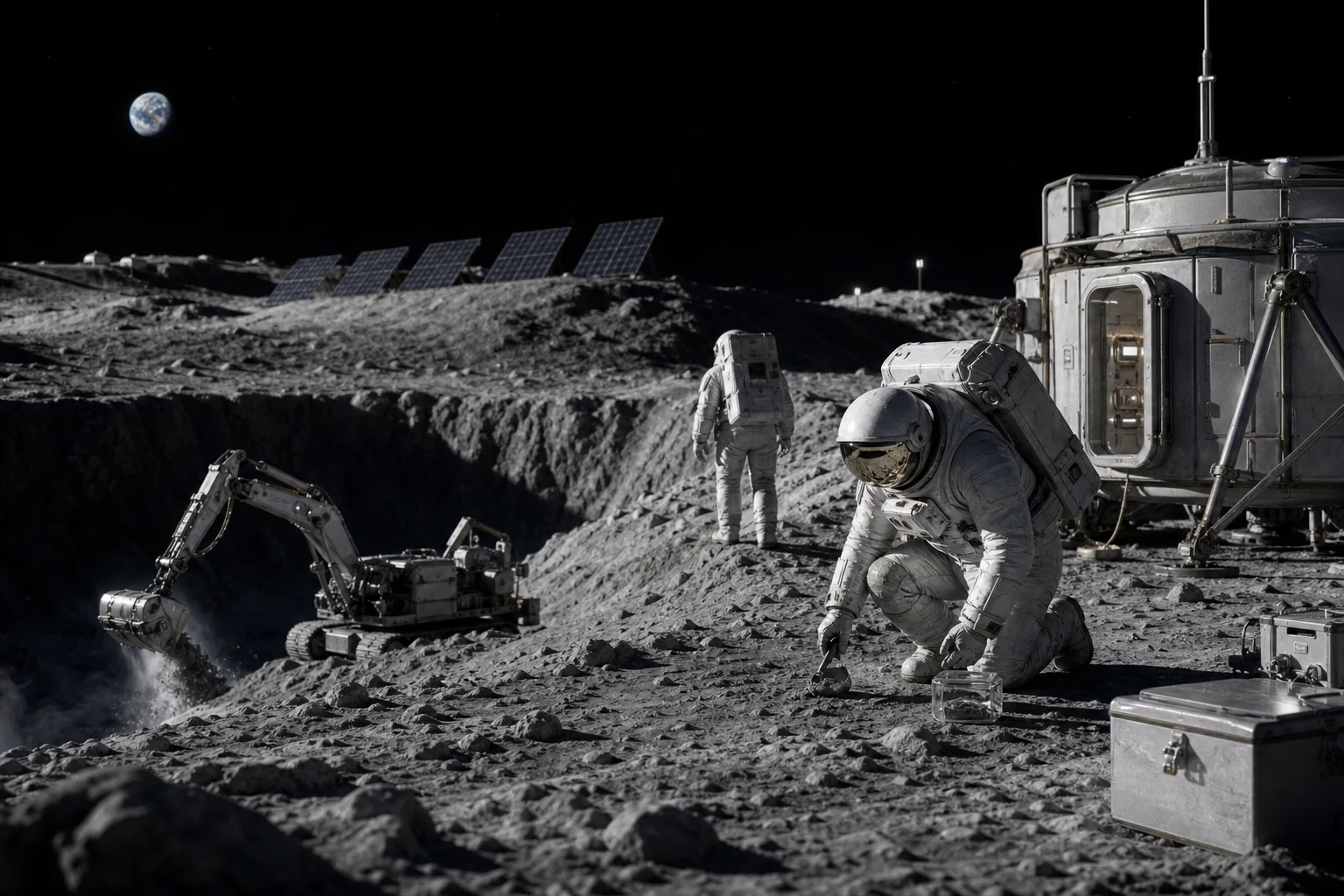
The first valuable resource on the Moon may not be helium-3 or a rare metal. It is water ice. Hidden in permanently shadowed craters near the poles, ice could provide drinking water, oxygen and hydrogen fuel. A deposit with reliable sunlight and safe landing terrain nearby could become the most strategically important real estate beyond Earth.
NASA now speaks of an enduring Moon Base near the lunar south pole and is seeking commercial systems for frequent transport and logistics. Other nations and companies have their own plans. The technology remains difficult, but the legal argument has already begun.
No nation may own the Moon
The 1967 Outer Space Treaty says outer space, including the Moon, is not subject to national appropriation by sovereignty, use, occupation or any other means. A country cannot plant a flag and convert a crater into national territory.
The treaty is less explicit about extracted material. The United States, Luxembourg and several other states have adopted the position that taking and owning resources does not equal owning the celestial body. Critics argue that large-scale extraction could become appropriation in practice, especially if access to the best sites is controlled for decades.
Lunar resource map
Where lunar interests collide
Explore why a small number of south-pole sites may attract competing uses.
Potential water ice
Permanently shadowed regions may preserve useful frozen volatiles.
Long-duration sunlight
Illuminated ridges could support steadier solar power.
Operational safety zone
Necessary separation must not quietly become territorial control.
Conceptual terrain—not a claim map. Deposits and operating zones require mission data.

The Artemis Accords model
The Artemis Accords are non-binding political commitments built around the Outer Space Treaty. Their signatories support resource extraction conducted in compliance with international law. They also propose temporary “safety zones” to prevent harmful interference around operations.
A safety zone sounds practical when a nearby landing could blast abrasive dust across delicate equipment. It becomes controversial if a zone is larger or longer-lived than necessary. At what point does deconfliction become exclusive control?
The south-pole bottleneck
The Moon is large, but premium polar locations may be scarce. Some ridges receive long periods of sunlight; some nearby craters may contain accessible ice; some terrain permits communication with Earth. These advantages overlap imperfectly.
Early operators could build pads, power systems, navigation beacons and storage facilities that make later missions dependent on their infrastructure. Ownership might emerge through contracts and practical control even without formal territory.
Science, heritage and commerce
Mining could contaminate volatile deposits before scientists learn what they record about the early Solar System. Exhaust and dust may travel far in the lunar vacuum. Radio-quiet regions on the far side are valuable for astronomy. Apollo landing sites and future heritage locations need protection.
At the same time, local resources may be necessary for a sustained human presence. Launching every litre of water and kilogram of oxygen from Earth is expensive. A ban on all extraction could freeze exploration; unregulated extraction could damage the very places we went to study.
Three questions law has not settled
- Who grants a right? National licences govern companies, but no global lunar land registry exists.
- How much is too much? Collecting grams for science is different from removing millions of tonnes.
- Who benefits? The Outer Space Treaty speaks of activities for the benefit of all countries, but it does not prescribe a royalty system.
The eventual answer will probably be a patchwork of treaties, national laws, operating agreements and customs created by the first missions. That makes the next decade unusually important. Rules established for a few exploratory landers may become precedents for a lunar economy.
No one owns the Moon. The harder question is whether humanity can use part of it without quietly turning use into possession.
Sources and further reading


latest video

news via inbox
Subscribe to our Cosmic newsletter to get notified when we have new articles.