AARO’s New Gulf of Aden and Middle East UAP Files: What the Reports Actually Say
A new government file is not the same thing as a solved mystery. In May 2026, the Pentagon’s All-domain Anomaly Resolution Office added a group of mission reports and case records involving the Gulf of Aden, Syria, the Persian Gulf, Iran and the Strait of Hormuz. The release matters because it places more sensor encounters into the public record. It does not, by itself, prove that the objects were extraordinary.
The most useful way to read these documents is case by case. Some may ultimately reduce to balloons, aircraft, birds, glare or parallax. Others may remain unresolved because essential metadata is missing. “Unresolved” describes the evidence available to analysts; it is not a conclusion about origin.
What AARO released
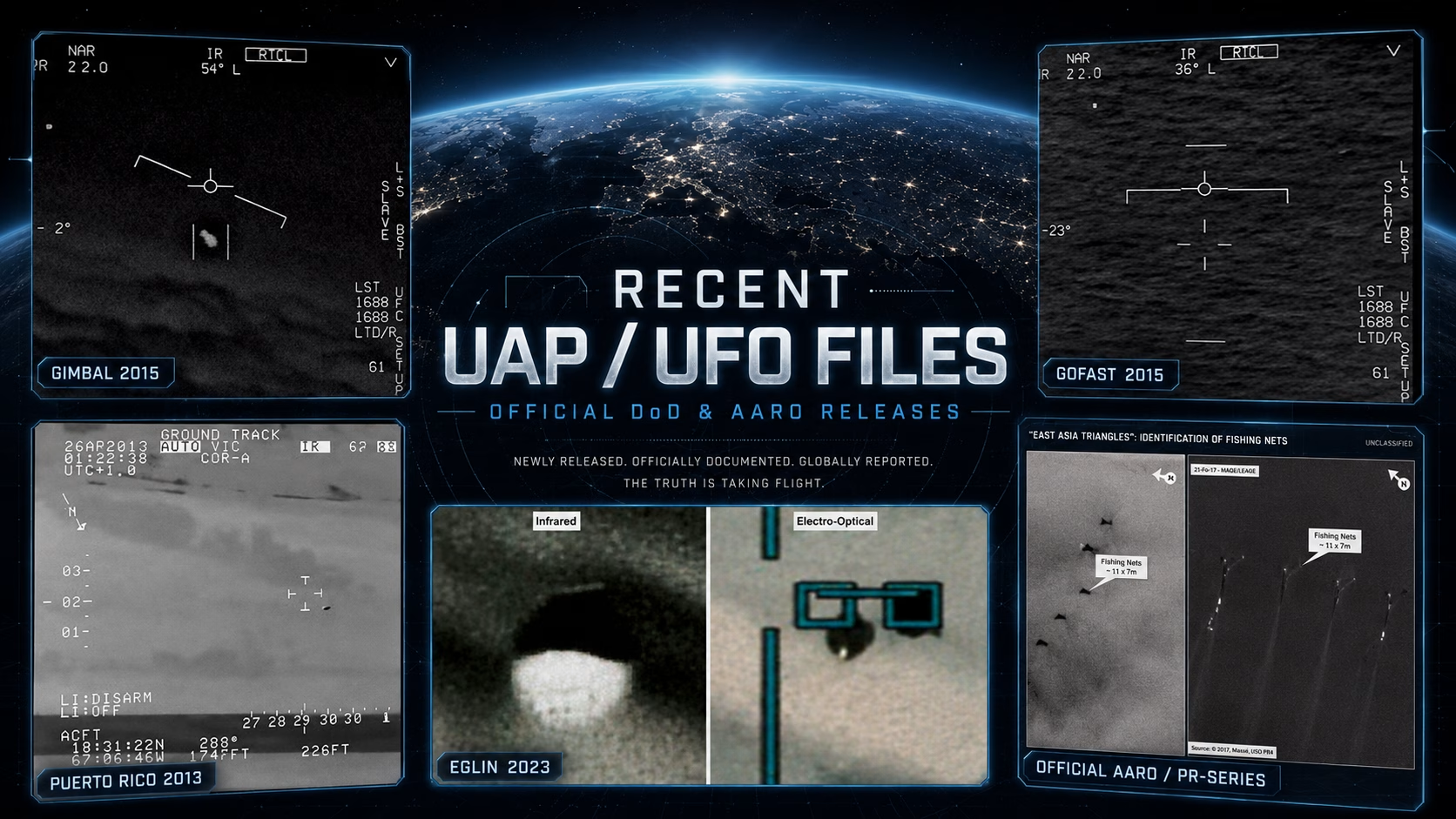
AARO’s 2026 mission-report page lists several records dated 8 May, including MR-75 for a 2024 Gulf of Aden incident, MR-74 for Syria in 2023 and MR-60 through MR-65 covering incidents reported around the Persian Gulf, Iran and the Strait of Hormuz in 2020. The office also published resolution reports and additional case material.
Why maritime UAP cases are difficult
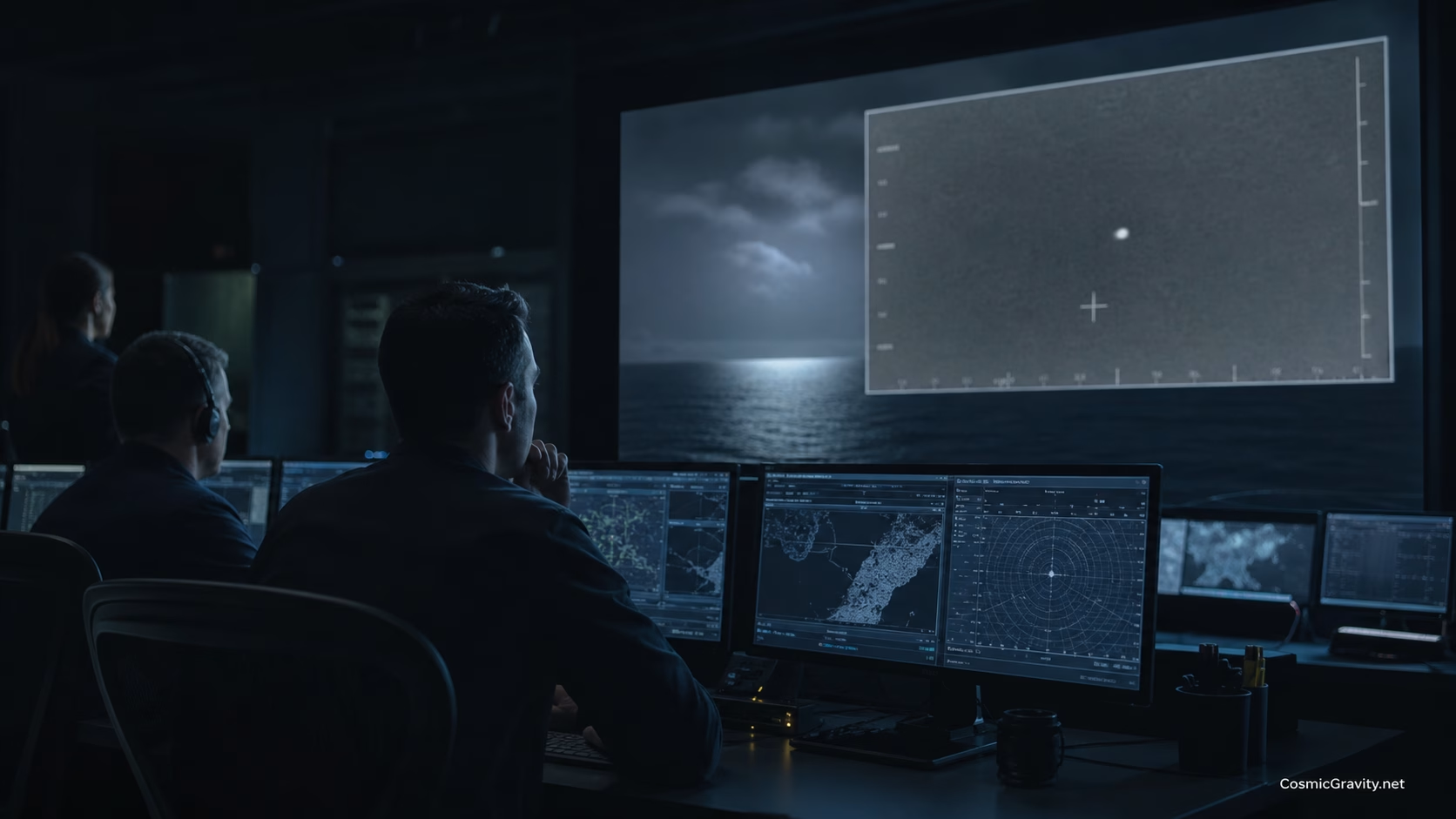
Ocean environments produce ideal conditions for misinterpretation. A sensor may be moving rapidly while observing a distant target against a featureless background. Humidity, thermal gradients and haze affect infrared imagery. Without range data, apparent speed can be dramatically exaggerated. At the same time, military platforms may collect several sensor streams unavailable to civilian witnesses, making some incidents genuinely valuable for study.
Interactive evidence ladder: evaluate a case
- Provenance: Is the original file available, with time, date and sensor platform?
- Geometry: Do we know range, viewing angle, aircraft motion and camera field of view?
- Multi-sensor support: Was the target also recorded by radar, another camera or independent observers?
- Environmental checks: Were balloons, aircraft, stars, satellites and weather considered?
- Extraordinary behavior: Is acceleration measured in calibrated data, or only perceived in the video?
- Reproducibility: Can independent analysts reach the same result from the released material?
The Gulf of Aden case
MR-75 draws attention because the Gulf of Aden is a heavily monitored maritime corridor. But location alone does not make an observation anomalous. Analysts need the original sensor data, platform telemetry, target range and details of any corroborating systems. A compressed clip can preserve the visual impression while removing precisely the information needed to calculate motion.
That is why our guide to UAP video analysis begins with geometry rather than appearance. A small object, a distant aircraft and a bright infrared source can each produce surprising imagery when the camera is stabilized on the target and the background moves.
Why official release still matters
Skepticism about interpretation should not become indifference to disclosure. Standardized records allow journalists, scientists and the public to compare cases across years and regions. They also expose missing data. If recurring incidents lack range measurements or raw files, that is itself a procedural problem worth correcting.
A stronger public archive would include uncompressed imagery, sensor specifications, timestamps, aircraft attitude, estimated range, weather data and a clear account of which hypotheses were tested. Classification will limit some releases, but redacted metadata can often be provided without revealing sensitive capabilities.
What the files do not establish
- They do not establish extraterrestrial origin.
- They do not show that every listed case remains unresolved.
- They do not make eyewitness testimony worthless.
- They do not rule out a small residue of genuinely unusual events.
The honest position is demanding but productive: take the reports seriously, insist on better data and refuse to turn uncertainty into a predetermined answer. Readers can place these cases in historical context through our Global UAP/UFO Case Atlas and follow continuing releases in the 2026 transparency tracker.
Sources and further reading


latest video

news via inbox
Subscribe to our Cosmic newsletter to get notified when we have new articles.