What the graves at Kom Abu Billo reveal about Egypt’s western Delta
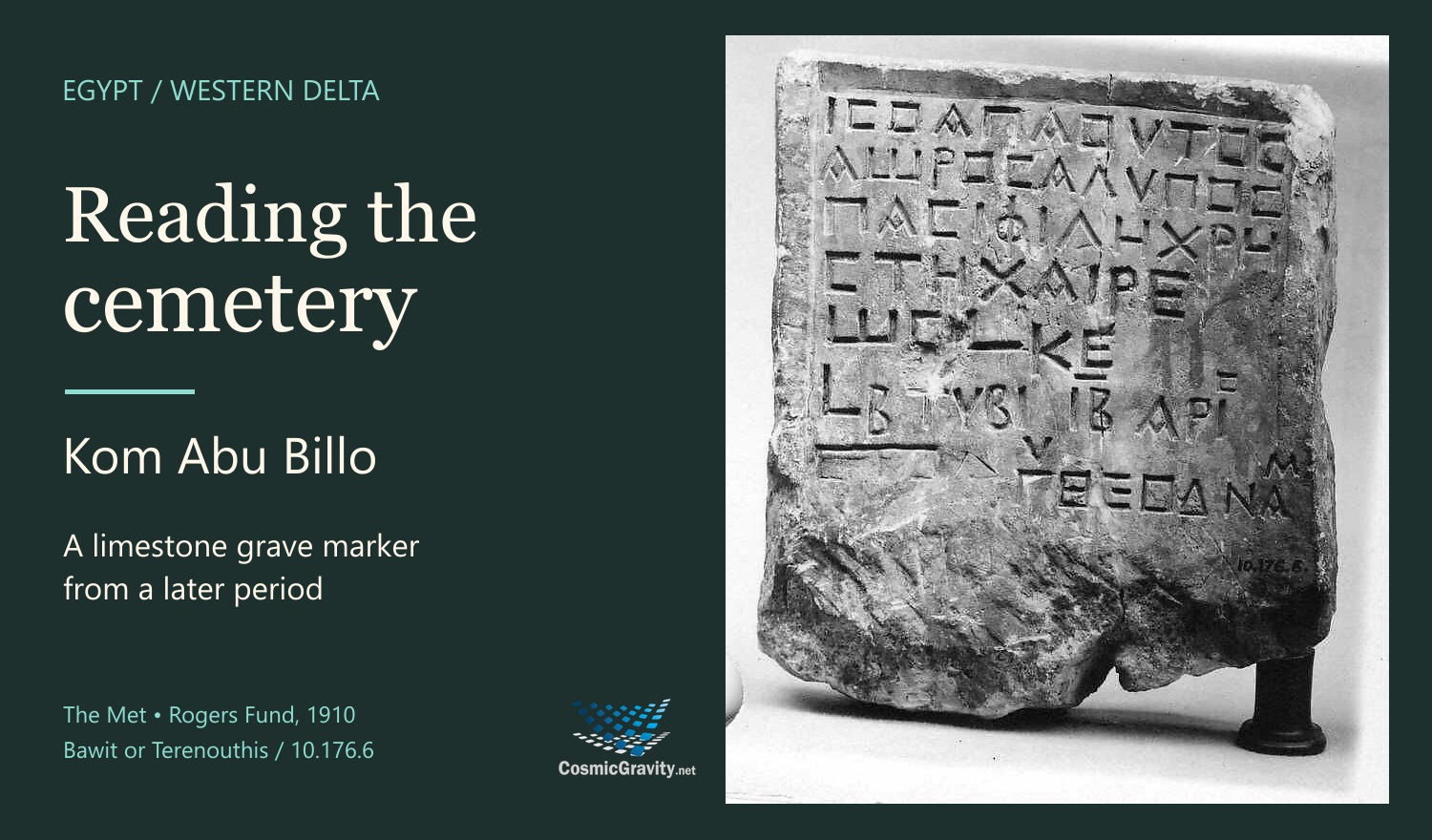
Feature image. A later comparison. The Met attributes this limestone marker to Bawit or Terenouthis and dates it broadly to the 3rd–12th century. It belongs to a different collection from the November finds. Photograph from The Metropolitan Museum of Art, Rogers Fund, 1910, object 10.176.6, public domain. Museum record.
A grave marker at the University of Michigan looked blank below the feet of its carved figure. Under ultraviolet light, part of a name appeared, followed by an age: about nineteen. The stone came from Terenouthis, the ancient town at modern Kom Abu Billo. On November 18, Egypt announced excavations at the same site that put a different question in reach. How did families bury their dead here across centuries of political change? Kelsey Museum conservation notes.
What the Kom Abu Billo excavators found
An Egyptian team working for the Supreme Council of Antiquities found hundreds of stone and pottery coffins, along with traces of wood from others. Some coffins follow the outline of a person. Others give the face exaggerated features. Even the structures around the burials vary. Builders laid mudbricks into vaults at some tombs and lined another tomb with limestone. Egypt’s State Information Service dates the cemetery evidence from the end of the Late Period through the Ptolemaic and early Roman periods. Read the Egyptian announcement.
Consider the difference between a stone lining and a clay coffin. The lining tells us how builders prepared the room. The coffin records a choice about the person it held. One burial might include both kinds of evidence. Counting the types of material in the announcement therefore gives us neither a count of graves nor a simple order in which funerary customs changed.
What went into a grave?
The excavators also report gold tongues, jewelry, amulets, offering tables and little glazed figures called ushabtis. Two falcon burials appear in the announcement too. The inventory invites questions that a photograph of a gold object cannot answer. Did a particular amulet lie beside a body, inside its wrapping or in soil disturbed when somebody opened a neighboring grave? Each position would support a different account of how it got there.
The town’s long history makes those distinctions especially important. A family living under Roman rule could recognize a much older Egyptian funerary image and choose it for someone they loved. Establishing whether a practice became more common over time takes groups of securely dated graves. An object’s presence in a cemetery used for centuries gives a researcher a starting point for that work.
What earlier finds can tell us about the people
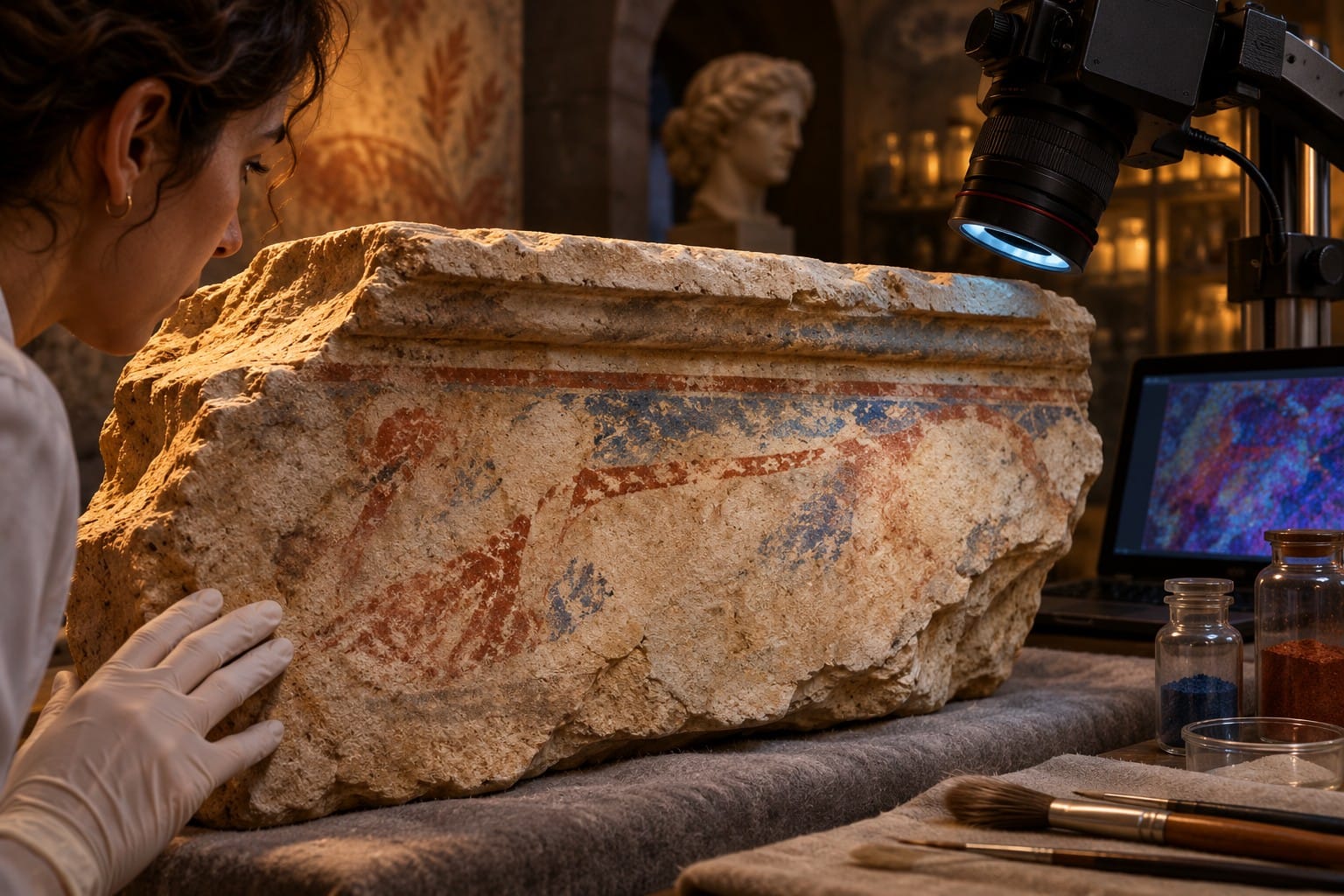
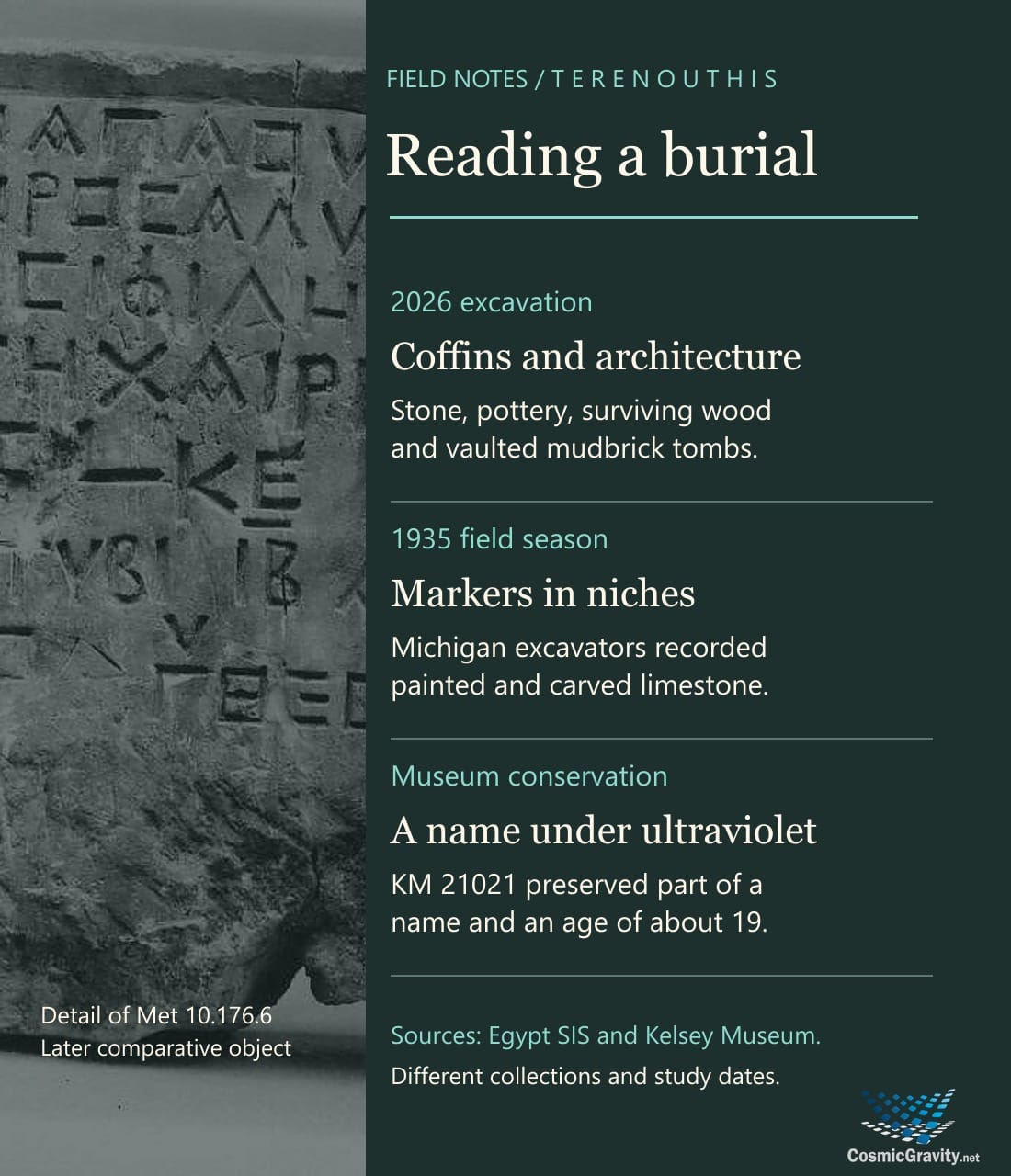
In 1935, Enoch Peterson led a Michigan expedition to Terenouthis. Its excavators recorded limestone markers set into niches. Greek inscriptions sometimes named the dead and gave their ages. About two hundred of these stones are now at the Kelsey Museum. Their paint matters as much as their carving. A conservator reading bare stone today sees less than a relative standing in front of a newly finished tomb would have seen. Michigan’s excavation record.
The nineteen-year-old is a particularly sharp reminder. Conservators recovered only the end of the name on stone KM 21021. They subsequently identified previously invisible inscriptions or imagery on twelve more markers. That work concerns the older collection. It also suggests a practical question for the newly excavated material: what survives on a surface after an inscription becomes too faint to read by eye?
For now the November announcement gives us building materials, burial forms and a span of occupation. A published grave-by-grave catalogue could connect those things to individual lives. For another example of how the location of an Egyptian find changes what researchers can say about it, see the bronze ring recovered at Alexandria’s lighthouse site.



latest video


news via inbox
Subscribe to our Cosmic newsletter to get notified when we have new articles.