How a CT Scan Helped Reveal the Schaalby Bronze Vessels
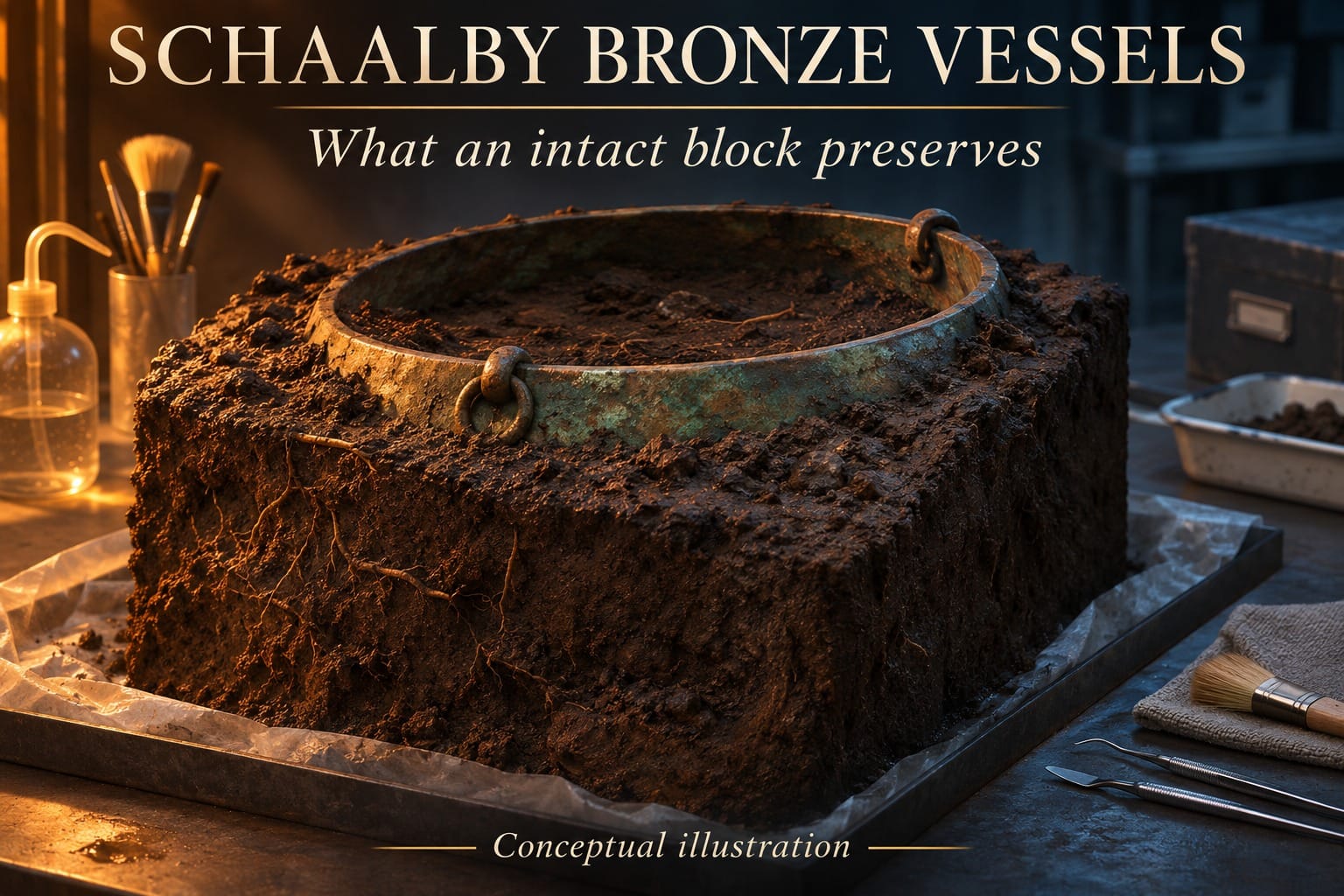
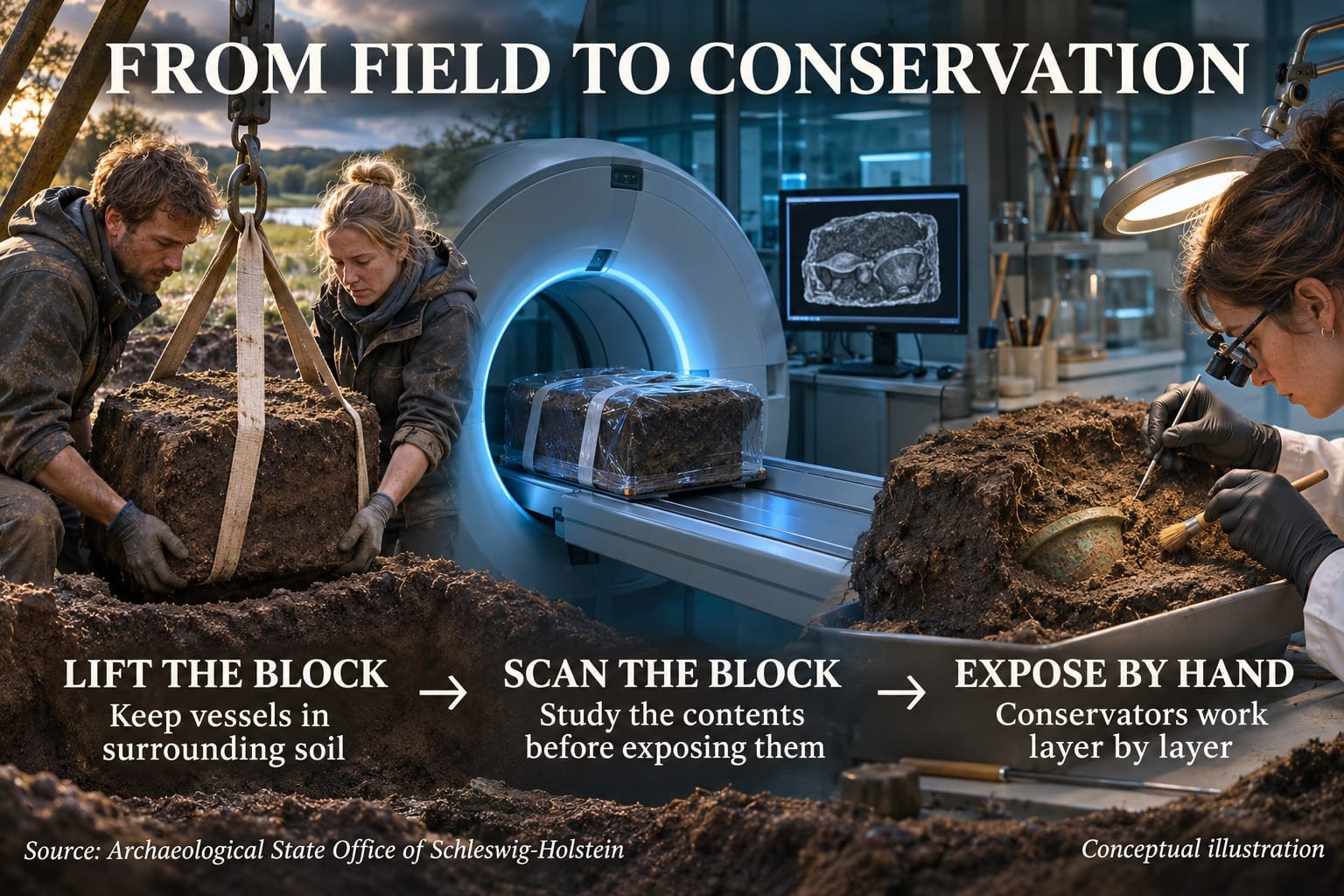
When archaeologists excavated fragile bronze vessels near Schaalby in northern Germany, they lifted the soil around them as well. Taking each vessel out in the field could have damaged thin walls and disturbed the contents. Lifting a block gave conservators the chance to scan the objects before exposing them. They could then see where one vessel sat inside another and decide where to work first. Field report from the Archaeological State Office of Schleswig-Holstein.
When were the Schaalby bronze vessels found?
A Danish detector group working with permission and in contact with the state archaeology office found the vessels in late 2025. Specialists lifted them in April 2026. The state office dates the types to the third through fifth centuries CE, spanning parts of the Roman Imperial and Migration periods. The latest reports concern their first public presentation at Schleswig’s November archaeology day. That presentation came after a year of recovery and conservation work. State archaeology day programme · NDR’s report on the public presentation.
Why lift the whole block?
Soil can support thin or cracked metal until a conservator is ready to expose it. The state office describes wrapping and reinforcing the block before transport. This also helped preserve the relative positions of the finds. For an object that turns out to contain something else, knowing what sat inside it matters. A list made after the objects are separated loses that spatial relationship unless it has already been recorded.
The team sent the block for computed tomography, or CT. A scanner measures how X-rays pass through the block from many directions and uses those measurements to reconstruct slices. The slices helped show where the vessels and other changes in material lay within the soil. The conservator could use that information to plan her approach before touching a fragile edge. NDR’s account from the conservation workshop.
What could the conservators see?
Three vessels had been recognised in the field. The scan helped reveal two more among them, bringing the count to five. The physical examination still mattered because a scan can show shape and position while leaving some details about condition and material for direct inspection. A pattern on a shallow vessel, for example, raised the question of whether it was applied decoration or a trace from something that once rested against it.
The scan also provides a record of the block before the objects are taken apart. If conservators find a fragile fragment while clearing the soil, they can refer back to its original position and see how it lay in relation to the surrounding vessels.
Why were they buried together?
The state office identified some of the vessels as Vestland-type cauldrons, forms made within the Roman sphere that reached places farther north. The type gives archaeologists evidence of connections across regions. The objects could have changed hands more than once before reaching Schaalby. The reason for placing them in the ground is still open. The project has discussed a deliberate deposit and a burial context as possibilities.
The object group and its surrounding sediment can be examined together for evidence bearing on those possibilities. That is one reason the recovery method matters after the objects reach a display case. Our account of a bronze sword found at Lake Mezzano follows another case in which the surroundings help explain what a metal object can tell us. Read about the Lake Mezzano sword.

latest video



news via inbox
Subscribe to our Cosmic newsletter to get notified when we have new articles.