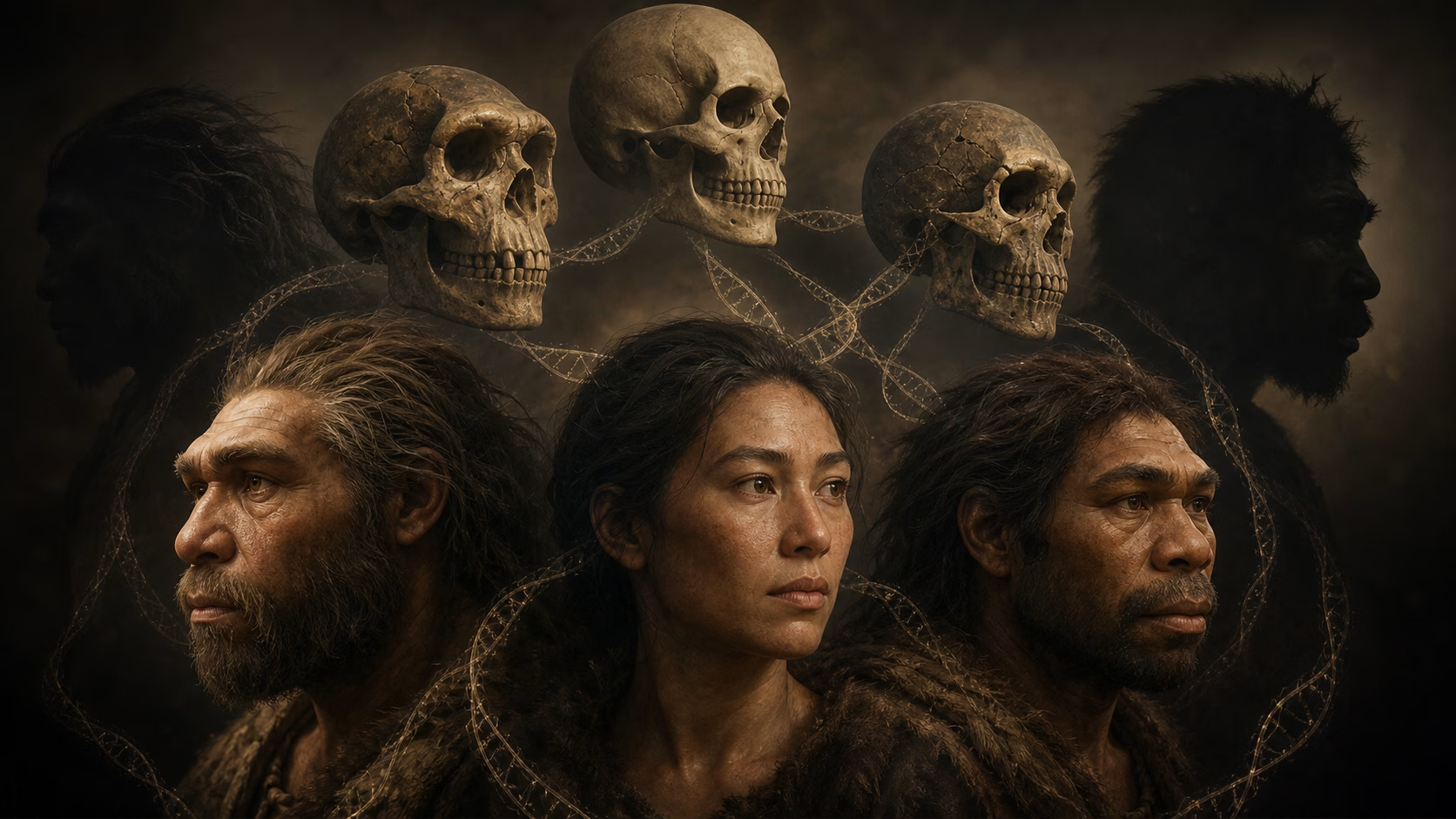
Ghost Ancestors Left Their DNA in Modern Humans
Human evolution is becoming less like a family tree and more like a braided river. A new genetic method has identified ghost ancestor DNA inherited from two ancient human populations whose genomes have never been sequenced.
The research, announced by UC Berkeley in July 2026, places specific stretches of modern and archaic genomes into a timeline of interbreeding. One contribution appears to come from a human lineage that lived more than a million years ago.
What is a ghost ancestor?
A ghost population is not imaginary. It is a group whose former existence is inferred from genetic patterns even though scientists do not possess a complete sequenced genome from its fossils.
Neanderthals and Denisovans were once genetic ghosts too. Fossil remains and ancient DNA eventually provided direct reference genomes. Other lineages may have lived in climates where DNA preservation is poor or may not yet be represented by recognised fossils.
Finding ancestry without a reference genome
Most ancestry methods compare a modern genome with known reference populations. That works well when researchers have Neanderthal or Denisovan DNA to match. It is much harder when the contributing population is unknown.
The new approach examines genealogical relationships along the genome. Recombination breaks inherited DNA into smaller pieces over generations, while mutations accumulate with time. The length, pattern and relationship of segments can therefore indicate when populations mixed and whether some material came from a deeply separated lineage.
Instead of asking, “Does this match a known fossil genome?” the method asks, “What ancestry history is required to produce this genetic pattern?”
Two unknown lineages emerged
The analysis points to at least two ghost contributions alongside the already known mixing among modern humans, Neanderthals and Denisovans. The most striking appears to involve a “super-archaic” lineage separated from other humans for an extremely long period.
Researchers estimate that this population lived more than a million years ago. Its DNA later entered another archaic group and, through additional encounters, a small portion survived in people living today.
This does not mean a modern human directly met a million-year-old ancestor. The inheritance likely passed through a chain of populations across hundreds of thousands of years.
Evolution was not a clean sequence
Popular illustrations often show one species replacing another in a neat march toward modern humans. Genetics reveals repeated contact. Groups separated, adapted to different regions and later met again. Some encounters produced children whose descendants carried DNA across continents and millennia.
Neanderthal ancestry in many living populations is the best-known example. Denisovan ancestry is especially important in parts of Asia and Oceania. Ghost ancestry shows that these were not isolated exceptions but part of a broader pattern.
What can this DNA tell us?
Inherited archaic variants can affect immunity, metabolism and adaptation to environments such as high altitude. Researchers will now examine whether the newly mapped ghost segments influenced traits in ancient or living populations.
Care is needed. A genetic contribution does not define ethnicity, culture or identity. Genes record biological relationships; archaeology and history are required to understand how people lived and saw themselves.
The same distinction appears when interpreting ancient communities such as Göbekli Tepe. Bones and tools reveal parts of a society, but they do not automatically explain its beliefs or social bonds.
Can fossils identify the ghosts?
Possibly, but matching will be difficult. Several ancient human fossils resist simple classification because they combine traits found in different lineages. The genetic result can guide palaeoanthropologists toward regions and periods where an unknown population may have lived.
Future discoveries might yield protein sequences or fragments of DNA even when a complete genome is impossible. Those molecular clues could connect a named fossil population to one of the inferred genetic ghosts.
A deeper human inheritance
Ghost ancestor DNA makes the human story more complex, but also more recognisable. Populations moved, met and mixed. Extinct groups did not always disappear without a trace; some became part of later people.
Archaeological finds such as the Nebra Sky Disc show how ideas travelled through ancient Europe. Genetics tracks a much older movement—not of objects or knowledge, but of people and inherited biology.
The discovery does not close the book on human origins. It reveals that entire chapters remain hidden inside living genomes, waiting for methods capable of reading them.


latest video


news via inbox
Subscribe to our Cosmic newsletter to get notified when we have new articles.