Iron Age Wells in Hampshire Reveal How One Spring Served Two Eras
One of the Iron Age wells in Hampshire broke while it was still in use. Someone supported the damaged section with the wooden blade of a shovel. Centuries later, builders working at the same spring lined a rectangular pit with planks and stakes. Archaeologists now have unusually well-preserved pieces of both designs, uncovered ahead of a modern water pipeline north of Southampton. UCL Archaeology South-East excavation announcement, 5 November 2026.
The team reported five wells. Four are thought to belong to the Iron Age and one to the Roman period. The interest lies in how the different structures made use of the same source. The wood also preserves small decisions that would normally disappear from the record, including evidence of a repair.
How the Iron Age wells in Hampshire were made
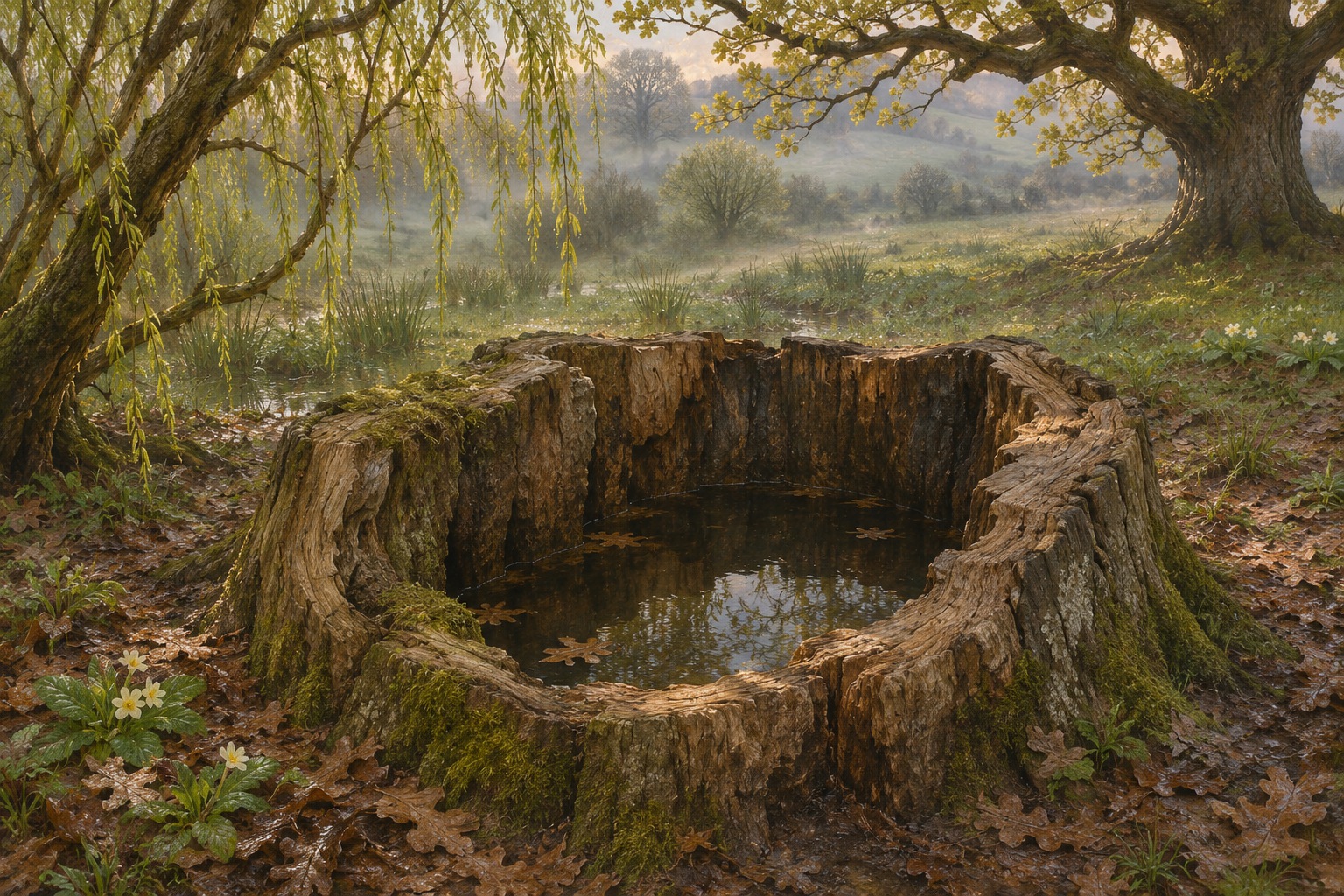
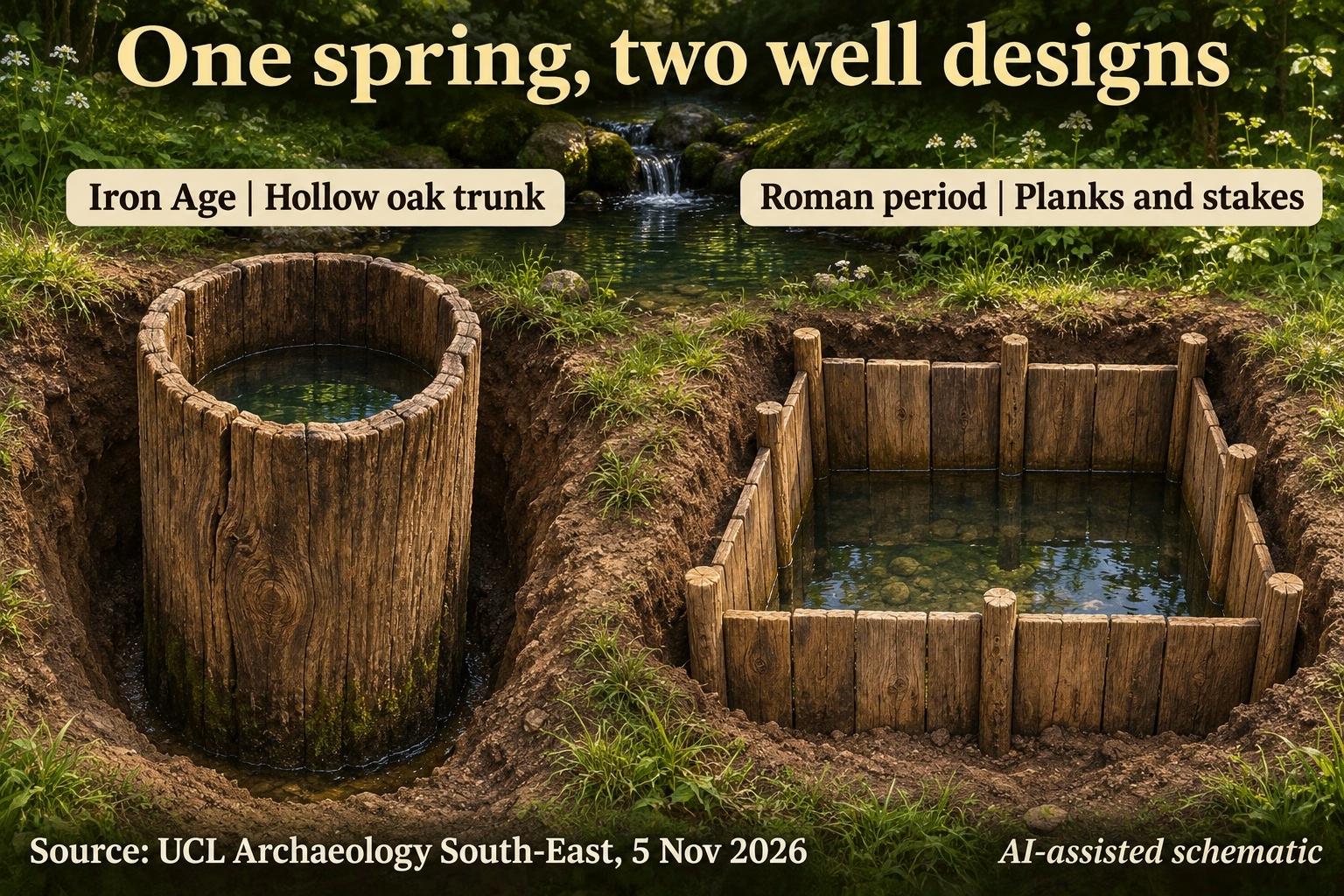
For the earlier wells, builders set sections of hollow oak trunk into pits. One had an extra ring of stakes for support. The team measured the largest at about 70 centimetres across. Someone reused the shovel blade in a different well. Those two details show why the four structures are worth studying individually, even though they share the same basic design.
A hollow trunk gives a well a lining with a single curved wall. In use, it helps hold soil away from the place where people collect water. The Hampshire find also shows what could happen when a lining failed. The surviving blade is evidence of someone patching the structure with a piece of wood that had already served another purpose. The excavators can still see axe marks on some timbers, another glimpse of the work that went into the wells.
How long did people use the spring?
UCL reports a radiocarbon date of 719–396 BC for the construction of one of the wells. That broad range applies to a single structure. Pottery from within and around the wells points to use of the water source into the later Roman period. Taken together, those finds show that the spring drew people back over a long span. They leave room for gaps, rebuilding and changes in who collected water there.
The Roman well was a shallow rectangular pit lined with timber planks and stakes. The excavators’ initial identification suggests that its wood was largely oak too. An important question now is whether the timber preserves a sequence of repairs and replacements. Archaeology South-East made a series of three-dimensional models from overlapping photographs as the excavation progressed. Because the team recorded the timbers before lifting them, researchers can return to their positions and relationships when studying the pieces in the lab. Field recording and timber analysis.
Why the wood survived
Wet ground around the spring kept oxygen levels low, slowing the processes that normally destroy buried wood. The well linings survived because of their surroundings. Taking them out changes those conditions. UCL says the team is keeping the timbers in water tanks while specialists study them. That gives the conservators time to work with material that can be fragile once exposed.
Specialists also plan to compare growth-ring patterns in some of the Roman timbers. This method, called dendrochronology, could narrow the date of their construction if the patterns can be matched to a dated reference sequence. Pollen and other plant remains from the site may help reconstruct the surroundings. Those analyses are still in progress, so the report from Hampshire is the beginning of that part of the story.
There is a parallel in our coverage of the building uncovered at Buto. In both excavations, work hidden below ground gives clues to how people built for local conditions. At Hampshire, one of the clearest clues is the old shovel blade, left where it could keep a well working.



latest video



news via inbox
Subscribe to our Cosmic newsletter to get notified when we have new articles.