A single scratched letter leaves a Greek mountain sanctuary unnamed
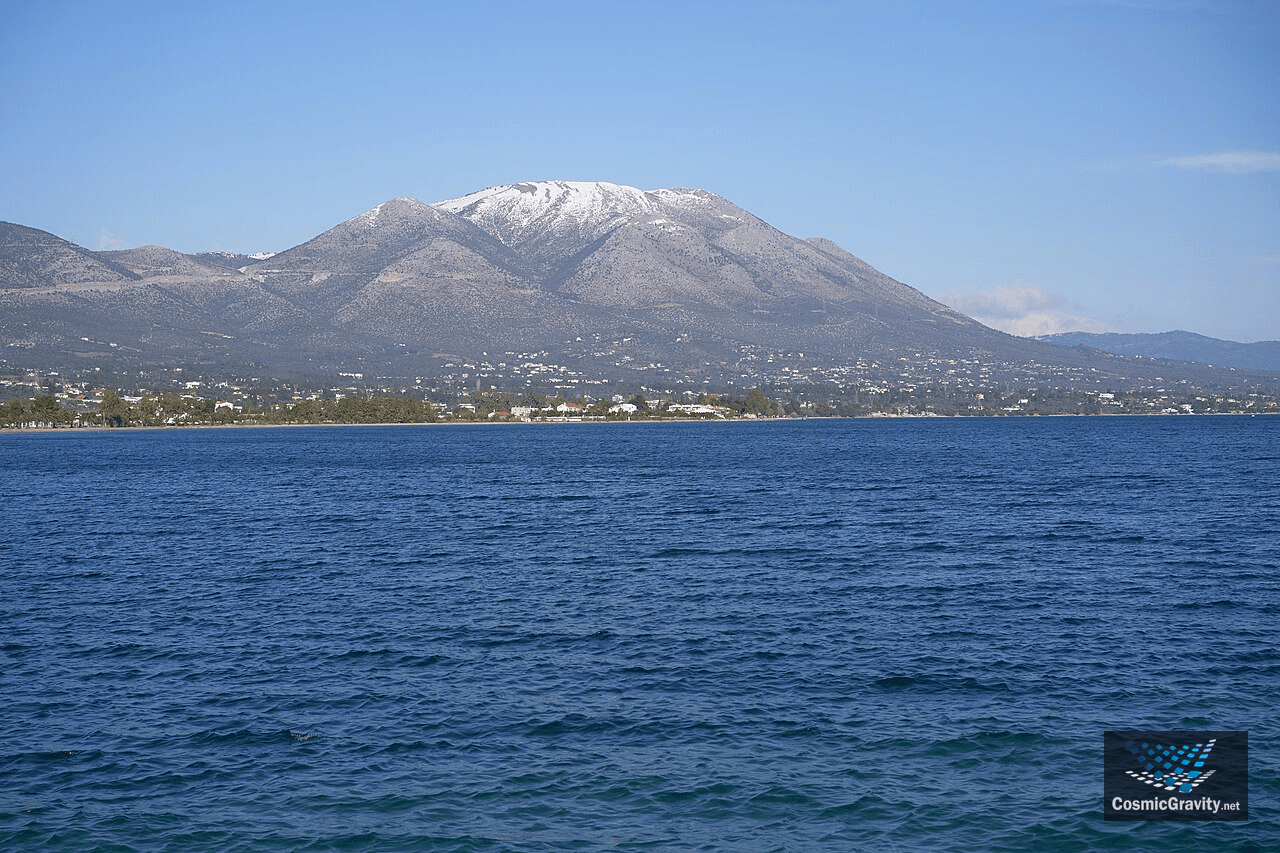
Somebody scratched a letter into a pot that eventually broke on a mountain above Eretria. Enough of the mark survives for an archaeologist to suggest two readings, alpha or delta. That leaves a tantalising question at the Elatias peak sanctuary. People carried vessels up this steep shoulder of Mount Olympus on the Greek island of Euboea for centuries. Whom did they come to honour?
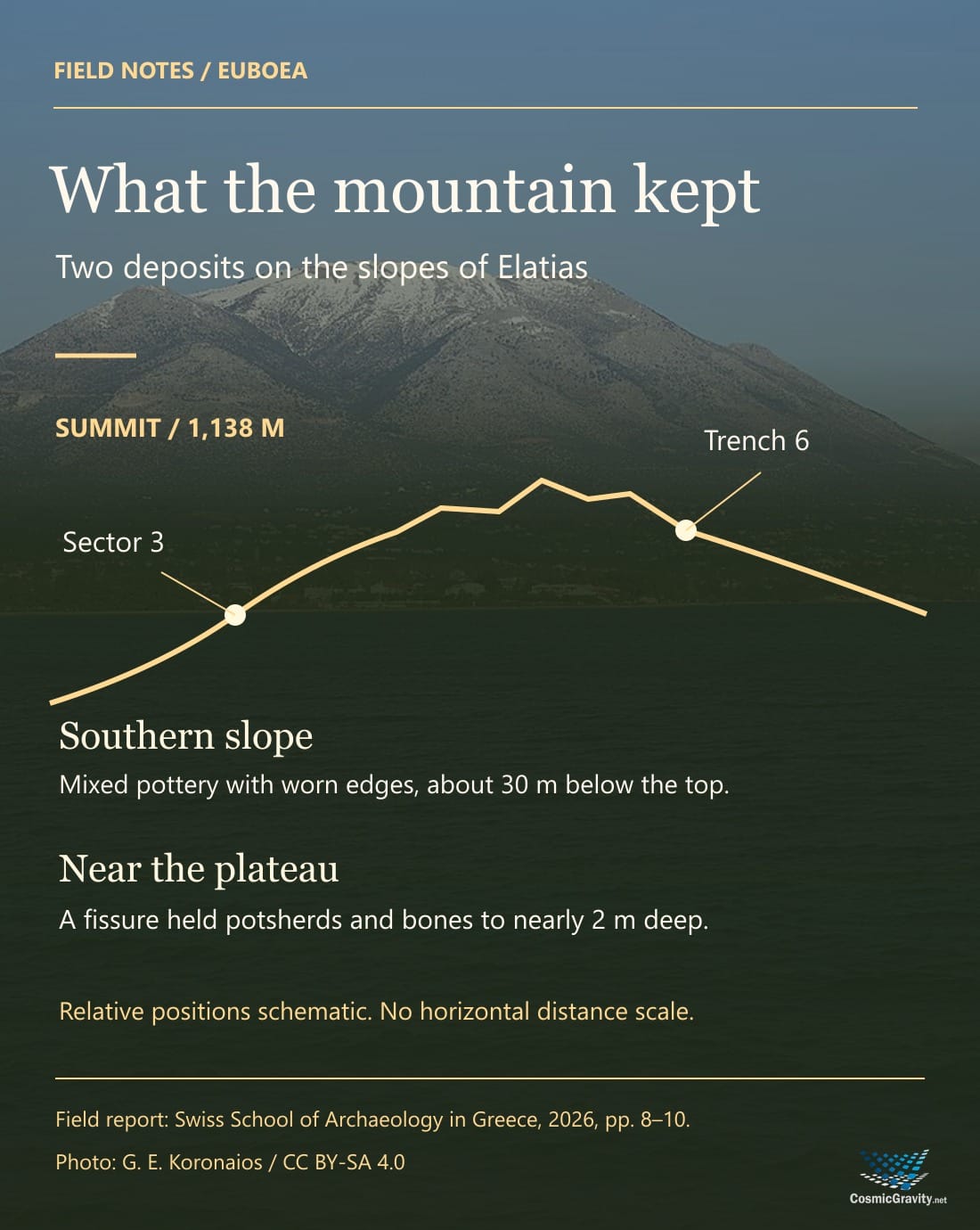
Feature image: Mount Olympus on Euboea from Eretria, January 16, 2020. Photograph by George E. Koronaios. Cover layout and infographic adaptation by CosmicGravity, CC BY-SA 4.0. Original image. Image licence.
The best place to begin is a crack in the limestone. During five days of digging in June 2026, a Greek-Swiss team found that the mountain had preserved two quite different records of what people did there. The distinction is easy to miss in photographs of the rocky slope. Chloé Chezeaux and her colleagues map the trenches side by side on page 8 of the Swiss School of Archaeology’s 2026 field report.
Where the Elatias peak sanctuary kept its evidence
The investigators started with a promising scatter on the southern side, about 30 metres below the summit. Potsherds turned up readily. But pieces centuries apart in age lay together, and even deeply buried fragments had rounded edges. Water and weather had been shifting debris downhill. A map showing where those pieces ended up would make a poor plan of where people once stood.
Closer to the summit, the excavators opened Trench 6 a few metres below the plateau. Under a heap of limestone, a natural opening held dark soil packed with animal bones and hundreds of ceramic fragments. The team explored the deposit to a depth of nearly two metres. The rock had done something a building might otherwise have done. It had caught material on an exposed mountainside and held it there.
A jug, a bowl and a much longer story
Two vessels illustrated in the report put that depth of time into human terms. One is an eighth-century BCE pouring jug with a mouth shaped like a three-lobed leaf. The other is a mould-made relief bowl dated to the second or first century BCE. Someone using the later bowl was already hundreds of years removed from the person who handled the jug. The school’s field summary traces use from the Geometric period into Roman imperial times. The detailed trench account treats the latest pottery more cautiously.
Sheep and goats account for most of the identified bones. Some pieces show burning, in places intense enough to calcine them. Those traces fit offerings or meals at a place of worship. Identifying which parts of the animals people carried up, butchered or burned would help distinguish those activities. Centuries of material gathered in one fissure leave room for more than one custom.
What would identify the deity?
A dedication found down in Eretria gives Artemis the epithet Olympia. That makes Artemis a reasonable candidate for the summit. The missing link is a dedication that names her here. The published drawing of the fragment on page 10 shows how little of the lettering survives. The excavators also consider Zeus. Neither name can be read from that mark alone.
A reader coming from the city sanctuary at Epidaurus might expect buildings to give an ancient place of worship its outline. At Elatias, follow the sherds uphill instead. Their worn edges point to where evidence moved. The protected fissure shows where it collected. And the tiny scratch on a piece of pottery tells us precisely where the excavators’ answer runs out.



latest video



news via inbox
Subscribe to our Cosmic newsletter to get notified when we have new articles.