Isle of Man Viking Finds Raise the Question of a Double Burial
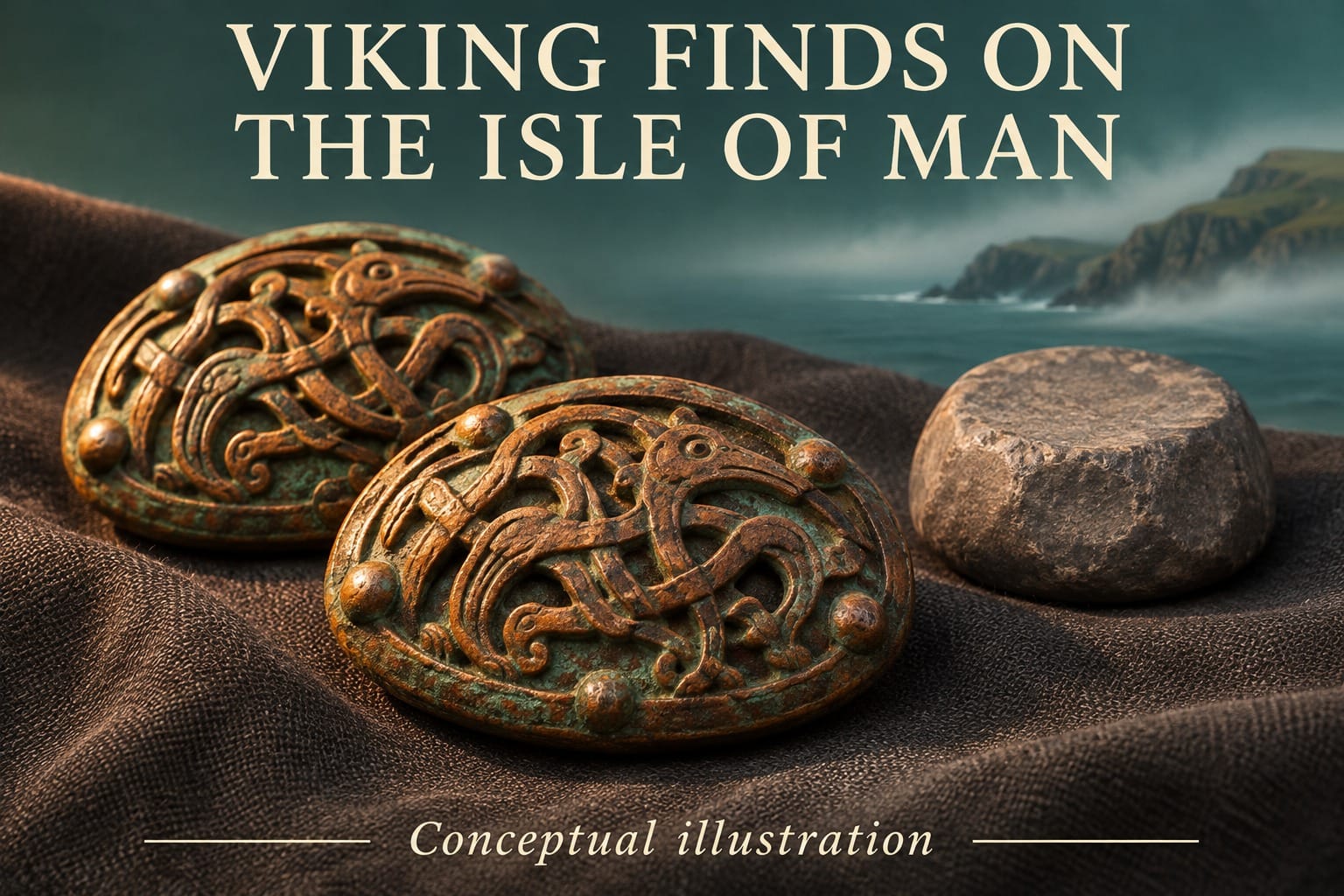
Three brooches, a broken sword and a set of trading implements have brought an early chapter of Viking settlement on the Isle of Man into view. The objects date to around AD 900. A selection went on display at the Manx Museum in Douglas on 11 November 2026, two days after the find was declared Treasure. The mix of jewellery and weapons raises a question the objects alone cannot settle. Were they placed with two people in the same grave, or in separate burials close together? Manx National Heritage’s announcement and video.
What do the Viking brooches tell us?
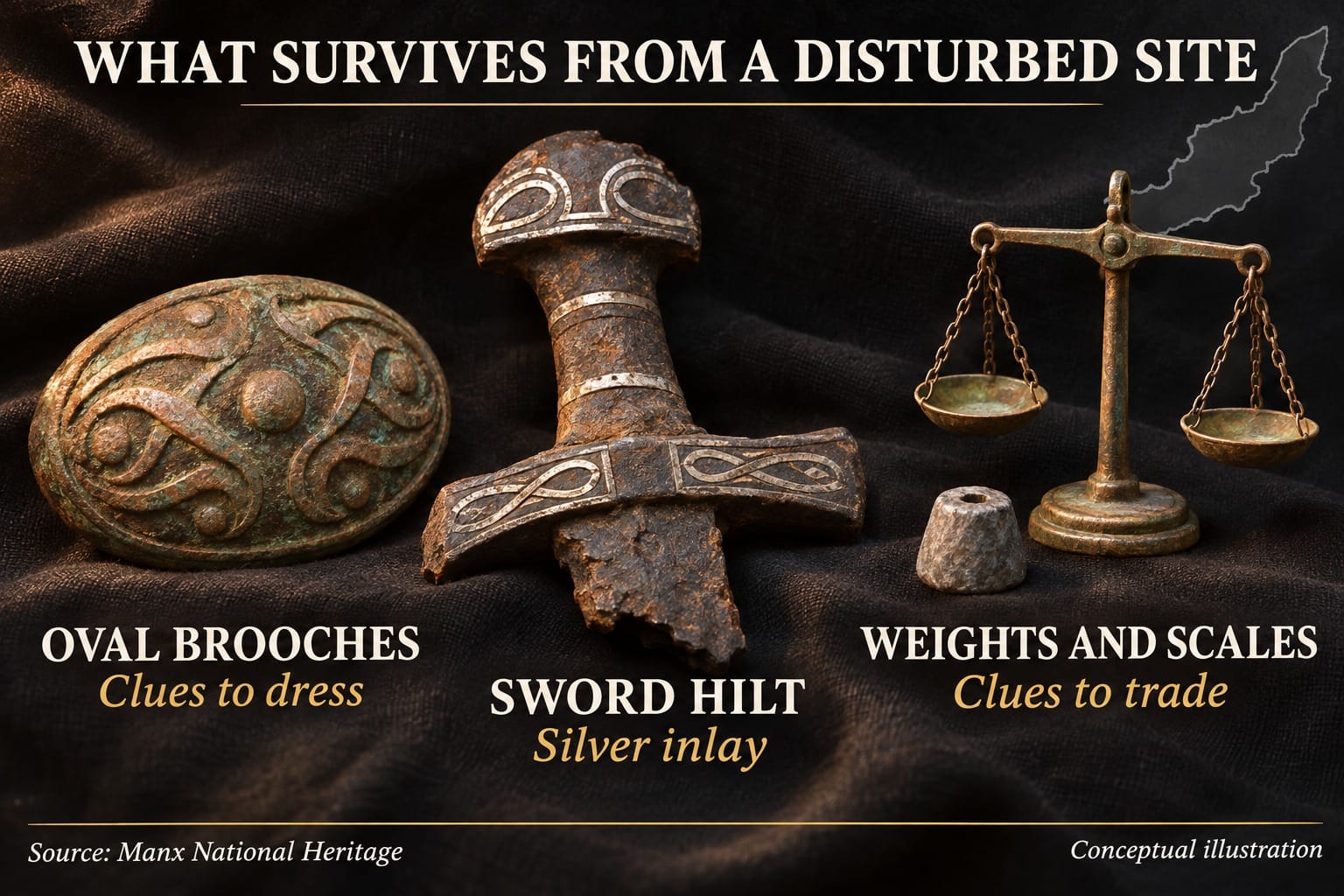
Two oval brooches carry designs of interlocking animals. This form of paired jewellery is typically associated with women’s dress in the Viking Age. Manx National Heritage says the pair could be about 50 years older than another pair recovered on the island in 2018. If the dating and burial interpretation hold, these would be evidence for the earliest female Viking Age burial currently known on Man. A third brooch has spiral decoration and a glass centre and was originally gilded. The heritage body describes it as the first example of its kind found on the island. Museum account of the 2018 pair.
The 2018 comparison also shows why jewellery and burial evidence have to be read together. A glass bead and belt fittings were found alongside those brooches, and the museum commissioned a targeted excavation. The dig did not locate a grave. A distinctive artefact can help narrow a date and suggest how it was used. Whether it lay beside a person depends on evidence from where it was found. In 2018 the bead’s Irish origin and the likely Irish Sea origin of the belt fittings suggested cultural exchange even without a surviving grave to examine.
Was it a double burial?
The sword is the thirteenth Viking sword recorded from Man, according to the museum. Roughly two-thirds survives. X-rays brought out fine silver inlay and twisted silver wire on the hilt. The museum suggests that some of the breakage may reflect a burial rite, with further damage after burial. Detectorist Daniel Crowe left the objects uncleaned, preserving traces for conservators to examine. Rhett Britton helped search and recovered material including an axehead and part of the scales. Manx Radio’s coverage of the declaration.
The proposed double burial rests partly on the association of the brooches with women’s dress and of the sword with men’s graves. Since the original site was disturbed, separate graves of roughly the same age are also possible. A comparison comes from the excavated cemetery at Horbourg-Wihr, where recorded grave layouts help archaeologists identify which objects accompanied each burial.
What do small weights add to a story about settlers?
Fragments of a bronze balance and decorated lead weights point to skills useful in exchange, when traders might weigh precious metal or coins. The museum notes that one weight bears a decorative fitting in a style found in Britain and Ireland, possibly reused from another object. That reuse provides a clue to movement across the Irish Sea even when a specific maker or voyage cannot be identified. With the sword and brooches drawing most attention, the trading tools give visitors a way to ask how the island’s early Scandinavian communities obtained, valued and reused objects. Museum introduction to Viking Man.


latest video



news via inbox
Subscribe to our Cosmic newsletter to get notified when we have new articles.