UAP Research Gets a Scientific Playbook From the Naval Postgraduate School
The public UAP debate often swings between two unhelpful extremes: instant dismissal and instant certainty. A 2026 special issue from the U.S. Naval Postgraduate School tries to move the subject into a more productive space—repeatable measurements, better sensors and accessible data.
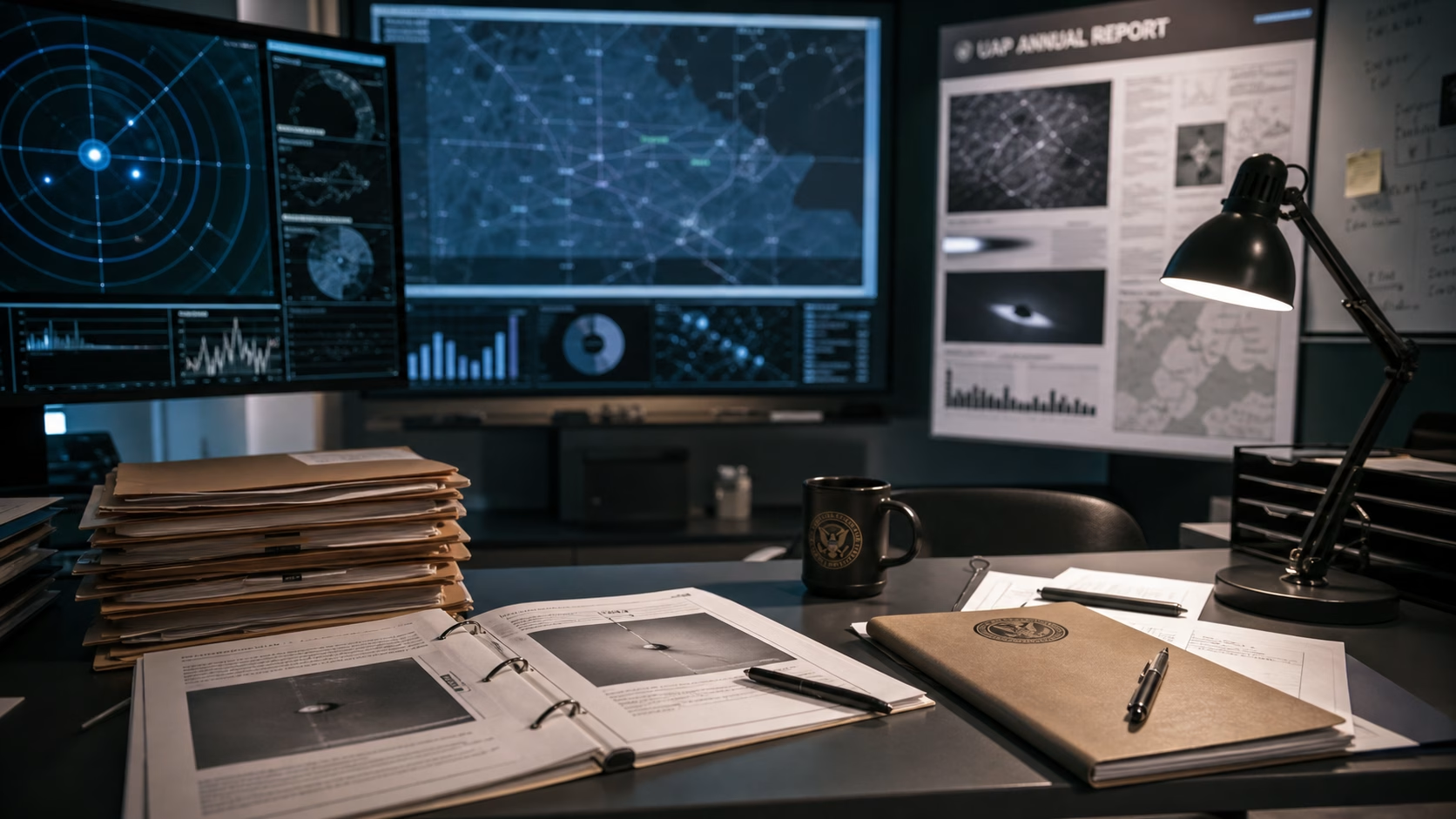
Published through the Combating Threats Exchange journal in cooperation with AARO, the collection focuses on scientific UAP research. Its subjects include data vetting, event-based cameras, military observations in Ukraine and practical guidance for citizens trying to record unusual events.
Institutional attention has clearly changed
A decade ago, serious academic or military discussion of UAP was often avoided because of stigma. That environment has shifted. NASA has completed an independent UAP study, AARO publishes case material, the U.S. National Archives is building a permanent UAP collection and the Naval Postgraduate School is openly soliciting technical research.
None of those developments proves a single explanation for every case. They do establish that the subject is considered relevant to aviation safety, intelligence, sensor performance and science. That matters because decades of reports from pilots, radar operators and civilians cannot be evaluated well if witnesses fear professional damage or if raw data disappear.
The hardest problem is not a lack of stories
UAP research has an abundance of testimony and a shortage of calibrated, synchronised measurements. A witness may accurately describe something strange while distance, size and speed remain unknown. A video can preserve a real event but still fail to distinguish an unusual object from parallax, glare or a distant balloon.
The special issue addresses this directly through data vetting and accessibility. Researchers need original files, sensor settings, time stamps, platform position, viewing geometry and local environmental information. A compressed social-media clip may be compelling, but it strips away much of what an analyst needs.
That is why careful UAP video analysis starts with the instrument and context rather than the shape people imagine on screen.
Event-based cameras could change detection
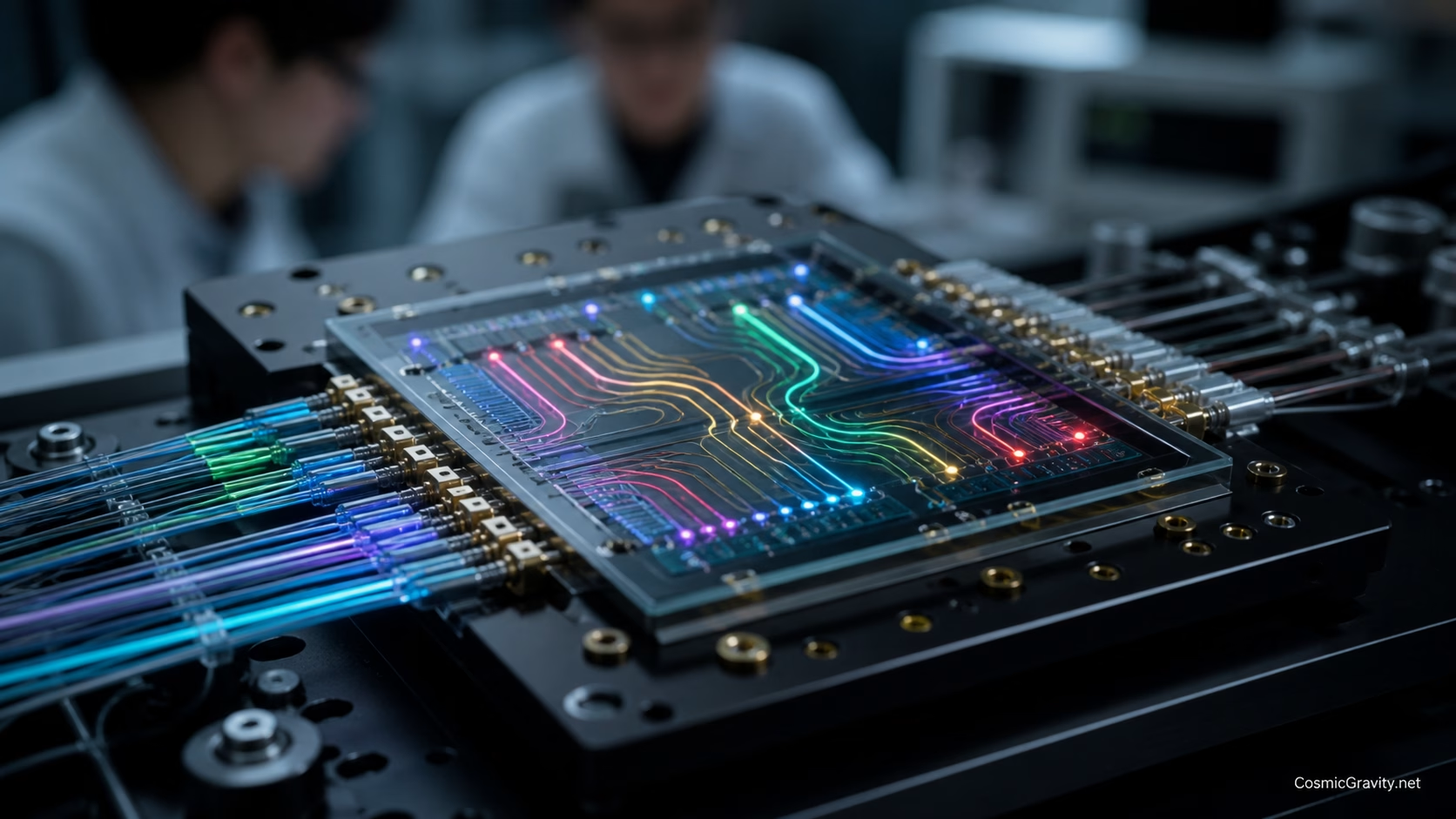
Conventional video records complete frames at fixed intervals. Event-based sensors work differently. Individual pixels respond when brightness changes, producing precise timing with high dynamic range and relatively low data volume.
For fast, faint or unpredictable targets, that can be valuable. A network of event-based cameras placed around military ranges, airports or other controlled locations could record motion without continuously storing enormous video streams. If two or more calibrated stations see the same event, triangulation can estimate distance and true speed.
Event-based sensing is not a magic detector. Birds, insects, satellites and aircraft still produce signals. Its strength lies in adding another measurement channel that can be synchronised with radar, infrared and ordinary optical cameras.
Military observations are not automatically simple
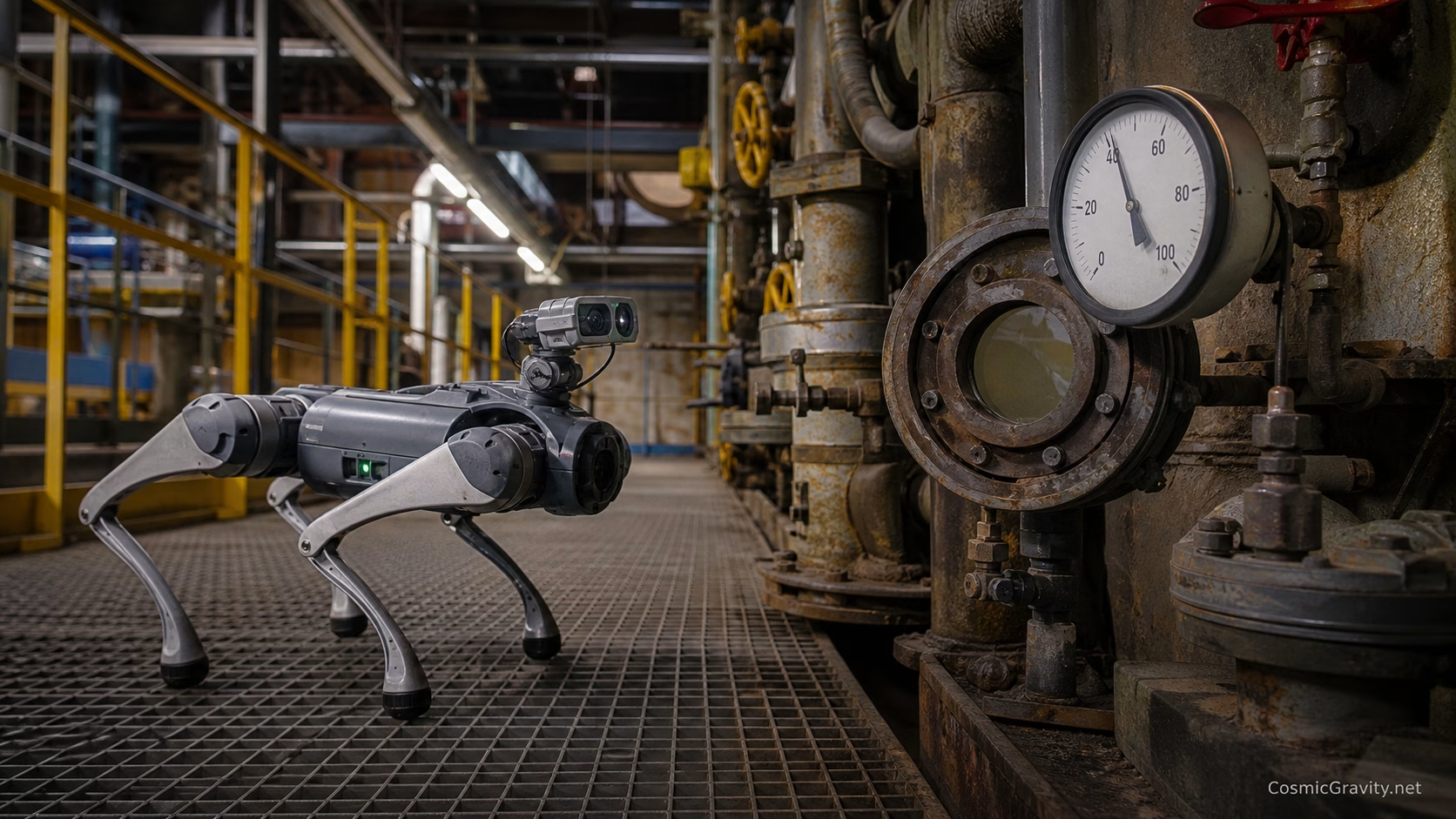
One contribution examines Ukrainian military observations during the war with Russia. Modern conflict zones contain drones, missiles, electronic warfare, decoys, sensor interference and secret technology. That makes them rich in data but extremely difficult to interpret.
A genuinely anomalous detection can coexist with many classified or misidentified objects. The correct response is neither to discard every case as warfare clutter nor to label every unknown extraterrestrial. Analysts must preserve the measurements, examine known capabilities and leave cases unresolved when the evidence does not justify closure.
Citizen scientists can improve the record
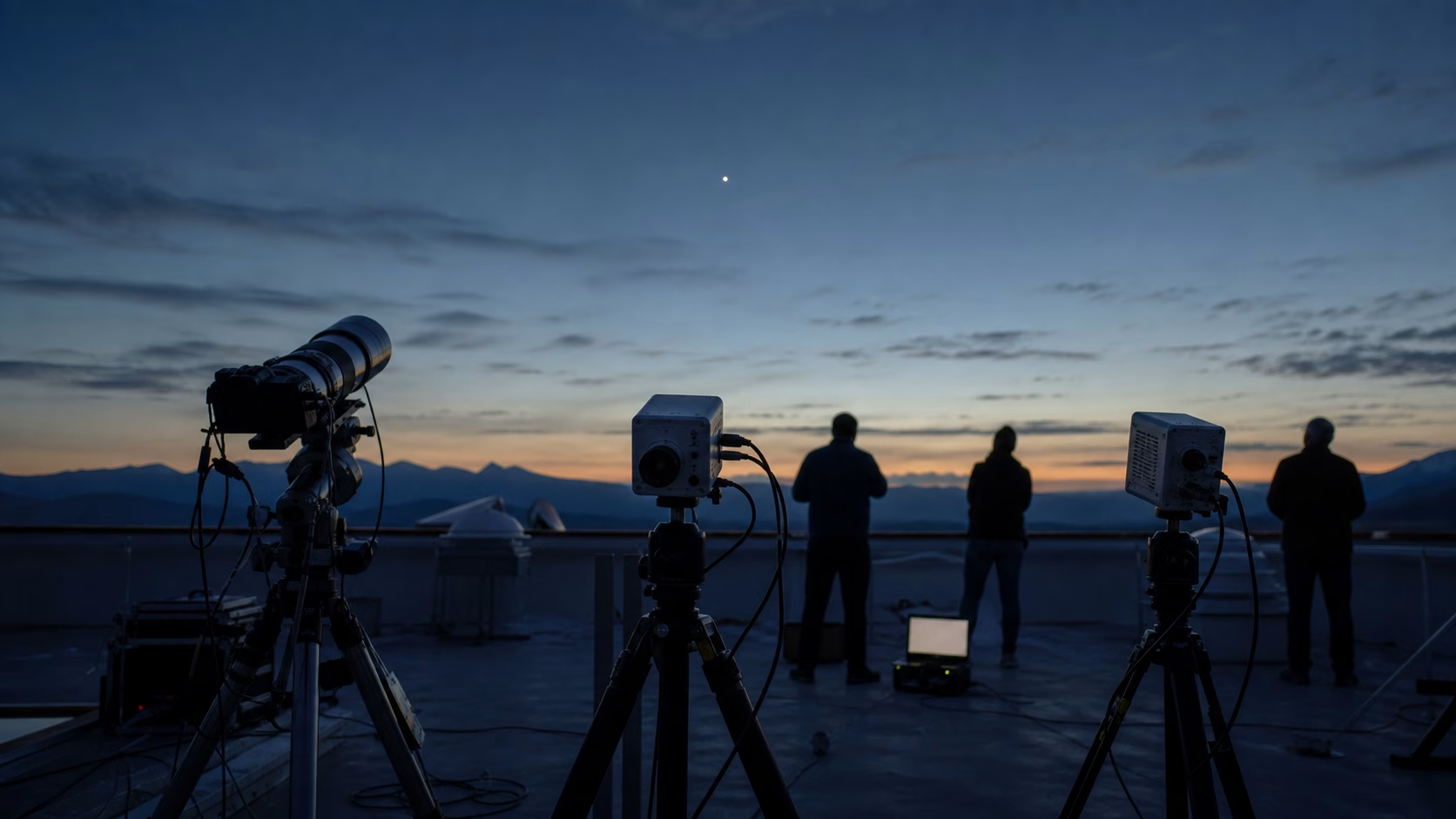
The issue also contains practical photography guidance for ordinary observers. The most useful habits are simple: keep filming, include stationary reference points, record the exact time and location, avoid excessive digital zoom and preserve the original file.
A second camera positioned some distance away can be far more valuable than a closer zoom. Two viewpoints make it possible to test altitude and motion. Sky maps, flight-tracking data and satellite predictions should be checked, but a match should be demonstrated rather than assumed.
Strong indications are not the same as final proof
The cumulative UAP record is difficult to dismiss. It includes persistent reports across decades, trained observers, multi-sensor cases and a smaller set of events that official investigations have not resolved. That weight of evidence justifies sustained, stigma-free investigation.
At the same time, “unresolved” is a description of the available evidence, not a confirmed origin. Some cases remain open because key data are classified, missing or too weak. Others may point toward genuinely unfamiliar technology or phenomena. Good research protects both possibilities until measurements decide.
Transparency remains the decisive test
A scientific playbook can improve future collection, but historical transparency is still essential. The permanent UAP collection at the National Archives provides a route for agencies to transfer records and for outside researchers to compare official accounts over time.
Methods, metadata and negative results should be public wherever security permits. Independent review is how sensor artefacts are caught, ordinary explanations are confirmed and truly exceptional cases become stronger.
The Naval Postgraduate School issue is not “disclosure” in the dramatic sense. It is something more practical: evidence that UAP study is acquiring a technical vocabulary, an academic venue and a set of methods that can survive scrutiny. That is a necessary step if the subject is ever to move from argument to knowledge.
Sources: Naval Postgraduate School UAP special issue and AARO UAP records and information papers.


latest video


news via inbox
Subscribe to our Cosmic newsletter to get notified when we have new articles.