What a pot of 208 Celtic silver coins tells us about Iron Age Hungary
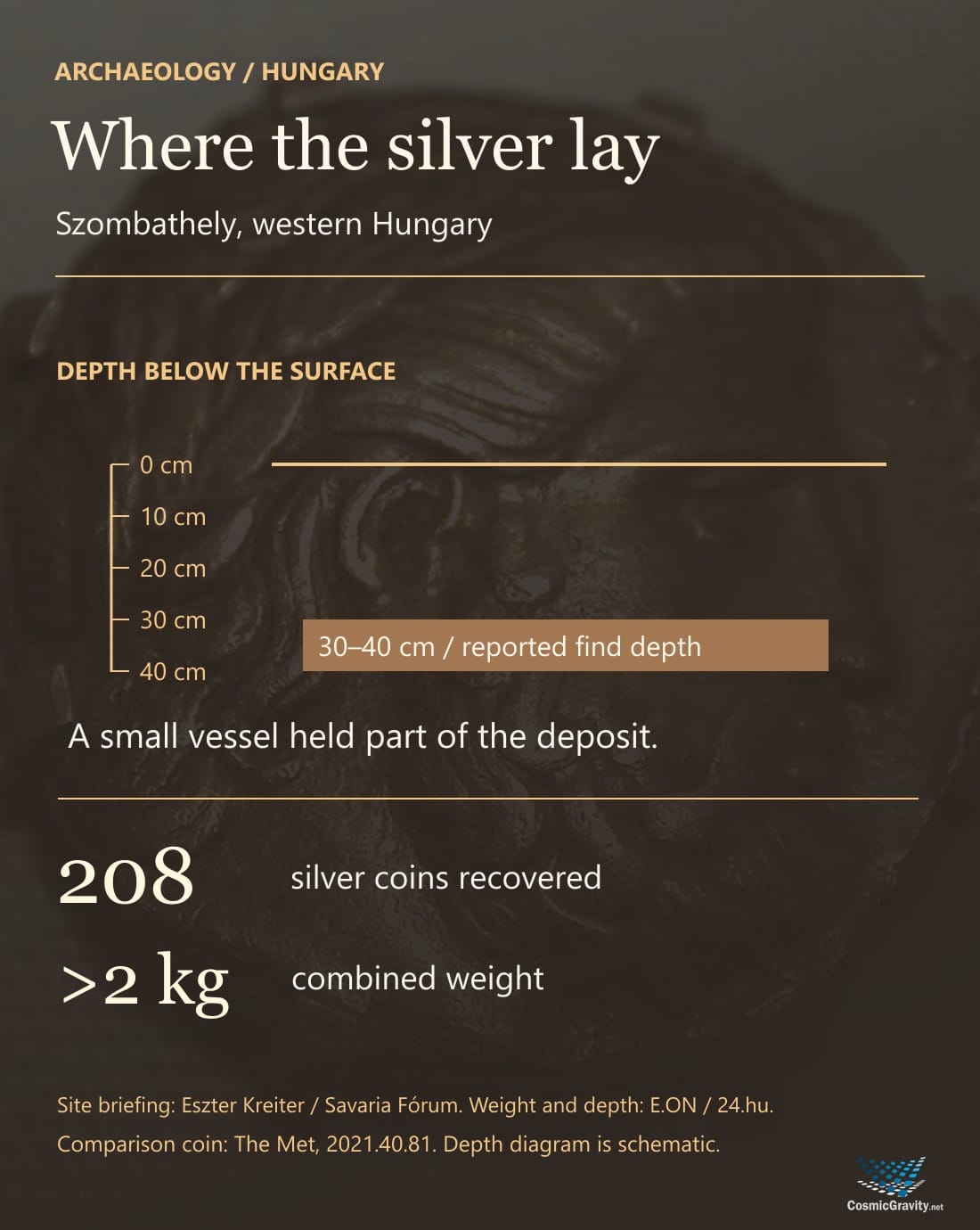
Some of the Celtic coins found in Hungary at Szombathely were still inside a small pot. Others lay in the same shallow pit. A single silver piece might have entered the ground through a hole in somebody’s purse. A vessel and 208 coins pose a different question. Someone gathered a considerable amount of silver in one place. What can the excavation tell us about that decision?
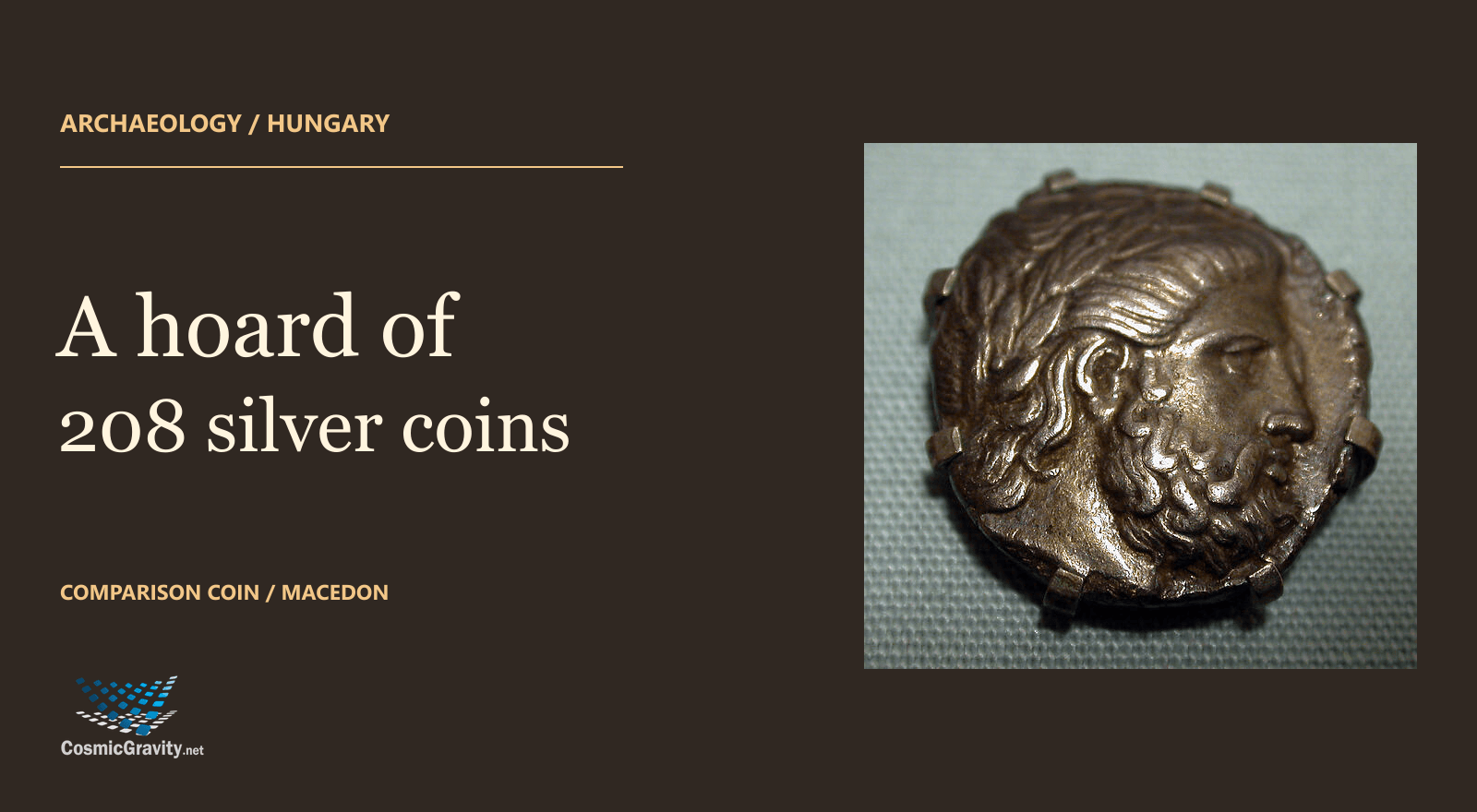
Feature image: Macedonian silver tetradrachm of Philip II, about 359–355 BCE. Comparison piece from The Metropolitan Museum of Art, bequest of Nanette B. Kelekian, 2020, object 2021.40.81. Public domain. The Hungarian finds are later. View the original.
Where were the Celtic coins found in Hungary?
The National Archaeological Institute of the Hungarian National Museum investigated the northern edge of Szombathely ahead of construction of an electricity substation. Work began in 2023 on land already known to contain archaeological remains. At the substation opening, archaeologist Eszter Kreiter described the sequence: the team walked the site, surveyed underground features and cut trial trenches. Archaeologists also watched the construction work. Savaria Fórum reported Kreiter’s account at the site.
The news circulated in Hungary in October and reached a wider audience in November. A statement from the utility, reported by 24.hu on November 24, puts the deposit just 30 to 40 centimetres below the surface. The silver weighed more than two kilograms altogether. The account dates the Velem-type tetradrachms to the late second or early first century BCE. That date comes from the coins themselves. Their shallow depth alone could tell an excavator very little about their age.
Why a Greek coin belongs in the comparison
A tetradrachm was originally a Greek silver denomination worth four drachms. One influential design, struck for Philip II of Macedon in the fourth century BCE, paired a head of Zeus with a rider on horseback. The Met’s silver tetradrachm of Philip II lets you examine the model. Communities along the Danube borrowed and adapted these designs, giving modern specialists a way to recognize regional coinages.
Velem is a regional type name. It helps place the Hungarian group in a family of designs. A resemblance to an earlier Macedonian coin carries no itinerary with it. To trace how silver moved, a researcher would also want comparable finds from known places, a chronology and close photographs of both faces of each coin.
What a hoard preserves that a loose coin loses
Keeping 208 pieces together makes questions possible that no single specimen could answer. Did several pieces come from the same pair of dies, the engraved tools used to strike a coin? Do some show much more wear than their neighbours? A fresh, closely related group might have a different history from an assortment assembled over many years. Kreiter said the team examined the metal composition before restoration. The public account gives no individual assay results or die-by-die catalogue.
The surrounding ground introduces a second trap. Archaeologists found Iron Age burials here, as well as the remains of a later Roman villa near ancient Savaria. A map can put those finds close together while centuries separate their owners. The vessel links part of the silver to the act of burial much more directly than the villa links a Roman household to the coins.
Who expected to return for that pot? A count and a weight cannot distinguish household savings from a merchant’s reserve or a deposit made for another purpose. A useful comparison is the Mørstad hoard in Norway, where the particular mix of coins gives researchers a different route into the same question of how a buried collection came together.



latest video



news via inbox
Subscribe to our Cosmic newsletter to get notified when we have new articles.