Homer’s Iliad Found Inside an Egyptian Mummy: What Archaeologists Discovered
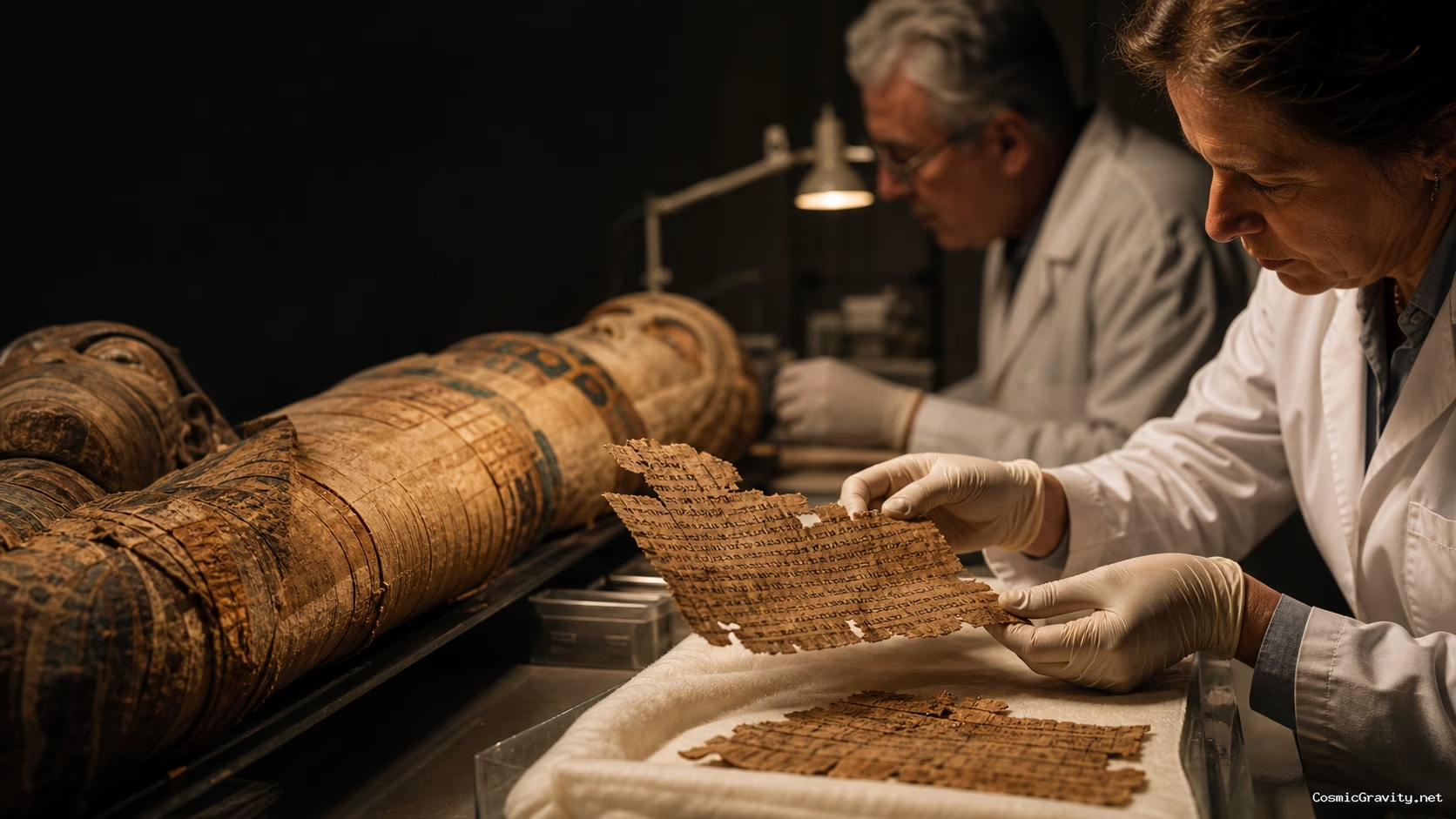
A fragile piece of Homer’s Iliad has been found in a place no scholar expected: inside the abdomen area of a Roman-era mummy from ancient Oxyrhynchus in Egypt. The discovery, announced by the University of Barcelona in 2026, is the first known case of a Greek literary text deliberately incorporated into a mummy.
The fragment comes from Book 2, the famous “Catalogue of Ships,” in which Homer names the Greek forces said to have sailed to Troy. It was recovered from Tomb 65 at Al Bahnasa, the modern settlement that covers ancient Oxyrhynchus, a city already legendary for the enormous number of papyri preserved there.
What was found in Tomb 65
The mummy dates to roughly 1,600 years ago, when Egypt was part of the Roman world and Greek remained an important language of administration, education and literature. Archaeologists working in Sector 22 found the papyrus positioned on the abdomen as part of the funerary preparation.
The fragment does not amount to a lost book of Homer. Its value lies in context. Countless papyrus scraps were reused as packing material, but the excavators describe this placement as deliberate. That makes the relationship between the text and the burial central to the interpretation.
Follow the object: text to tomb
- Composition: the epic tradition took written form centuries before this burial.
- Copying: a scribe produced the papyrus in Greek.
- Selection: someone retained or chose the fragment.
- Funerary use: it was placed with the mummy rather than discarded elsewhere.
- Recovery: archaeologists documented the fragment in its burial context.
Why the Catalogue of Ships mattered
Book 2 is more than a list. For ancient readers it connected heroic memory with real places, family identities and the geography of the Greek-speaking world. A passage naming communities and leaders may have carried educational, cultural or symbolic weight far from the Aegean.
We do not know whether the deceased could read Homer, whether the family selected the text, or whether the fragment acquired a protective meaning. Those are hypotheses, not results. The discovery is powerful precisely because it opens those questions without answering them too neatly.
Oxyrhynchus: the city made of texts
Dry conditions preserved administrative notes, private letters, tax records, poems and Christian writings around Oxyrhynchus. Most discoveries were removed from their original setting long ago. Tomb 65 is different because modern excavation preserves the relationship among mummy, chamber and papyrus.
Context is archaeology’s hidden superpower. The same fragment sold without provenance would still be interesting as a text, but it could not tell this story about funerary practice.
What happens next
Conservators will stabilise the fibres, papyrologists will compare handwriting and wording with other copies, and specialists will examine the mummy and tomb as a single assemblage. Small textual variants could help map the transmission of Homer, while material analysis may reveal when and where the papyrus was made.
The result is a rare bridge between literature and lived history: Homer not on a library shelf, but physically woven into the final rites of a person in Roman Egypt.
Sources and further reading

latest video


news via inbox
Subscribe to our Cosmic newsletter to get notified when we have new articles.