Can a half-wave plate turn violet light in just 173 nanometres?
Put a piece of clear calcite over some print and a single letter can appear twice. The crystal treats light differently depending on the direction its electric field oscillates. Optical engineers use that property, called birefringence, to control polarization. A study of copper aluminum oxide now puts an intriguing number on half-wave plate thickness: about 173 nanometres for a design working in violet light.
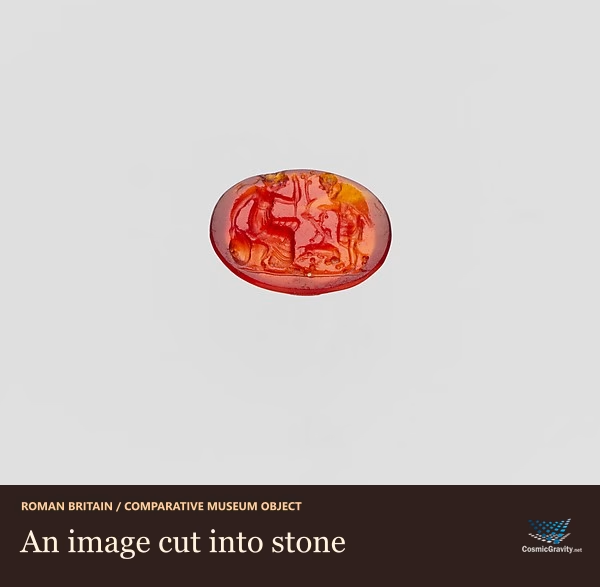
Feature image: Text viewed through Iceland spar, a transparent form of calcite. Comparison photograph by Furrfu, public domain, via Wikimedia Commons. The material tested in the study was copper aluminum oxide. Original image.
Baekjune Kang, Junhee Shin and colleagues published the crystal measurements in Nature Communications on October 13, 2026. KAIST explained the component estimate on November 24. The distinction matters if you have seen the figure attached to a pair of smart glasses. The researchers measured a material and worked out how thin one optical element could be.
What determines half-wave plate thickness?
Imagine a beam of linearly polarized light entering a transparent plate. Its electric field oscillates along one direction. Unless that direction already matches one of the crystal’s two optical axes for this beam, you can describe the field as two components, one along each axis. They enter together. Their waves accumulate phase at different rates as they cross the material.
A half-wave plate gives one component half a cycle of delay relative to the other. As a simple example, send in linear polarization at 45 degrees to the fast axis. Reverse the sign of one component by delaying it half a cycle and the outgoing polarization is at the opposite diagonal. The beam can continue straight ahead while its electric field now oscillates at right angles to its original direction.
For the thinnest ideal plate, multiply the physical thickness by the difference between the two refractive indices. The result must equal half the light’s vacuum wavelength. If the index difference doubles, half as much material gives the same delay. This inverse relationship is what makes a comparison between crystals meaningful, provided the wavelength is specified.

Where the factor of 120 comes from
For violet light, the KAIST team reports an index difference about 120 times that of crystalline quartz. Their estimate for the oxide is 0.173 micrometres. Multiplying by that rounded ratio gives roughly 21 micrometres of quartz for the equivalent ideal delay. Neither figure includes a mount, a substrate or any other optics. For a different colour, the indices themselves can change and the calculation must be done again.
There is an atomic clue to that large contrast. Oxygen, copper and oxygen form straight units within the layered crystal. The study connects their orientation to how the material responds to light polarized in different directions. A strong optical response is only part of the job. A useful plate must also transmit enough light to the next component.
From a crystal to a usable film
Making a uniform layer is a practical test of the idea. If one patch is thicker than another, two parts of the same beam leave with different delays. A component meant for a display must also work over its intended colours and angles. The team identifies thin-film fabrication and reducing optical losses as continuing work.
Our guide to an experimental photonic light sorter follows a different way engineers can manipulate light before a detector ever sees it. Here the attraction is simpler. Choosing the right crystal could let a beam accumulate a useful half-cycle of delay before it has crossed even a micrometre of material.


latest video


news via inbox
Subscribe to our Cosmic newsletter to get notified when we have new articles.