Shroud of Turin DNA Study 2026: What the New Evidence Really Shows
The Shroud of Turin DNA study published in 2026 sounds, at first glance, like the kind of result that could settle a centuries-old argument. It does not. What it does offer is something more modest and, in its own way, more interesting: a biological record of the people and environments that have touched the cloth during its documented history.
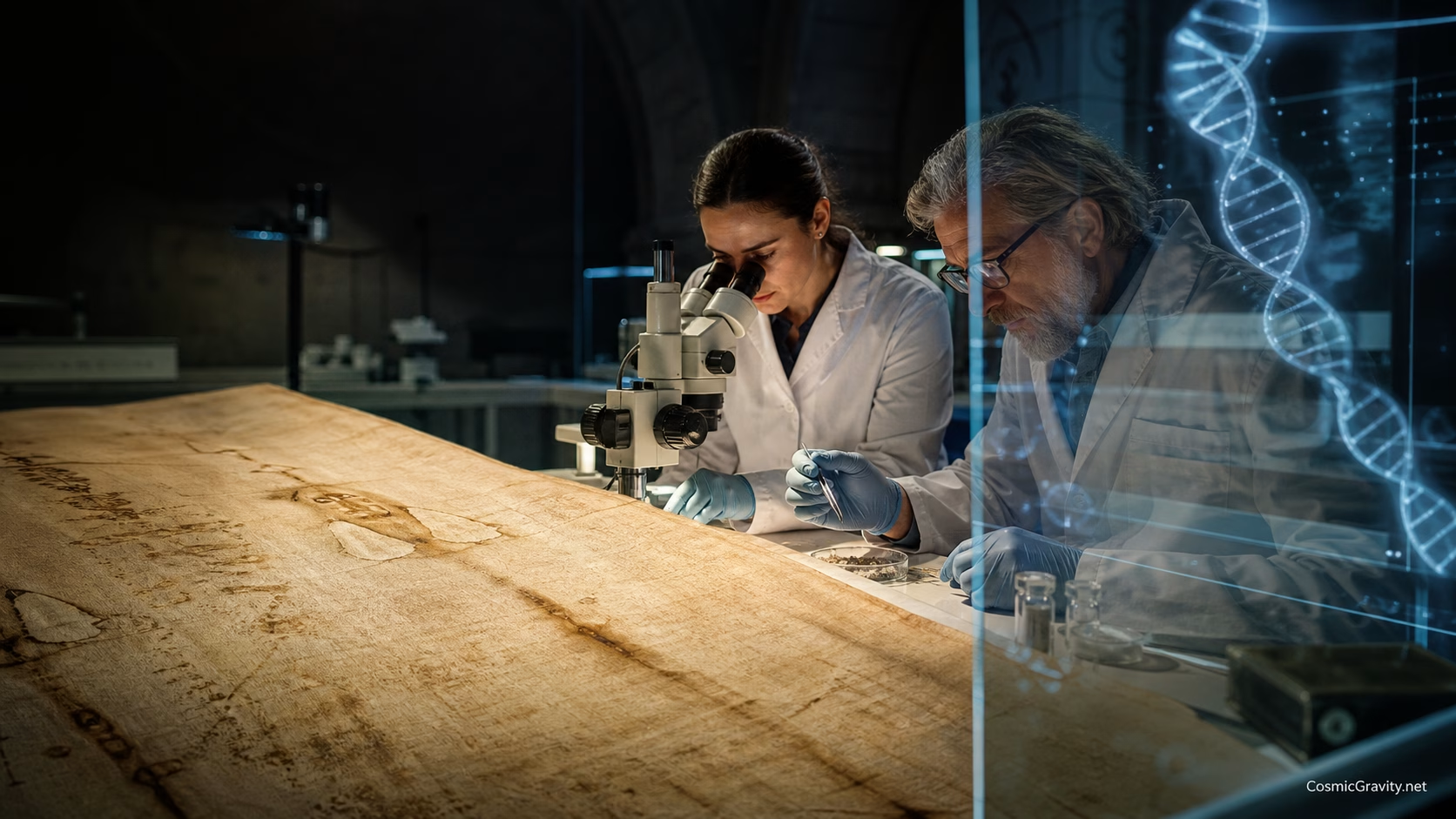
Researchers analysed material from the official 1978 sample collection and recovered fragmented human mitochondrial DNA alongside environmental DNA. Several maternal lineages were reported, including lineages common in Western Eurasia and a rarer lineage also found in the Near East. The work was published in Scientific Reports in July 2026.
What the researchers actually tested
The team did not cut a fresh piece from the Shroud. It worked with particles retained from the 1978 examination. That distinction matters. A fibre can carry biological traces from handlers, conservators, pilgrims, storage rooms and the people who collected it. DNA on an object is evidence of contact, not automatically evidence of origin.
The scientists used methods designed for highly fragmented historical DNA. One mitochondrial lineage matched the genome of a 1978 collector, a useful internal warning that modern handling can leave a clear signature. Other lineages point to several biological contributors rather than one clean individual.
Interactive check: what can this DNA answer?
It can help with: identifying biological diversity in the sample, measuring degradation, recognising modern contamination and reconstructing parts of the cloth’s environmental history.
It cannot currently establish: the identity of the image-bearing person, the exact place the cloth was made, or whether the image formed in antiquity.
Why multiple lineages are not surprising
The Shroud has been displayed, folded, repaired, carried and examined for centuries. Even careful modern conservation happened after a long period in which people could approach or touch religious objects far more freely than they would today. Finding DNA from several populations is therefore compatible with many different journeys.
This is also why geographic labels must be used cautiously. A mitochondrial lineage seen today in the Near East may also appear elsewhere, and present-day distributions are not perfect maps of medieval populations. DNA can narrow a question, but it rarely supplies a postal address.
Does this challenge the radiocarbon date?
No. DNA analysis and radiocarbon dating answer different questions. The famous 1988 tests dated the sampled linen to the medieval period, while critics have continued to debate whether the tested corner was representative of the whole cloth. The new DNA work neither repeats that dating nor invalidates it.
A genuinely decisive programme would require an agreed sampling strategy, independent laboratories, textile analysis, contamination controls and transparent publication of raw data. Until such work is permitted, every result will remain part of a larger, incomplete puzzle.
A better way to discuss the Shroud
The choice is not between “miracle proved” and “nothing to see.” Historic objects accumulate complicated evidence. The responsible position is to separate what a technique measured from what people hope it means. That is the same standard we apply to disputed UAP imagery, ancient DNA and archaeological scans elsewhere on this site.
For the longer history of the cloth and earlier scientific disputes, read our background article: Why the Turin Shroud continues to defy a simple explanation.
Sources and further reading



latest video


news via inbox
Subscribe to our Cosmic newsletter to get notified when we have new articles.