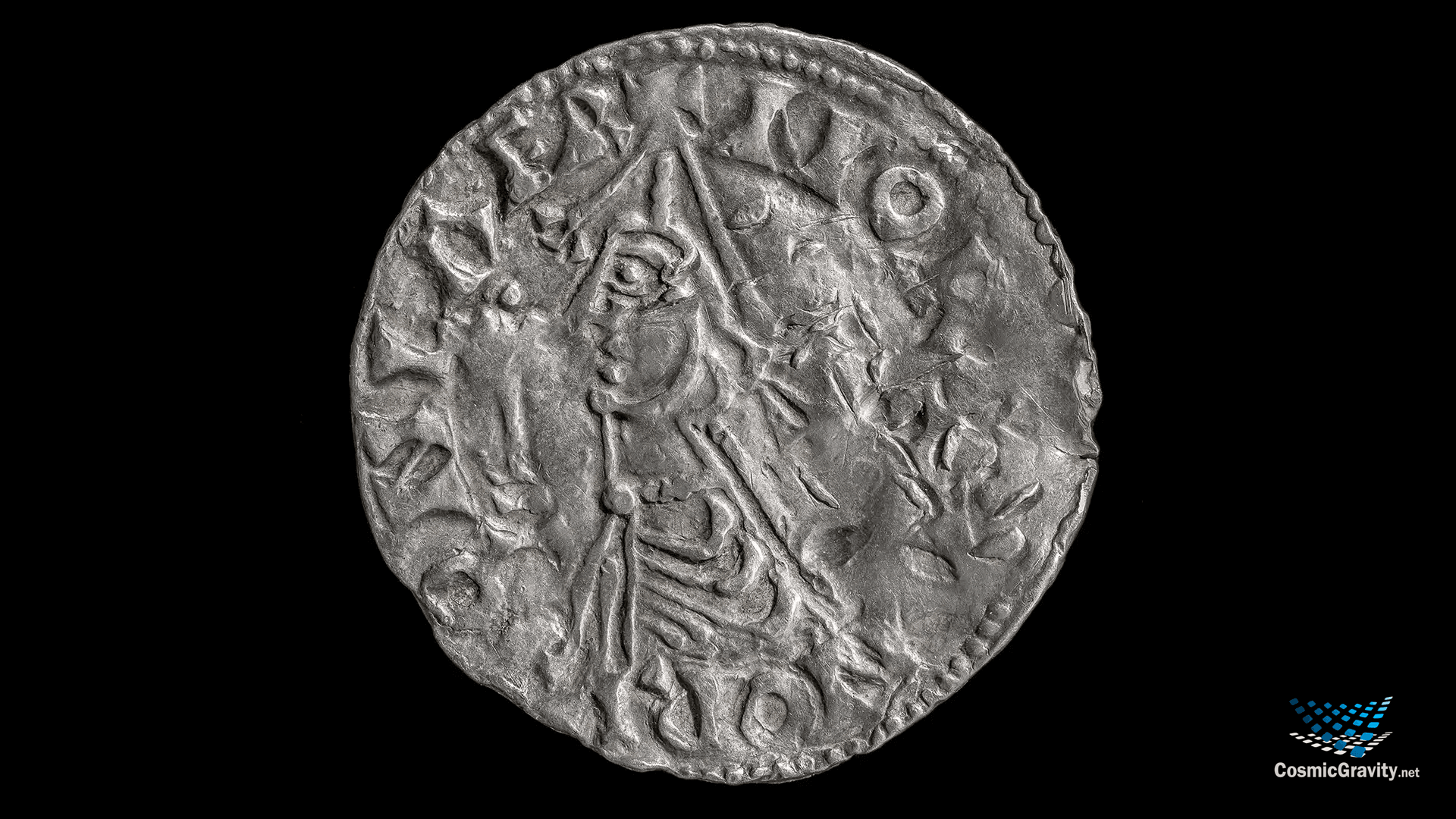
How three pieces of wood dated the Vikings in Newfoundland to 1021
We know what some Vikings in Newfoundland were doing in 1021. They were cutting wood. Three pieces recovered at L’Anse aux Meadows, on the island’s northern tip, preserve the marks of a metal blade. Each came from a different tree. Each tree stopped growing in the same year. One even kept a few spring cells at its edge.
It is an unusually intimate detail to recover from a settlement a thousand years old. The year came from a trace of space weather inside the wood. To see why that worked, start at the other end of the calculation, with the last ring the tree ever grew. Read the dating study by Margot Kuitems and colleagues.
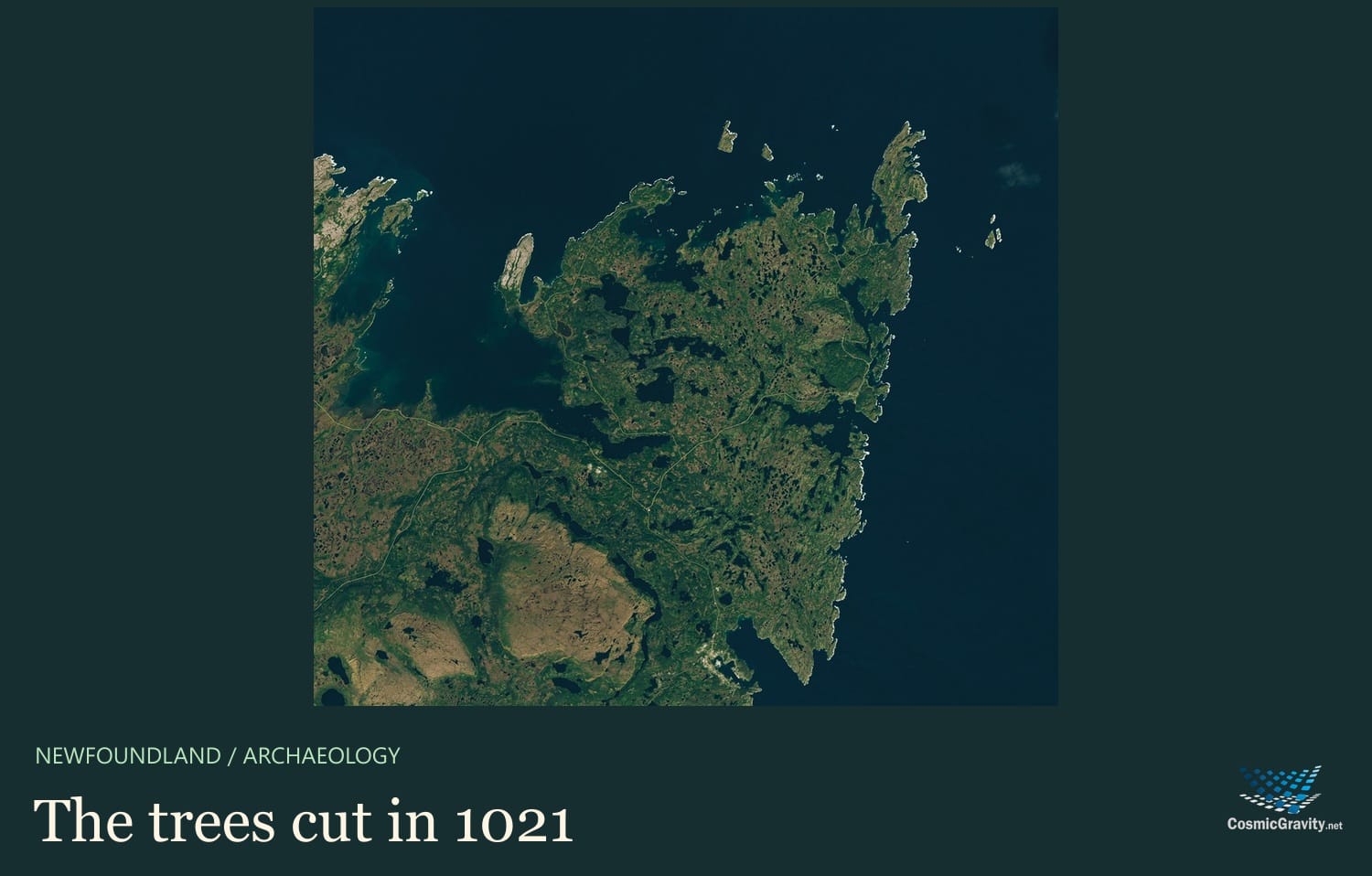
Feature image. Landsat 8 recorded Newfoundland’s northern coast on October 7, 2021. Image by Lauren Dauphin, NASA Earth Observatory, using USGS Landsat data. Image source.
Why the outer edge matters
Pick up a piece of worked timber and you have a problem. A carpenter may have pared away the outside to make a flat face. You can date a ring in the middle with exquisite precision and still have no idea how many years the tree lived after that. A piece with its final growth surface intact answers a different question. The outermost cells were growing when the trunk was cut.
The three pieces in the study had that surface, called the waney edge. Excavators had recovered them from Norse archaeological deposits, and all three bore the shallow, clean cuts associated with metal tools. Those observations do separate jobs. The cuts and their findspots connect the pieces with work at the Norse site. The rings provide a way to put that work on a calendar.
The signal in the ring for 993
A tree takes in carbon dioxide while it grows. A tiny fraction of that carbon is radioactive carbon-14. Its abundance in the atmosphere changes over time. In the early 990s, an exceptional influx of energetic particles left a sharp rise in atmospheric carbon-14. Trees growing far apart recorded it. Researchers had already placed that rise in a sequence of rings with known calendar years.
Usually a radiocarbon result for medieval wood gives a range of possible dates. Here the team could look for a shape across adjacent rings, following the jump in carbon-14 near 993 and its aftermath. It is much like identifying a particular bar of music because you know which notes come immediately before and after it. Once the researchers located that passage, they could count outward through the annual layers. From 993 to the final ring there are 28 annual steps. That gives 1021.
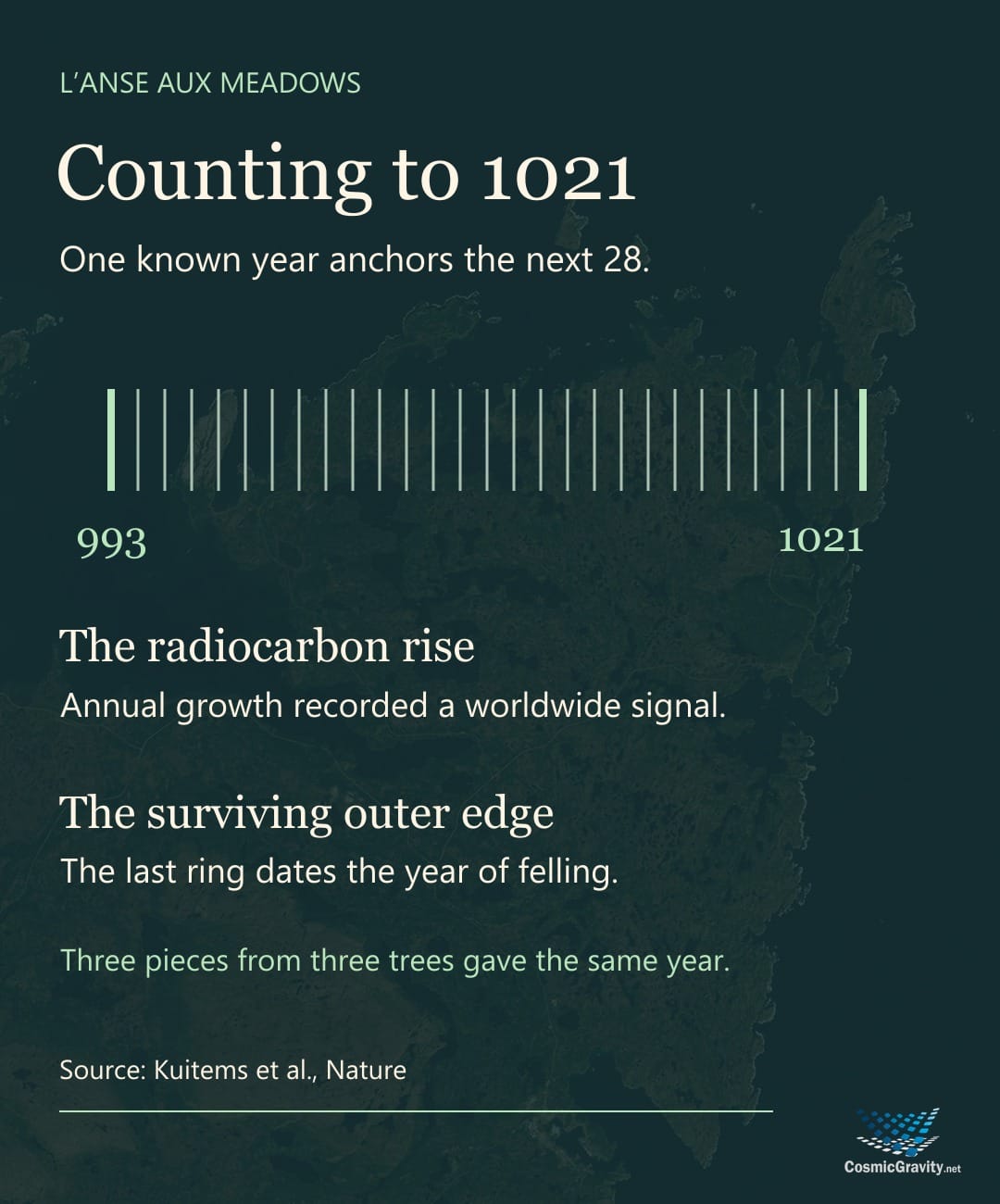
There is a useful check on that arithmetic. Someone who counts both the marked ring and the final ring will count 29 rings. Someone who subtracts the dates will count 28 elapsed years. Both are looking at the same piece of wood. More important than either number alone is that the match worked independently on three trees.
What the Vikings in Newfoundland left on the ground
The tree rings add a precise date to a place archaeologists already understood as a Norse settlement. Turf buildings and evidence of ironworking help explain the setting in which people were making clean cuts in timber. The calendar result gives us a working year at that site. It cannot tell us who held a particular tool or when a ship first reached this coast. Indigenous peoples already had a long history in the region. See the landscape in NASA Earth Observatory’s account.
A closer look at the cell structure gives the story a little more texture. One tree had laid down a narrow band of earlywood, consistent with felling in spring. Another had grown far enough for the researchers to place the cut in summer or autumn. Earlier conservation treatment made the third piece harder to read at that level of detail. All three retained the evidence for the year.
There is a temptation to put an arrival date, a named explorer and a length of stay on the same label as 1021. Each would take evidence of its own. What survives here is smaller in scale and remarkably direct. At least twice during one growing year, someone went out to cut wood. A piece of the tree they left behind can still tell us the season. For another example of what the findspot of an object can establish, see the Viking burial on the Isle of Man.


latest video



news via inbox
Subscribe to our Cosmic newsletter to get notified when we have new articles.