Turning Earth Into a Quantum Sensor for Dark Matter
Dark matter may be passing through your body, the Earth and every laboratory on the planet without leaving an obvious trace. If it consists of ultralight fields or vast topological structures rather than familiar particles, the signal may not look like a collision. It may look like time itself briefly changing its rhythm.
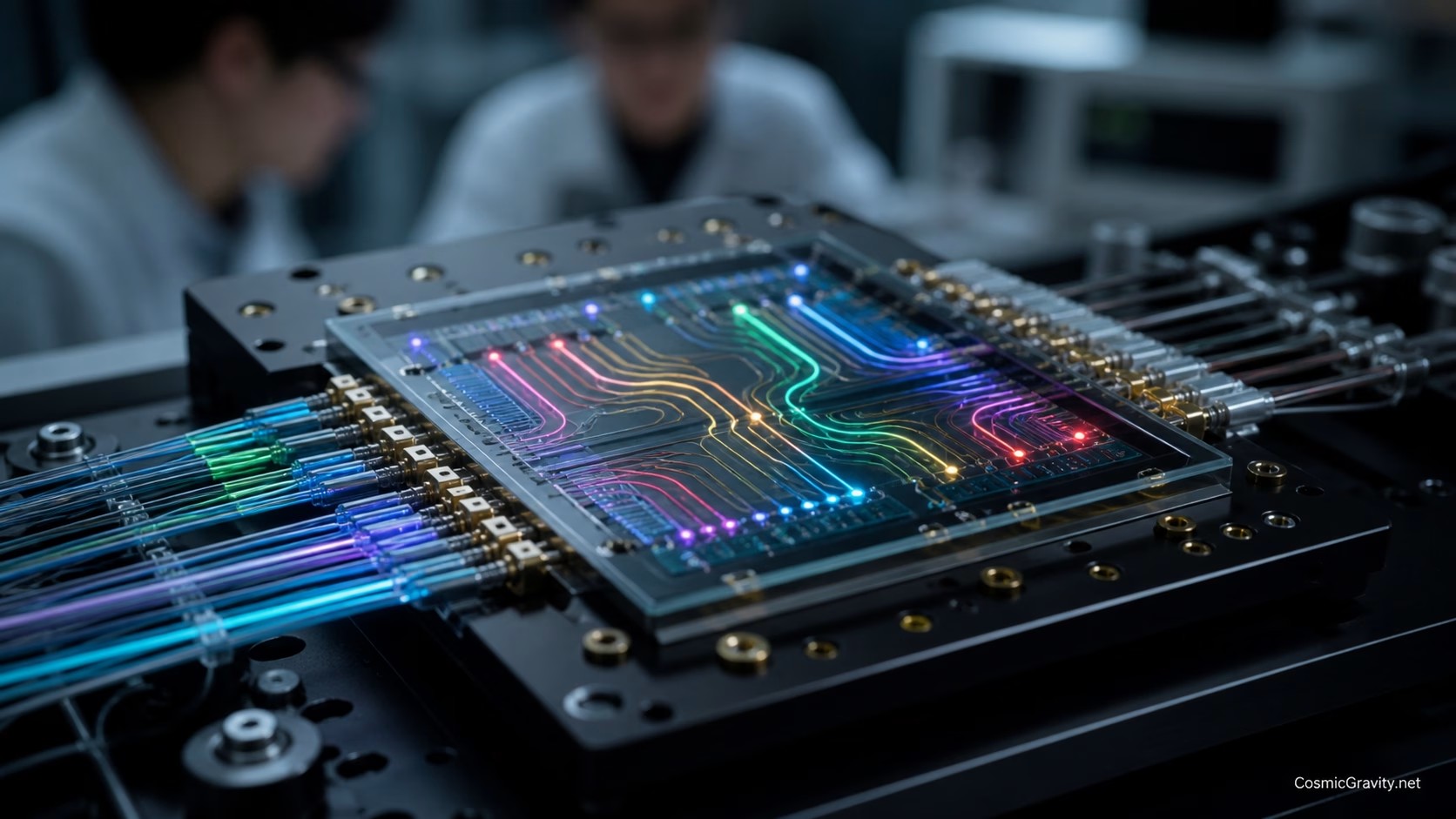
That possibility has inspired an extraordinary instrument: not one detector, but a network of precision clocks and quantum sensors spread across Earth.
Why clocks can detect invisible physics
An atomic clock measures the frequency associated with a transition between quantum energy levels. That frequency depends on fundamental constants, including the fine-structure constant and particle masses. Some dark-matter models predict tiny temporary changes in those quantities.
If a dark-matter field or domain wall crossed Earth, different clocks might shift in a sequence determined by their positions. A local malfunction would affect one laboratory. A cosmic event could produce a correlated pattern across continents.
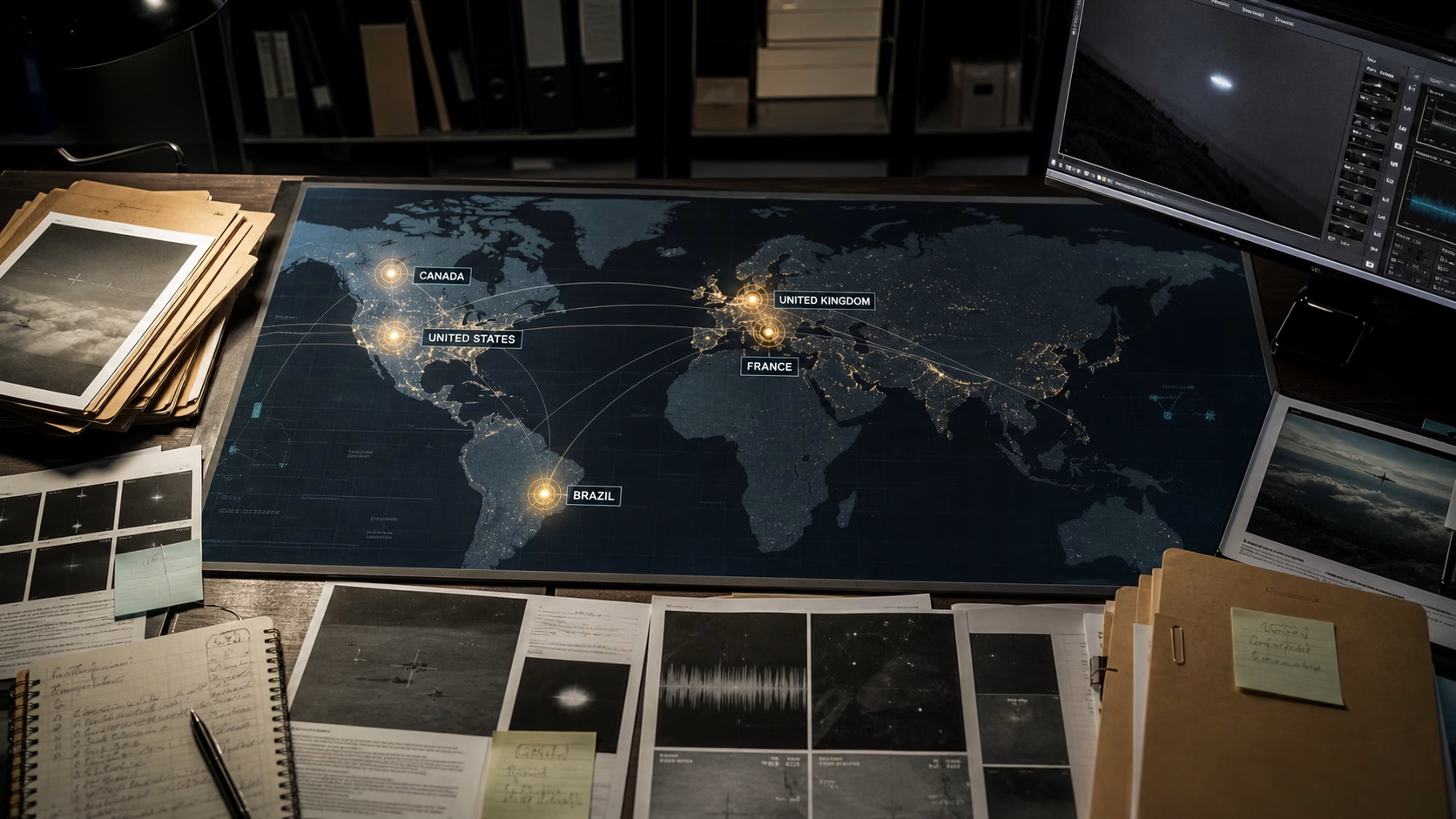
In 2019, researchers reported the first Earth-scale search using optical clocks in four laboratories on three continents. They found no dark-matter signal, but improved limits on how strongly certain models could couple to ordinary matter. A null result is still a measurement: it removes part of the hiding place.
Quantum network demo
Send a dark-matter wave across Earth
Reveal how a travelling sequence could be distinguished from local sensor noise.
Four stations listening
Independent clocks compare timing patterns across continents.
Correlated sequence detected
Demonstration arrivals: 0.0 ms · 310 ms · 590 ms · 860 ms.
Demonstration only. No dark-matter event has been detected by this network.

The planet-size advantage
Distance turns a network into more than the sum of its instruments. A disturbance moving through Earth should arrive at separated sensors at different times. Comparing direction, delay and amplitude helps distinguish a genuine travelling signal from vibration, temperature change, electronics or human error.
Clocks are not the only option. Atomic magnetometers, spin sensors and atom interferometers can search for different dark-matter candidates. In 2024, a long-baseline network of atomic magnetometers separated by about 1,700 kilometres constrained dark-photon models. In 2025, an intercity network reported new limits on axion-like dark matter. The Earth-scale detector already exists in early form.
Where quantum entanglement enters
Today’s clock comparisons do not require the entire global network to be entangled. They use extremely stable local quantum systems and compare records through conventional links. Entanglement is a proposed upgrade, not a description of every operating network.
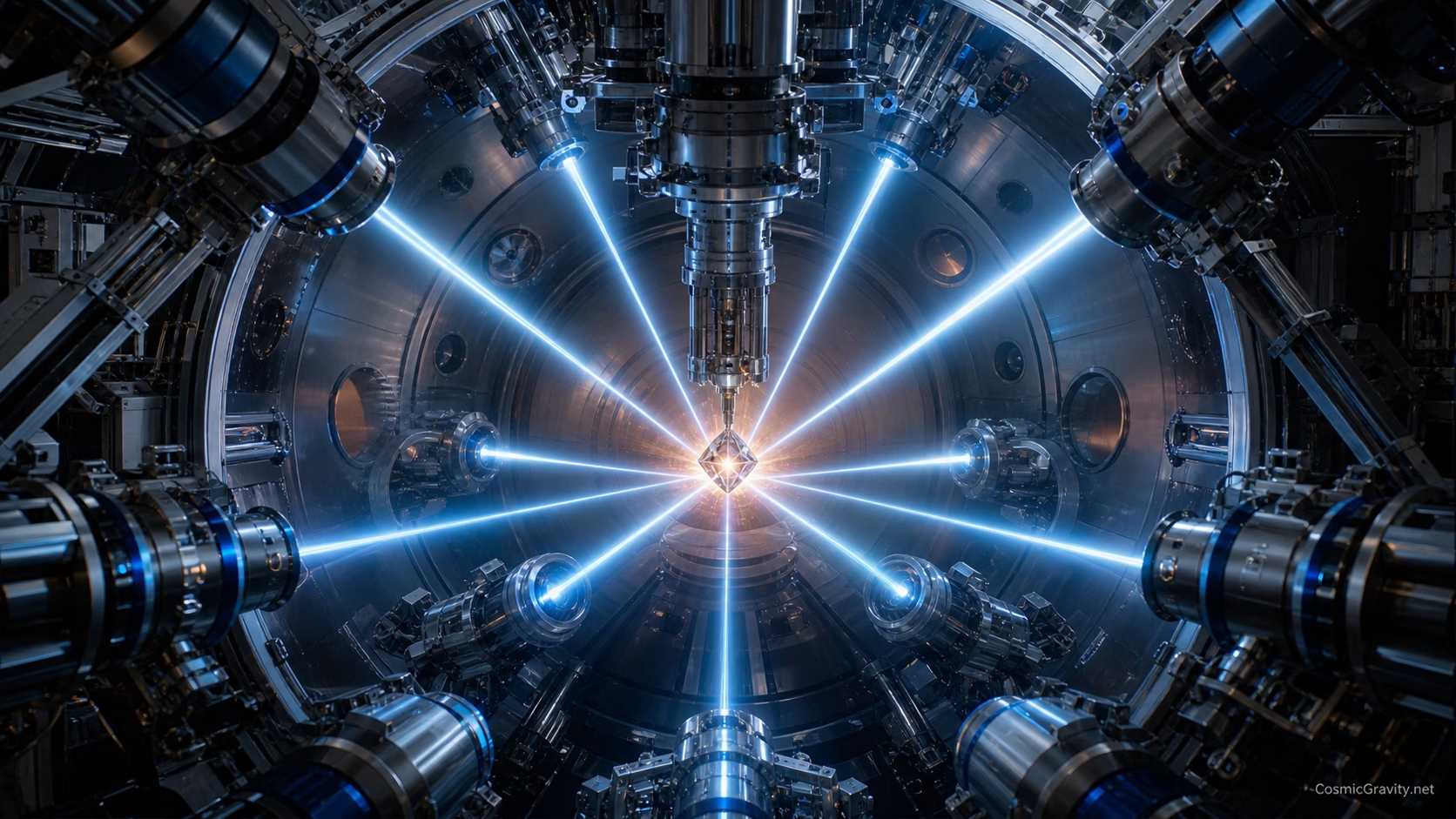
Entangling atoms within a clock can reduce measurement noise. Future quantum networks might distribute entanglement between distant clocks, allowing coordinated measurements beyond classical limits. NIST describes a global network of entangled space clocks as a serious vision, but also notes that present entangled clocks have not yet surpassed the best conventional atomic clocks.
Is Earth becoming conscious?
Calling the network a “conscious antenna” is a powerful metaphor, not a scientific conclusion. Sensors do not possess awareness merely because they exchange information. What the network gains is distributed sensitivity: the ability to recognise a pattern that no single station could trust.
In that limited but astonishing sense, the planet becomes an observatory. Its diameter supplies the baseline. Its laboratories act like nerve endings. Its clocks listen for fields that may fill the Galaxy.
What a discovery would require
A candidate signal would need to appear in multiple independent sensor types, match a physically possible speed and direction, survive environmental checks and recur or agree with astronomical expectations. The first anomaly would not be accepted as dark matter. It would trigger a global attempt to disprove itself.
That is the beauty of the idea. Dark matter is cosmic, so the experiment becomes planetary. We may discover the invisible Universe not by building one impossibly large machine, but by teaching the most precise instruments on Earth to listen together.
Sources and further reading


latest video

news via inbox
Subscribe to our Cosmic newsletter to get notified when we have new articles.