Did LZ Detect Dark Matter? The One Event Physicists Are Checking
CosmicGravity · News & analysis · September 5, 2026
A single unusual event in a detector deep underground has put dark matter back in the headlines. It deserves attention. It does not yet deserve a victory announcement.
The LZ dark matter candidate emerged from an analysis reported on September 1. Researchers examined 220 live days of data collected between March 2023 and April 2024, looking beyond the simplest assumptions about how a dark-matter particle might interact. One event stood out. UCL’s account of the result describes a significance of 2.6 sigma, well below the conventional discovery threshold.
What happened inside the detector?
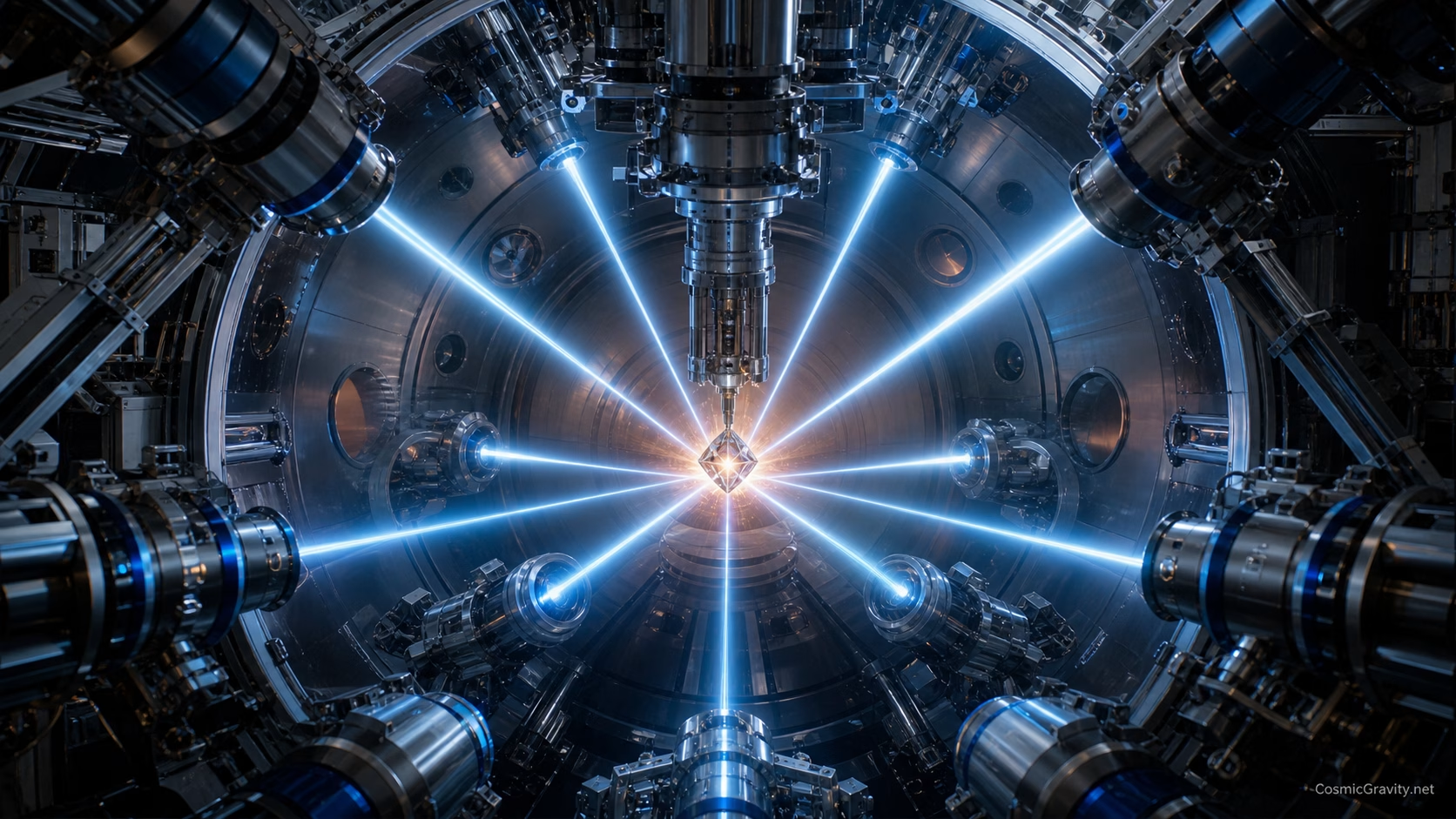
LUX-ZEPLIN uses liquid xenon to look for tiny collisions that might otherwise go unnoticed. A particle interaction can produce a flash of light and release electrons. Those electrons generate a second light signal after they are drawn into gas above the liquid. Comparing the signals helps researchers reconstruct where an event occurred and what kind of interaction it resembles.
The experiment operates underground to reduce interference. Additional detector layers help identify unwanted activity. The LZ detector description explains why shielding, clean materials and multiple checks are fundamental to the search. A sensitive instrument must be excellent at recognizing ordinary events before an extraordinary interpretation becomes persuasive.
Why 2.6 sigma is not a 99.5% chance of dark matter
The quoted significance concerns how surprising the result would be under the analysis’s background assumptions. It is not the probability that the dark-matter explanation is correct. Converting one into the other skips questions about alternative explanations and the models used to test them.
The collaboration is treating the event as a candidate. Its announcement described a paper being prepared for submission and further checks ahead. Readers should look for the full analysis and subsequent results, rather than treating the press release as the end of the process.
The bigger mystery survives either outcome
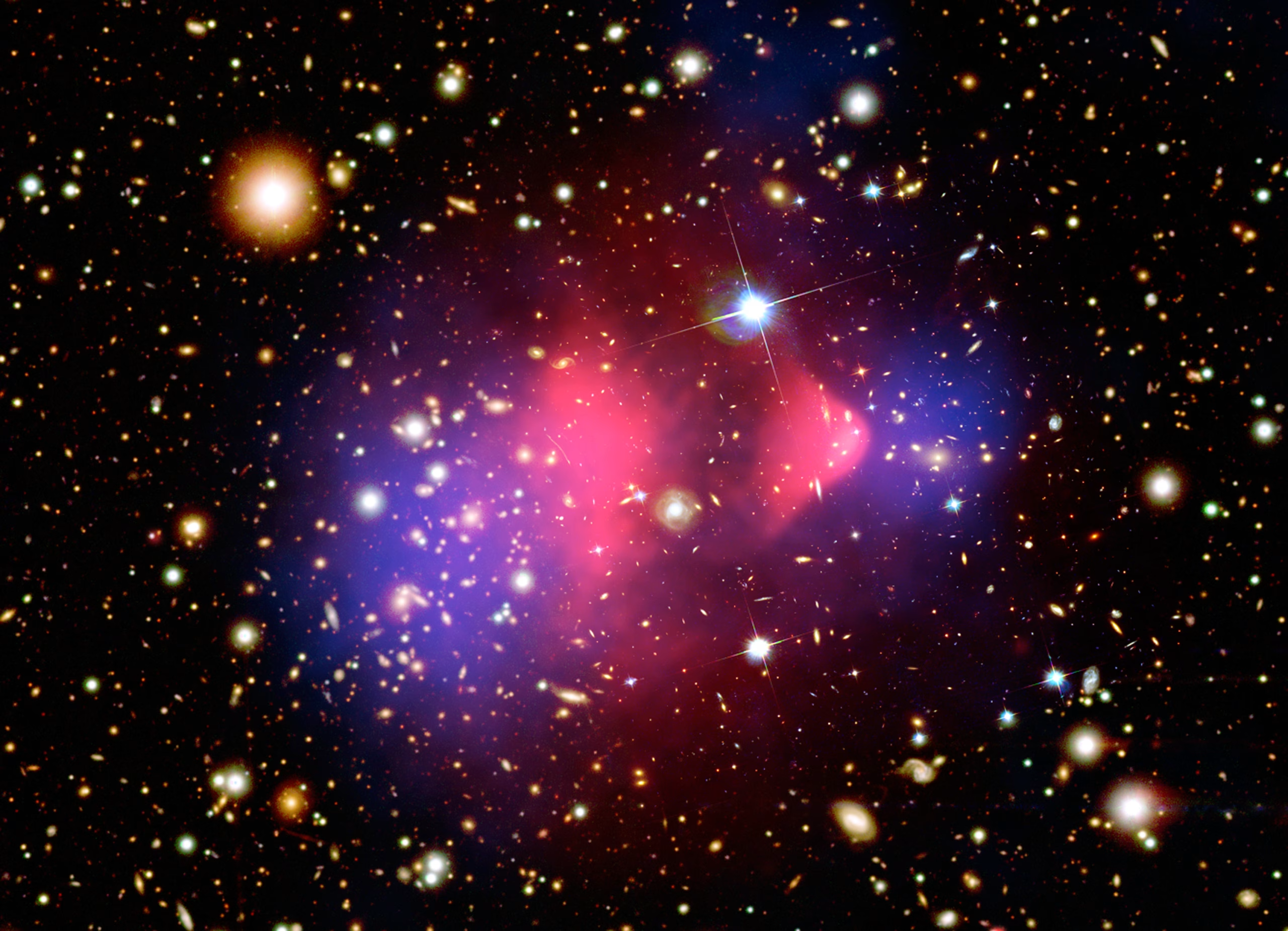
Evidence for dark matter did not begin with this detector. Astronomers infer unseen mass from gravitational effects. In the Bullet Cluster, for example, maps of gravitational lensing can be compared with the distribution of hot gas. That is a different line of evidence from identifying an individual particle in a laboratory.
If the LZ candidate fades with more data, those astronomical observations do not disappear. If it strengthens, the next challenge is to establish which particle properties explain it and whether other experiments can test that explanation.
The exciting question is therefore quite precise: will this event remain unusual when the experiment has more chances to catch another one?
Start with dark matter without the mathematics, then compare the much larger scales in our dark-galaxy explainer.
COSMICGRAVITY · EXPLORE THE EVIDENCE
Three different levels of evidence
Tap a heading to open the explanation.
Candidate
An event worth investigating. This is where the newly reported LZ result belongs.
Statistical significance
A measure tied to a particular background model. It is not a direct probability that a proposed explanation is true.
Discovery
Requires much stronger evidence and rigorous checks. Reproducible patterns and independent tests matter more than an isolated headline.
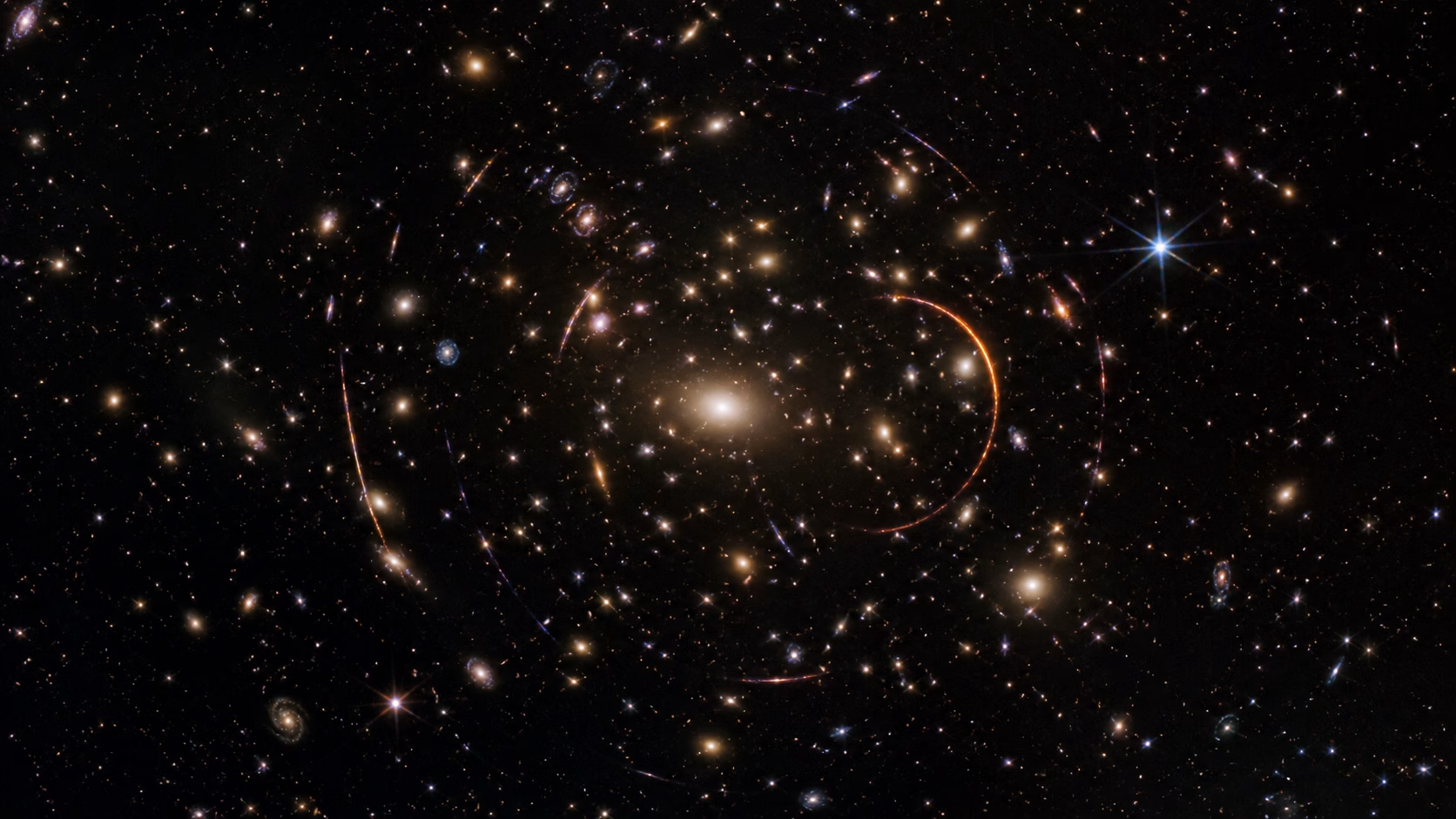
Lead image: Context image: the Bullet Cluster, combining optical observations, X-rays and a lensing-derived mass map. It is not an image of the LZ event. X-ray: NASA/CXC/M.Markevitch et al. Optical: NASA/STScI; Magellan/U.Arizona/D.Clowe et al. Lensing Map: NASA/STScI; ESO WFI; Magellan/U.Arizona/D.Clowe et al. CC BY 4.0; resized for display. Image source and usage information.
Editorial note: Reporting checked September 5, 2026. Linked sources distinguish the underlying observations from interpretation. Future plans and preliminary results may change.


latest video

news via inbox
Subscribe to our Cosmic newsletter to get notified when we have new articles.