
David Grusch’s FOIA Lawsuit Hinges on Where the Pentagon Searched
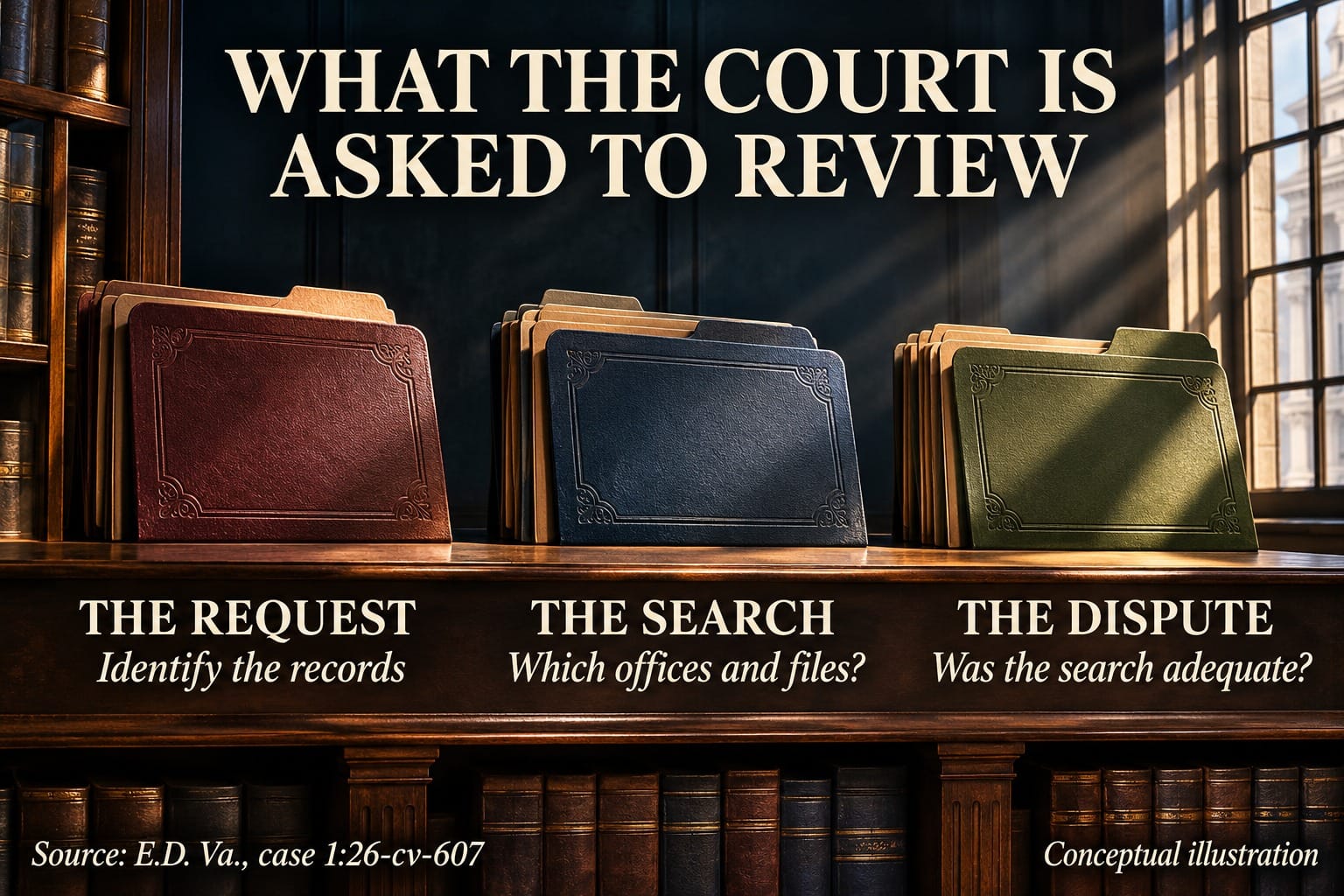
David Grusch’s Freedom of Information Act lawsuit has brought a specific records question into federal court. His lawyers point to a Pentagon letter to Congress describing an Air Force contact about a possible unauthorised disclosure. They argue that the letter gave the Department of Defense a lead it should have followed. The department says its searches were reasonably tailored to his request. The Eastern District of Virginia lists a motion hearing for 20 November 2026 in Alexandria. Court calendar · Defendant’s notice of hearing.
What records did David Grusch ask for?
Grusch submitted his request on 30 September 2024. It sought material about unauthorised-disclosure complaints from April through December 2023 associated with the office of the Senior Intelligence Oversight Official. One part concerned possible disclosures involving Grusch. A second part specified terms including UAP and UFO. He filed suit on 2 March 2026. His public House testimony in July 2023 gives context for the interest in the case. The briefs put the focus on how the department searched for those particular records. Department’s brief and description of the request · Grusch’s 2023 House statement.
Why does one letter matter?
In the released material is a letter dated 1 November 2023 from Senior Intelligence Oversight Official Mark Dupont to Representative Tim Burchett. The letter describes an Air Force intelligence oversight officer making contact over preliminary information about a possible unauthorised disclosure. It also describes a follow-up discussion and the decision that further investigation was unwarranted. Grusch’s lawyers argue that there should at least have been a targeted search for material about the contact itself. The letter records how an official described the contact. The account leaves open what underlying records, if any, exist. Released records filed with the court · Grusch’s memorandum.
What did the department say it searched?
According to its brief, the department searched classified and unclassified shared folders in the Intelligence Oversight Division, along with both kinds of email accounts for two officials. Its searches identified 22 potentially responsive records amounting to 6,632 pages. After reviewing the material, it released 40 pages on 18 May 2026. The larger figure describes what surfaced before the department finished reviewing responsiveness. Treating the difference as a count of withheld responsive UFO records would go beyond the filing.
The two sides disagree about when an agency must follow a lead turned up by a records search. In its 30 October reply, the department argues that the original wording set reasonable boundaries on which systems it needed to search. It says Grusch can file a second request with additional parameters. Grusch asks the court to order a further search under the initial request and require a declaration documenting that work. Even a more extensive search could turn up correspondence about the contact, duplicate material or nothing additional. Department’s October reply and supplemental declaration.
What to look for in the next filing
A hearing notice puts argument on the calendar. A written order would show whether the court accepts the department’s account of the search or directs additional steps. If the court orders another search, a later declaration could identify the offices, custodians and systems checked. Those details would help readers trace where the inquiry led. Our account of Project Capella follows another part of the public UAP records trail and examines why the provenance of each document matters. Read about Project Capella.



latest video



news via inbox
Subscribe to our Cosmic newsletter to get notified when we have new articles.